HBM Pioneer Predicts Shift to HBF as AI Demands Explode
The architect of High Bandwidth Memory sees the next frontier in flash memory, sparking a race for market dominance.
SOUTH KOREA —
Key facts
- Professor Kim Chong-ho, known as the 'father of HBM', forecasts the rise of HBF.
- HBF (High Bandwidth Flash) could become prominent around 2030.
- HBM4 is slated for full commercialization by the end of this year.
- Global memory makers, including SanDisk, are preparing for HBF.
- AI's data needs are projected to increase a thousandfold within a decade.
- Nvidia CEO Jensen Huang's visit to South Korea is linked to securing HBM4 supply.
- The global investment in AI infrastructure is estimated to reach approximately 1,000 trillion won.
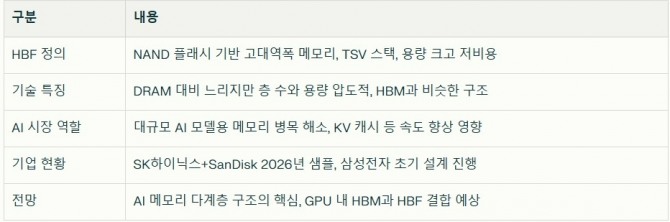
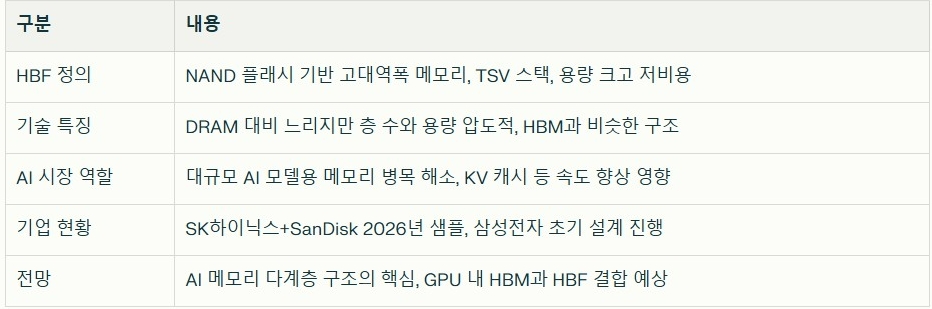
- HBF involves stacking NAND flash memory in three dimensions.
A New Memory Era Dawns
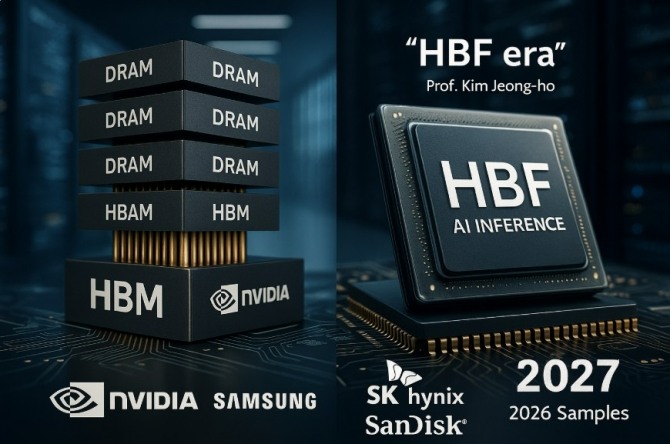
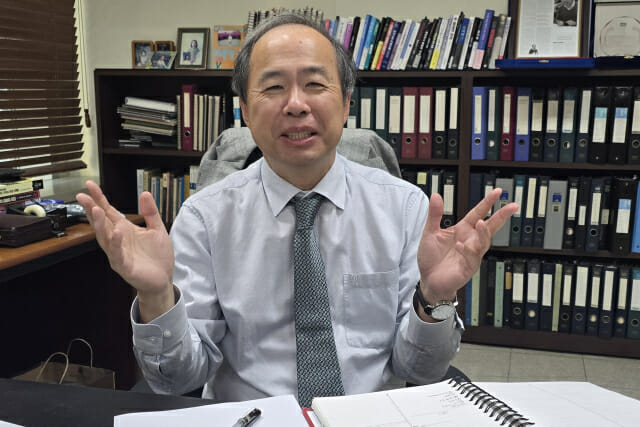
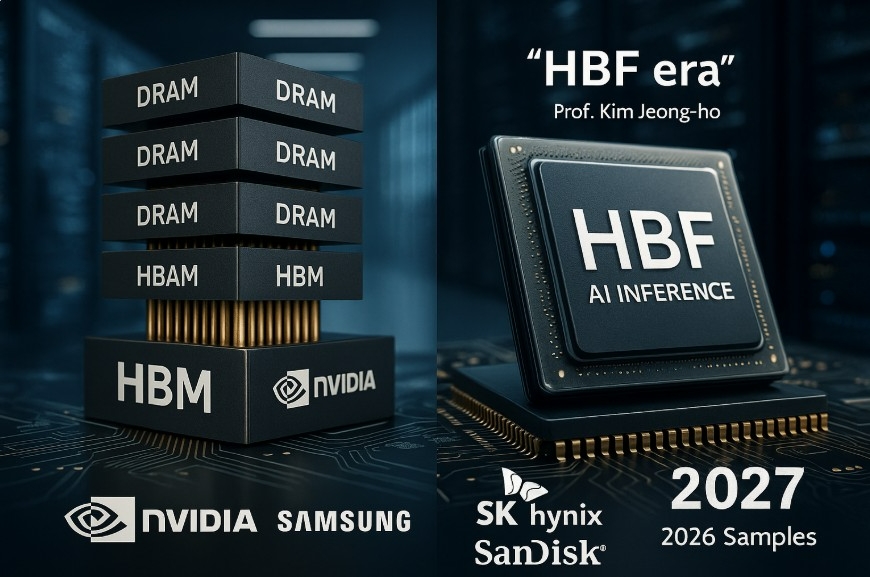
The era of High Bandwidth Memory (HBM) may be drawing to a close, heralding the dawn of High Bandwidth Flash (HBF). This seismic shift in the semiconductor landscape is being predicted by Professor Kim Chong-ho, a distinguished figure in artificial intelligence (AI) chip design, widely recognized as the 'father of HBM'. His forecast has captured the attention of an industry grappling with the insatiable data demands of AI. The analysis suggests that the technological battleground in the AI era is moving from graphics processing units (GPUs) to memory technologies. As AI evolves from discriminative models like AlphaGo to generative and agentic forms, the volume of data required for training is set to skyrocket. Professor Kim posits that this exponential growth in data will necessitate a new class of memory solutions. This transition is not merely theoretical. With HBM4, the sixth generation of High Bandwidth Memory, set for full commercialization by the end of this year, the industry is already looking beyond. Projections place the emergence of HBF as a dominant force around 2030, setting the stage for intense competition among global semiconductor giants.
The Genesis of HBM and the Rise of HBF
Professor Kim Chong-ho, a world-renowned scholar in AI semiconductors, is credited with conceiving the fundamental concepts and architecture of HBM. His foresight dates back to the early 2000s, when he began collaborative research with SK Hynix. This partnership was instrumental in the company's groundbreaking commercialization of HBM in 2013, a feat that positioned South Korea at the forefront of advanced memory technology. The current trajectory of AI, progressing from generative AI capable of creating images and films to more sophisticated agentic and physical AI, underscores the escalating need for data processing power. Professor Kim estimates that AI training data requirements could increase by a thousandfold within the next decade. This surge directly translates into a commensurate demand for memory solutions. In response to these burgeoning needs, HBF is emerging as a critical next step. Unlike HBM, which is built upon DRAM, HBF leverages NAND flash memory. The technology involves stacking NAND flash memory in three dimensions, a complex manufacturing process that presents challenges, particularly in overcoming the endurance limitations of 'write cycles,' which are typically rated for around 100,000 operations.
Geopolitical Maneuvers and Supply Chain Strategies
Recent interactions between Nvidia CEO Jensen Huang and South Korean industry leaders, including meetings with Samsung Electronics and SK Hynix, are being interpreted as strategic moves to secure the supply chain for next-generation memory. Professor Kim suggests that Nvidia's commitment to supplying 260,000 GPUs to South Korea is intrinsically linked to ensuring a stable supply of HBM4. This proactive investment strategy, Professor Kim argues, is crucial for South Korea to maintain its leadership not only in HBM but also in the nascent HBF market. The scale of AI infrastructure development is immense; the estimated investment in cooling, power facilities, and land for just 10 million GPUs in the United States is around 1,000 trillion won, with projections indicating a potential expansion to 100 million units. SK Hynix alone cannot fulfill the projected demand for HBM. Even with contributions from Samsung Electronics, the anticipated tenfold, hundredfold, or even thousandfold increase in demand presents a significant challenge. These factors, combined with competitive marketing dynamics among GPU manufacturers, likely explain Mr. Huang's engagement with multiple South Korean vendors.
The Race for HBF Standardization and Market Share
The burgeoning potential of the HBF market has spurred significant activity among South Korean memory giants, Samsung Electronics and SK Hynix. Both companies are reportedly accelerating their technological development and market-capture strategies, aiming to establish a dominant position in what is being dubbed the 'second HBM.' SK Hynix has already forged a partnership with SanDisk in August, signaling a concerted effort to gain an early advantage in setting HBF standards. This collaboration underscores the intense competition underway, with industry players vying to define the technological specifications and secure market share before the technology fully matures. The broader memory market is also bracing for the HBM4 competition, expected to intensify next year. The landscape is currently dominated by a triumvirate of major players, including Micron, who are engaged in a fierce battle for volume supply. The swift development and strategic alliances in the HBF space suggest that the next few years will be critical in shaping the future of high-performance memory.
Navigating the Future of AI Memory
Professor Kim Chong-ho's pronouncements highlight a critical juncture for the semiconductor industry. The transition from HBM to HBF is not merely an incremental upgrade but a fundamental shift driven by the exponential growth of AI data. The challenge for companies like SK Hynix and Samsung Electronics lies in mastering the intricacies of HBF manufacturing, particularly the endurance of NAND flash, while simultaneously navigating the competitive pressures of the HBM market. The strategic importance of securing memory supply chains has been amplified by the scale of global AI investments. Nvidia's CEO's engagement with South Korean firms underscores the nation's pivotal role in this ecosystem. As AI continues its relentless evolution, the demand for innovative memory solutions will only intensify, making the race to dominate the HBF market a critical determinant of future technological leadership. Ultimately, Professor Kim's vision of an 'HBF era' suggests that the future of AI will be profoundly shaped by advancements in memory technology. The ability to efficiently store, access, and process vast quantities of data will be paramount, positioning HBF as a key enabler of the next wave of artificial intelligence.
The bottom line
- Professor Kim Chong-ho, a pioneer in HBM technology, predicts a significant shift towards HBF by 2030.
- The exponential growth of AI data is the primary driver for this anticipated memory technology evolution.
- South Korean companies SK Hynix and Samsung Electronics are actively developing HBF technology to secure future market leadership.
- Partnerships, such as SK Hynix with SanDisk, are forming to establish HBF standards and gain competitive advantage.
- Nvidia CEO Jensen Huang's recent visits to South Korea are interpreted as efforts to secure supply chains for advanced memory technologies like HBM4.
- The development of HBF involves overcoming technical challenges related to the endurance of stacked NAND flash memory.


NBA 2라운드 대진 확정… OKC-레이커스 신구 황제 대결 성사

Nepal’s Airee Vows Attack as Hosts Seek Revenge Against Oman in Crucial League 2 Clash

Doku's Stoppage-Time Stunner Saves City but Hands Title Advantage to Arsenal