US KC-135 Stratotanker Vanishes Over Strait of Hormuz After Distress Signal
A US Air Force aerial refueling aircraft squawked 7700 before disappearing from radar, as tensions with Iran escalate over the strategic waterway.
KUWAIT —
Key facts
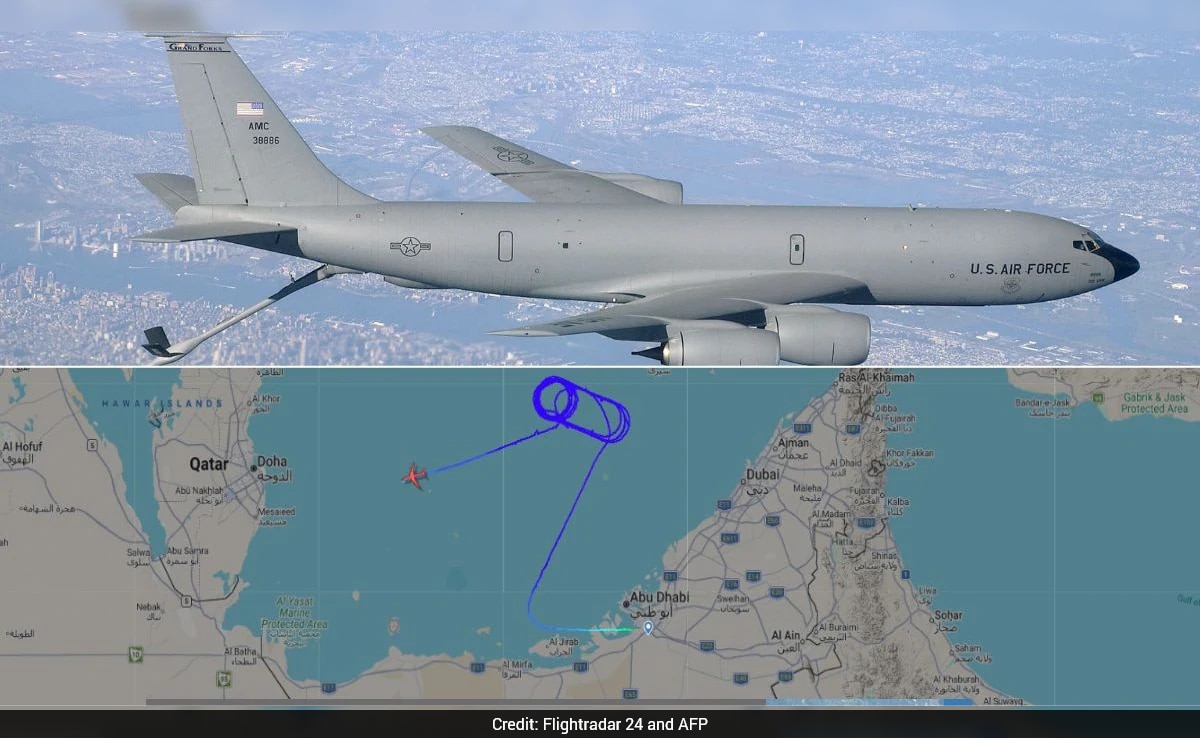
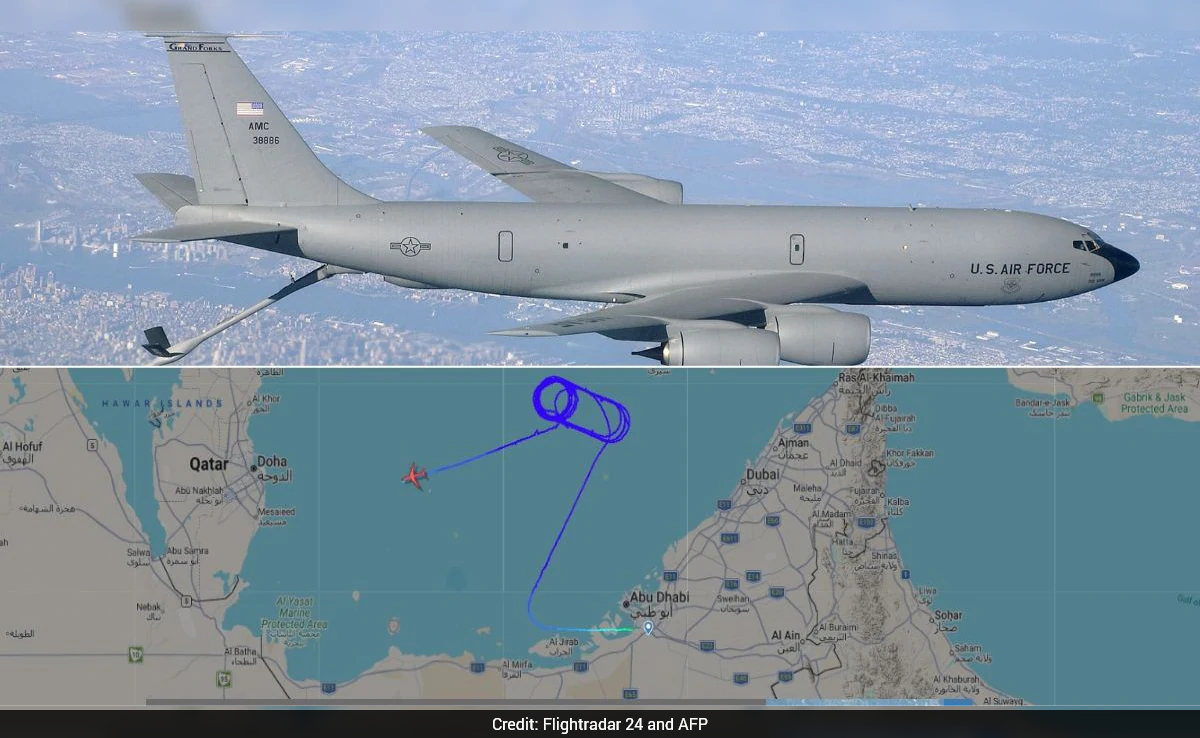
- A Boeing KC-135R Stratotanker issued a 7700 distress signal over the Persian Gulf near Iran on Tuesday.
- The aircraft took off from Al Dhafra Air Base in the UAE and lost transponder signals over Qatar.
- Two H125 light utility helicopters launched from Al Udeid Air Base in Qatar shortly after the signal loss.
- The incident occurred on the second day of Operation Project Freedom, a US-led mission to push commercial vessels through the Strait of Hormuz.
- Iran has controlled the Strait of Hormuz since late February and warned the US to stay out one day before the incident.
- On March 12, a KC-135 crashed in western Iraq after a mid-air collision, killing all six crew members.
- The KC-135 fleet lacks secure beyond-line-of-sight communications, according to defense experts.
- Commercial traffic through the Strait has collapsed more than 90% since the Iran war began.
Emergency Signal and Disappearance
A US Air Force KC-135R Stratotanker, a four-engine aerial refueling aircraft, transmitted a 7700 emergency code while flying over the Strait of Hormuz on Tuesday, according to flight tracking data from Flightradar24. The aircraft, which had taken off from Al Dhafra Air Base in the United Arab Emirates, was conducting refueling operations in support of ongoing military missions. Roughly an hour after the distress signal, the plane's transponder signal was lost as it was seen heading toward Qatar, where US forces operate from forward bases. The 7700 squawk is an internationally recognized signal indicating a serious in-flight emergency, which can be triggered by mechanical failure, fire, medical emergency, or external threat. The exact cause of the emergency remains unclear, and no official link to hostile action has been confirmed. The loss of a transponder signal does not automatically confirm a crash, as military aircraft can intentionally disable transponders for operational or security reasons, but the sequence of events has raised concerns.
Search-and-Rescue Response and Official Silence
Following the signal loss, two H125 light utility helicopters were observed lifting off from Al Udeid Air Base in Qatar, suggesting a search-and-rescue operation was underway. Al Udeid, the US military's primary air hub in the Gulf region, sits roughly 500 kilometers northwest of the Strait. As of publication, US Central Command had not confirmed the incident or issued any statement on the status of the plane. on the disappearance, citing Flightradar24 data, but Tehran has not issued any statement indicating its involvement. The Islamic Resistance in Iraq, an umbrella group of Iran-backed armed factions, previously claimed responsibility for shooting down a KC-135 in western Iraq in March, saying it acted "in defence of our country's sovereignty and airspace." No such claim has been made in connection with Tuesday's incident.
Operation Project Freedom and Escalating Tensions
The disappearance occurred on the second day of Operation Project Freedom, a US-led mission launched by President Donald Trump on May 4 to push commercial vessels through the Strait of Hormuz. Iran, which has controlled the waterway since late February, had warned the United States one day earlier to stay out of the strait. The KC-135 Stratotanker has been operating across the theater since Operation Epic Fury began on February 28. came hours after Iran denied responsibility for a strike that set Fujairah's oil port ablaze on Monday. Iranian Foreign Minister Abbas Araghchi called Project Freedom "Project Deadlock," warning Washington and Abu Dhabi against being "dragged back into quagmire." The Strait carries roughly 20% of the world's seaborne oil supply, and commercial traffic through the waterway has collapsed more than 90% since the Iran war began. Prediction markets place the odds of a full reopening before June at below 40%.
Vulnerabilities of the KC-135 Fleet
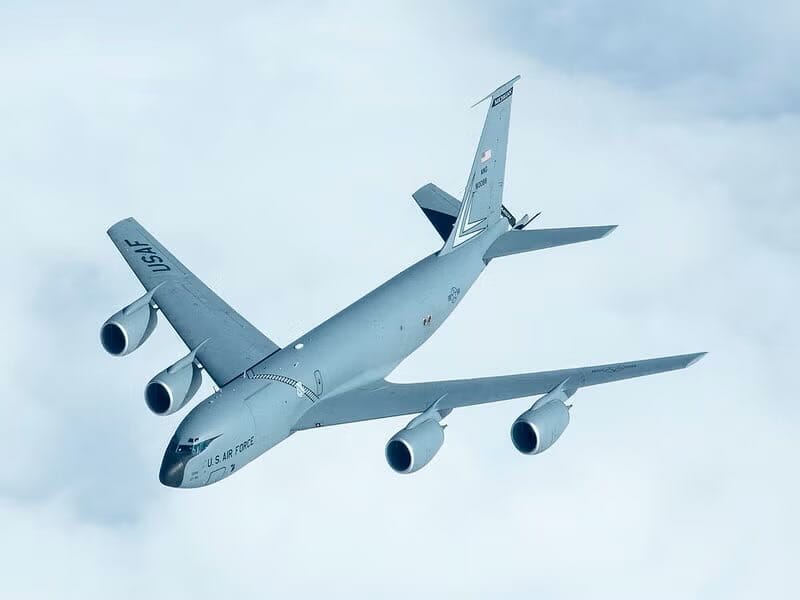
The KC-135 Stratotanker, based on Boeing's 367-80 design that also led to the commercial Boeing 707, has been in service for more than 60 years. It serves as a flying gas station, transferring fuel to fighter jets, bombers, and other military aircraft mid-air, allowing them to stay airborne longer and travel greater distances. Hundreds of KC-135s remain in service with the US Air Force, Air National Guard, and Air Force Reserve. Defense experts have repeatedly flagged the KC-135 fleet's limited battlefield connectivity as a liability in contested zones. As reported in March, the aircraft largely lacks secure beyond-line-of-sight communications, leaving crews with limited situational awareness of threats in the area. The US military has already lost multiple tankers during the current conflict, including a KC-135 that went down over western Iraq on March 12 following a mid-air collision with a second tanker in friendly airspace, killing all six crew members.
Open Questions and Strategic Implications
The fate of the KC-135 and its crew remains unknown, with no official confirmation of a crash or recovery. The combination of a 7700 emergency code followed by signal disappearance raises the possibility of a serious incident, but the lack of a statement from US Central Command leaves room for alternative explanations, including intentional transponder deactivation for operational security. The incident underscores the high stakes in the Strait of Hormuz, where US and Iranian forces are in direct proximity. The collapse of commercial traffic and the launch of Operation Project Freedom have heightened the risk of miscalculation or escalation. As the US military continues its operations, the vulnerability of its aging tanker fleet in contested airspace remains a critical concern.
The bottom line
- A US Air Force KC-135R Stratotanker issued a 7700 distress signal over the Strait of Hormuz and then disappeared from radar.
- Two H125 helicopters launched from Qatar in a likely search-and-rescue response, but US Central Command has not confirmed the incident.
- The incident occurred amid Operation Project Freedom, a US mission to reopen the Strait of Hormuz, which Iran controls.
- The KC-135 fleet has known communications vulnerabilities and has already suffered losses in the current conflict.
- Commercial traffic through the Strait has dropped over 90%, and prediction markets see low odds of reopening before June.
- Iran has denied involvement and warned the US against escalation, but no official cause for the emergency has been established.




Twin Seismic Readings Stir Kuwait as 4.4-Magnitude Quake Strikes Al-Manaqish

Magnitude 2.7 Earthquake Rattles Southeast Michigan, Second in Two Weeks

US Embassy Warns Citizens in UK to Avoid Schools and Churches as Threat Level Raised to ‘Severe’
