Latvia Grapples with Drone Incursions After Border Incidents
Following recent incursions, officials debate the nation's air defense capabilities and seek to emulate Ukraine's drone countermeasures.
LATVIA —
Key facts
- Multiple unmanned aerial vehicles entered Latvian airspace from Russia on May 8.
- At least one drone crashed in Rēzekne, damaging an oil product storage facility.
- A second drone is believed to have crashed and is currently being searched for in the Rēzekne municipality.
- Latvia's Defense Ministry's claims of national strength in drone defense are being questioned.
- Economy Minister Viktors Valainis advocates for rapid adoption of drone interception capabilities.
- Valainis proposes Latvia follow Ukraine's example in building drone defense walls.
- Gulf states are reportedly collaborating with Ukraine on drone interception technology.
Unmanned Aerial Vehicles Breach Latvian Airspace
Latvian skies were breached by multiple unmanned aerial vehicles originating from Russia early on May 8. The incursions culminated in at least one drone crashing in Rēzekne, causing damage to a facility storing oil products. A second drone is also believed to have fallen and is the subject of an ongoing search in the Rēzekne municipality. These events have ignited a debate within Latvia about the nation's preparedness and capabilities in the face of aerial threats. The incidents have cast doubt on official assertions regarding Latvia's strength in drone defense. Māris Andžāns, director of the Centre for Geopolitical Studies, stated in an interview that the repeated incidents in Latgale undermine the Defense Ministry's claims of national prowess in this domain. He characterized pronouncements about Latvia being a "drone superpower" or part of a "drone coalition" as significant exaggerations, noting that observers have voiced similar concerns previously. The timing of official warnings has also drawn criticism. Prime Minister Siliņa expressed dissatisfaction that a warning regarding the drone incident was issued only after the event had already occurred. Rēzekne's mayor, Jānis Tutins, has provided detailed accounts of the experience during the drone incident in his city.
Calls to Emulate Ukraine's Drone Defense Strategy
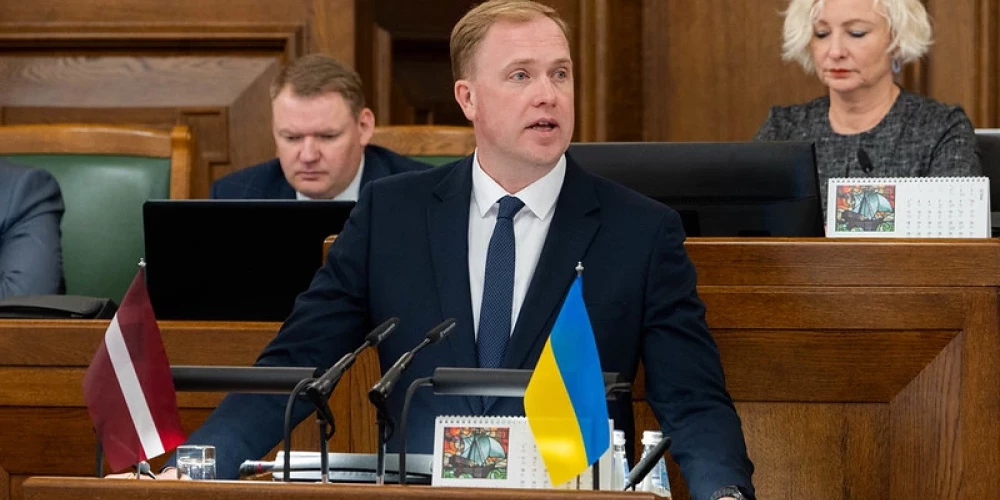
In the wake of the Rēzekne drone incident, Economy Minister Viktors Valainis has strongly urged Latvia to swiftly adopt Ukraine's model for establishing drone defense walls. Speaking in the Saeima, Valainis emphasized the urgent need to "very rapidly increase our capabilities to shoot down drones that fly into the country." Valainis recounted a recent visit to Ukraine, where he conveyed gratitude from Ukrainian colleagues for Latvia's support. During his visit, he observed Ukraine's advancements in drone wall construction and their methods for intercepting these aircraft. "We need to follow that [Ukrainian] example as quickly as possible," he stated. He pointed to the cooperation between Gulf states and Ukraine as a model. "Why are the [Persian] Gulf states directly making agreements with Ukraine?! They are not trying to reinvent the wheel themselves, but these states have directly agreed for Ukraine to help them shoot down drones. And as we see – they are doing it very successfully," Valainis remarked. He reiterated that Latvia should not attempt to "reinvent the wheel" but instead collaborate with Ukraine on building its drone defense infrastructure.
Economic Viability and Security Concerns
The economic feasibility of implementing such drone defense measures is not a significant barrier.costs presented to him were within the realm of near-term implementation. "The costs we were informed about were not such that we cannot implement them in the near future," Valainis asserted. He linked the speed of adoption to national security. "The sooner we implement them and adopt Ukraine's experience – the safer we will feel," the minister stressed. The objective is to enhance Latvia's security posture by leveraging proven technologies and strategies developed in a conflict zone. Valainis's remarks suggest a pragmatic approach, prioritizing the adoption of effective solutions over independent development. This perspective aligns with a broader strategy of international cooperation in defense, particularly with nations possessing direct experience in countering modern aerial threats.
Broader Context of Regional Security
The drone incursions come at a time of heightened geopolitical tension in the Baltic region. Latvia, a NATO member bordering Russia and Belarus, has been increasingly vocal about security threats. The presence of unmanned aerial vehicles, particularly those originating from Russia, is a stark reminder of the volatile security environment. Discussions surrounding comprehensive defense concepts are gaining traction. A conference titled "Comprehensive Defense Concept: Strategic Communication for Societal Resilience" is scheduled for Friday, May 8. This event will feature Ukrainian National Guard "Azov" soldiers sharing their experiences in strengthening societal resilience and evaluating lessons learned for Latvia. The conference will be opened by Zanda Kalniņa-Lukaševica, Deputy Speaker of the Saeima, and Ainars Latkovskis, Chairman of the National Security Commission. Adding a layer of complexity, Russian propaganda sources reportedly disseminated disinformation regarding drone flights even before the events in Rēzekne unfolded. This suggests a potential information warfare component accompanying the physical incursions, complicating the assessment of the situation and public perception.
Investigating the Drone Incidents
Investigations into the drone incidents are underway, with collaboration involving Ukrainian services. Ainars Latkovskis, head of the National Security Commission, indicated that multiple theories are being considered regarding the origin and nature of the drone incidents. The commission is actively assessing the situation to draw conclusions about the drones' provenance, though he noted that it is still too early to make definitive judgments. One theory suggests that the Rēzekne oil base might have been mistaken for a target due to a misunderstanding. This possibility was raised by a former State Secretary of the Ministry of Defense. The exact circumstances leading to the drone's trajectory and impact remain under scrutiny. Reports indicate that at least three drone incidents have been registered in Latvian airspace. The ongoing search for the second drone highlights the challenges in fully accounting for all airborne objects that enter the country's territory. The lack of immediate clarity fuels public concern and underscores the need for robust air defense systems.
The bottom line
- Latvia faces immediate security challenges following Russian drone incursions into its airspace.
- The incidents have exposed perceived weaknesses in Latvia's current drone defense capabilities.
- There is a strong political push to rapidly enhance drone interception technology and strategy.
- Ukraine's combat-tested experience in drone warfare is seen as a crucial model for Latvia.
- International cooperation, particularly with Ukraine, is considered vital for bolstering national security.
- The events are occurring within a broader context of increased geopolitical tensions and potential information warfare.
:format(webp)/nginx/o/2025/07/17/17008907t1h22b7.jpg)

Latvian Competition Authority Fines Jura Distributors Over €500,000 for Price Fixing

Prince William and Kate Introduce New Family Member, Otto

Latvian Theatre Tapes Phones to Combat Unauthorized Filming