Latvian film legend Jānis Streičs buried in Latgale after two-month farewell journey
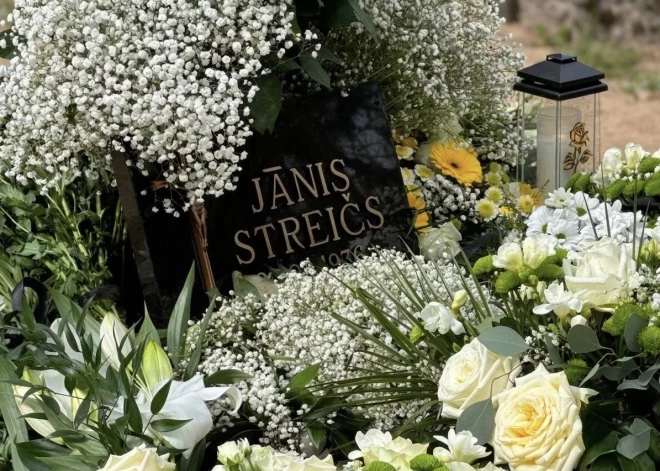
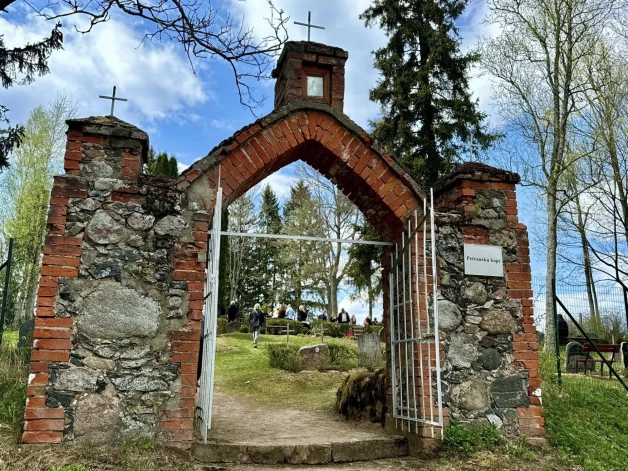
The director of 'Limousine in the Colour of Midsummer's Night' was laid to rest beside his mother and grandmother in Petrauski cemetery on May 3.

LATVIA —
Key facts
- Jānis Streičs died on March 5, 2026, in Lithuania at age 89.
- He was buried on May 3 in Petrauski cemetery, Riebiņi parish, Preiļi municipality.
- Streičs directed over 20 feature films and wrote scripts for nearly half of them.
- His 1981 film 'Limuzīns Jāņu nakts krāsā' is in the Latvian Cultural Canon.
- He won the main prize at the Sanremo International Festival of Author Films and the Vatican's Beato Angelico prize for Europe for 'Cilvēka bērns'.
- Streičs received the Lielais Kristaps award three times for Best Film and a lifetime achievement award.
- He was awarded the Order of the Three Stars, third class, in 1998.
- Streičs was an honorary member of the Latvian Academy of Sciences and an honorary citizen of Preiļi, Rēzekne, and Veisiejai.
A final homecoming to Latgale
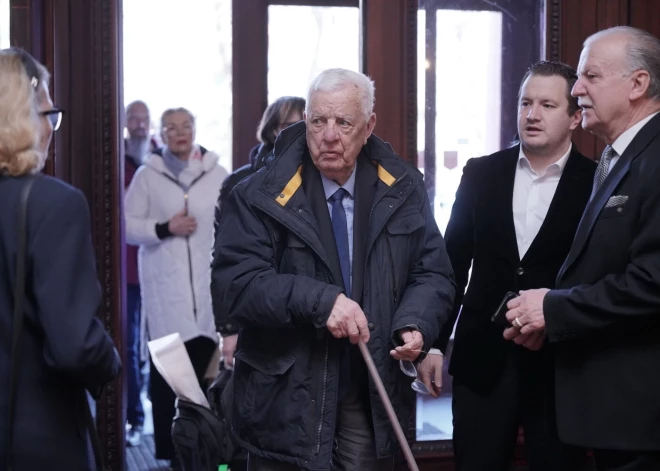
On Sunday, May 3, the legendary film director Jānis Streičs was laid to rest in Petrauski cemetery in Riebiņi parish, Preiļi municipality, ending a two-month memorial journey that began with his death in Lithuania. The Preiļi municipal government announced that the director had returned home, to be buried next to his mother and grandmother. 'May he rest in peace in his native Latgale soil,' the statement read. Streičs died on March 5 at the age of 89 in Lithuania, where he had lived in recent years. A private family farewell took place in Lithuania on March 8, followed by cremation the next day. A public memorial service was held on March 22 at the Great Hall of the Riga Latvian Society House, attended by several hundred people.
From rural beginnings to cinematic mastery
Born on September 26, 1936, in the 'Anspoki' homestead of Preiļi parish, Streičs spent his early childhood in Kurzeme near Sabile before his family returned to Preiļi parish in January 1941. After graduating from Rēzekne Pedagogical School and completing three years of military service in the Voronezh region, he enrolled in the Directing Department of the Theatre Faculty at the Latvian Conservatory, graduating in 1963. That same year, he began working at the Riga Film Studio, where he remained until 1991. Over his career, Streičs directed more than 20 feature films and wrote or co-wrote the scripts for nearly half of them. His 1981 film 'Limuzīns Jāņu nakts krāsā' (Limousine in the Colour of Midsummer's Night) was included in the Latvian Cultural Canon. His film 'Cilvēka bērns' (Child of Man) won the main prize at the Sanremo International Festival of Author Films and the Vatican's Beato Angelico prize for Europe, making him the first Latvian to receive that honour. He won the Lielais Kristaps award three times for Best Film of the Year and later received a lifetime achievement award.
A public figure and advocate for democracy
Beyond filmmaking, Streičs was a prominent public figure. In 1986, during a congress of the USSR Union of Cinematographers in Moscow, he delivered a speech that helped pave the way for the first democratic elections within creative unions. He served as chairman of the Latvian Union of Cinematographers and as chairman of the Riga Latvian Society. He was also an honorary member of the Latvian Academy of Sciences. In 1998, he was awarded the Order of the Three Stars, third class. The Latvian President, in a social media post, expressed grief alongside the director's family and admirers, writing: 'Theatre, Limousine in the Colour of Midsummer's Night, Child of Man. That is all Jānis Streičs, and he will remain with us.'
Years in Lithuania and cross-border cultural ties
In his later years, Streičs lived in Veisiejai, Lithuania, where he continued to paint and fostered collaboration between Latvian and Lithuanian artists. He was named an honorary citizen of Preiļi, Rēzekne, and Veisiejai. His burial in Petrauski cemetery, beside his mother and grandmother, fulfilled his symbolic return to the land of his birth. The director's death and funeral drew attention from across the Baltic region, reflecting his stature as one of the most significant figures in Latvian cinema and culture.
Commemorative events planned for his 90th jubilee
According to the National Film Centre, various tribute events are planned this year to mark what would have been Streičs's 90th birthday. The first such event was already scheduled before his death: a screening of his 1997 film 'Likteņdzirnas' (The Mill of Fate) at the Splendid Palace cinema on March 11, as part of the film lecture series 'Tas, ko tu nedrīksti nezināt' (What You Must Not Know). The screening went ahead as planned, serving as an early memorial. Further events are expected to honour his legacy throughout the year, ensuring that his contributions to Latvian and European cinema are remembered.
The bottom line
- Jānis Streičs, one of Latvia's most influential film directors, died on March 5, 2026, at age 89 and was buried on May 3 in his native Latgale.
- His film 'Limuzīns Jāņu nakts krāsā' is a cornerstone of Latvian cultural heritage, and 'Cilvēka bērns' earned international recognition from Sanremo and the Vatican.
- Streičs played a key role in Latvia's democratic movement, advocating for free elections in creative unions during the Soviet era.
- He lived his final years in Lithuania, promoting cross-border artistic cooperation, and was honoured by multiple municipalities.
- A series of tribute events, including a film screening, are underway in 2026 to commemorate his 90th birthday and lasting impact.

Latvia's Night Alert: Drone Scare Exposes Gaps in Public Warning System

Estonian Hockey Team Crushes Spain 12-2 in World Championship Opener

Latvia Marks 36 Years Since Independence Declaration Amid Renewed Unity Calls