Nigeria’s Senate Rewrites Rules to Block First-Term Lawmakers and Ex-Governors from Top Posts
In a pre-emptive move, the upper chamber amends its standing orders to restrict presiding and principal offices to senators with at least two consecutive terms, reshaping the race for the 11th Assembly leadership.

NIGERIA —
Key facts
- Senate amended Orders 4 and 5 of its Standing Rules on Tuesday after a three-hour closed-door session.
- Order 4 establishes a six-tier ranking hierarchy for presiding officers, topped by former Senate Presidents.
- Order 5 requires at least two consecutive terms immediately preceding nomination for any principal office.
- At least 10 of Nigeria’s 36 state governors are in their second and final terms, eyeing Senate seats in 2027.
- Deputy Senate Leader Lola Ashiru (APC-Kwara) presented the motion that led to the rule changes.
- The 11th National Assembly is set to be inaugurated one year from now.
A Pre-emptive Strike on the 2027 Senate Race
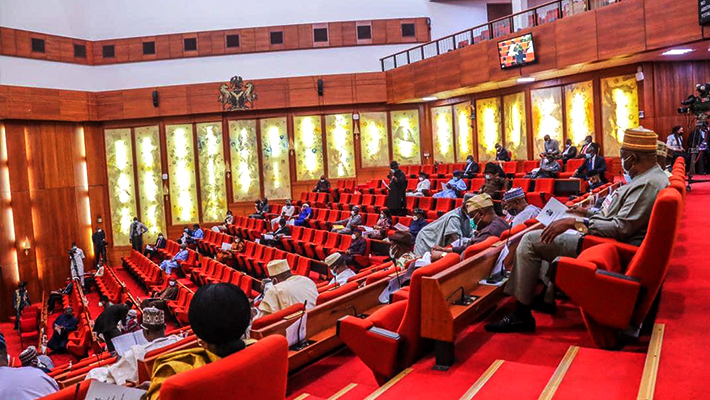
Nigeria’s Senate has moved to tighten its internal rules, effectively narrowing the path to its most powerful offices and edging out a class of incoming lawmakers, including serving governors and former senators eyeing leadership positions. Barely a year before the inauguration of the 11th National Assembly, the red chamber amended Orders 4 and 5 of its Standing Rules after about three hours behind closed doors on Tuesday. The changes restrict eligibility for both presiding and principal offices to ranking lawmakers with defined legislative experience, a move widely seen as pre-emptive.
New Hierarchy for Presiding Officers
Under Revised Order 4, the Senate reinforced a strict hierarchy for the emergence of presiding officers—the Senate President and Deputy Senate President. The order states that nominations shall be in accordance with ranking, listed as: (i) former President of the Senate, (ii) former Deputy President of the Senate, (iii) former Principal Officers of the Senate, (iv) senators who have served at least one term of four years, (v) senators who have been members of the House of Representatives, and (vi) in the absence of i to v, senators elected for the first time. This ranking structure effectively prioritizes experience and seniority.
Two-Term Requirement for Principal Offices
Beyond the ranking system, the Senate introduced a more stringent provision in Order 5, effectively excluding first-time and non-consecutive lawmakers from contesting principal offices. The amended rule reads: “Any senator shall not be eligible to contest for any principal office of the Senate unless he has served as a senator for at least two consecutive terms immediately preceding nomination.” The implication is far-reaching: senators-elect who were not members of both the 9th and 10th National Assembly would be ineligible to vie for key leadership roles in the 11th Assembly. Principal offices include Senate Leader, Deputy Senate Leader, Chief Whip, Deputy Whip, Minority Leader, Deputy Minority Leader, Minority Whip, and Deputy Minority Whip.
Governors and Heavyweights in the Crosshairs
The rule changes come against the backdrop of an intensifying scramble for Senate seats ahead of the 2027 general elections, driven largely by governors completing their constitutionally allowed two terms. No fewer than 10 state governors and several former governors are already angling to secure senatorial tickets, leveraging their influence over party structures to emerge as consensus candidates. At least 12 of the 36 state governors are in their second and final terms, with 10 set to complete their tenure by May 29, 2027. Eight of the affected governors are from the ruling All Progressives Congress, while Oyo State Governor Seyi Makinde belongs to the Peoples Democratic Party, and Bauchi State Governor Bala Mohammed is aligned with the Allied Peoples Movement.
Motion and Rationale Behind the Amendments
The motion to amend the rules was presented by Deputy Senate Leader Lola Ashiru (APC-Kwara) at plenary on Tuesday, following the closed-door session. The Senate stated that the move is intended to strengthen adherence to the tradition of ranking within the legislative chamber. By reinforcing parliamentary hierarchy and experience, the chamber aims to ensure that only seasoned lawmakers ascend to leadership positions. The decision has sparked debate about its implications for democratic representation and the concentration of power among a select group of incumbents.
What Comes Next for the 11th Assembly
With the new rules in place, only senators currently serving in the 10th Assembly who secure re-election into the 11th Senate will qualify to vie for the Senate presidency and other principal positions. This narrows the field of contenders significantly, as many potential candidates—including outgoing governors and first-time senators-elect—are now effectively barred. The 11th National Assembly is set to be inaugurated one year from now, and the political maneuvering is expected to intensify as parties finalize their candidates. The amendments may also face legal challenges or pushback from those excluded, though no immediate opposition has been reported.
The bottom line
- The Senate amended Orders 4 and 5 to restrict top leadership posts to senators with at least two consecutive terms, effectively barring first-term lawmakers and ex-governors.
- The ranking hierarchy for presiding officers prioritizes former Senate Presidents, Deputy Presidents, and principal officers over first-time senators.
- At least 10 outgoing governors are eyeing Senate seats in 2027, but the new rules prevent them from immediately contesting for leadership roles.
- Deputy Senate Leader Lola Ashiru sponsored the motion, which passed after a three-hour closed-door session.
- The changes aim to reinforce legislative experience and hierarchy but may limit democratic competition within the chamber.
- The 11th Assembly inauguration is one year away; the rule shift reshapes the leadership race and could trigger political realignments.


Knicks vs 76ers: Embiid's Return Fuels Playoff Showdown at MSG
Hearts Stun Rangers 2-1 to Restore Three-Point Premiership Lead

Lakers Face 15.5-Point Spread, Largest of LeBron's Career, as Thunder Host Game 1 Without Doncic
