Nigerian Senate Reverses Controversial Standing Orders After Oshiomhole's Rebuke
Lawmakers rescind rule changes that clashed with the constitution, following sharp criticism from a prominent senator.
NIGERIA —
Key facts
- Nigerian Senate rescinded amendments to its Standing Orders 2026 on Thursday.
- The amendments were deemed inconsistent with the 1999 Constitution.
- Senator Adams Oshiomhole called for Senate President Godswill Akpabio's resignation over the changes.
- The reversed clause required senators-elect to elect presiding officers before taking their oath.
- Imo State Governor Hope Uzodimma is seeking a Senate seat, potentially for the Senate Presidency.
- Senate Leader Opeyemi Bamidele moved the motion for rescission, citing constitutional conflicts.
- Deputy Senate President Jibrin Barau presided over the session.
- The reversal restores the previous procedure allowing election of presiding officers before oath-taking.
Senate Reverses Rule Changes Amidst Constitutional Concerns
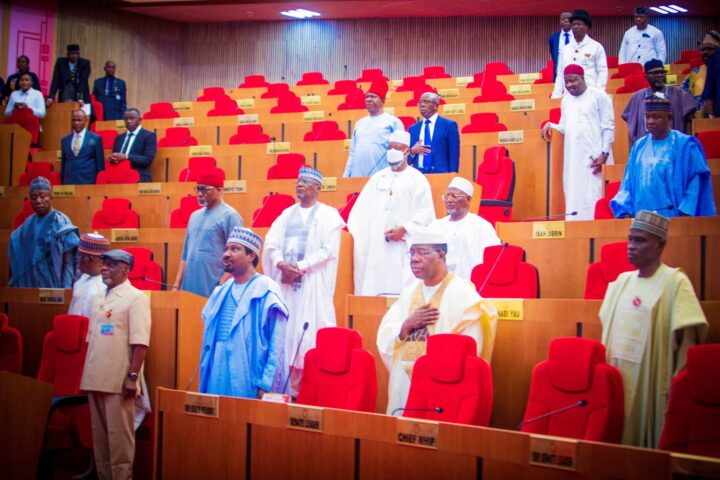
The Nigerian Senate on Thursday moved to reverse controversial amendments to its Standing Orders 2026. This decision followed concerns raised by lawmakers that certain provisions within the updated rules were incompatible with the nation's 1999 Constitution. The reversal occurred just days after the upper legislative chamber had initially altered its rules, a move that had already ignited significant debate and sharp exchanges among senators. The amendments had been introduced amid a burgeoning interest from outgoing governors and other political heavyweights keen on securing Senate seats in 2027. Many are reportedly positioning themselves for top leadership roles within the Senate, such as the Senate President and Deputy Senate President positions. This influx of experienced politicians is seen as a strategic move to leverage their influence for future political ambitions. at least 10 current governors and several former governors are actively seeking senatorial tickets. They are reportedly using their sway over party structures to emerge as consensus candidates in their respective states. Among them, Imo State Governor Hope Uzodimma, whose second term concludes in January 2028, has already obtained the necessary forms to contest for a Senate seat, with speculation rife that he may be eyeing the Senate Presidency.
Oshiomhole's Outburst Triggers Scrutiny
The controversial amendments drew particularly sharp rebuke from Senator Adams Oshiomhole, representing Edo North. Oshiomhole publicly called for the resignation of Senate President Godswill Akpabio over the rule changes. His strong stance amplified the existing concerns and brought the issue to a head during plenary sessions. During a subsequent session, Senate Leader Opeyemi Bamidele moved the motion for the rescission. He explained that a fresh legislative and constitutional review had revealed potential conflicts between the new provisions, specifically under Order 2 Subsection 2 and Order 3 Subsection 1, and Section 52 of the Constitution. Bamidele emphasized the Senate's inherent parliamentary authority to revisit and reverse prior decisions when necessary to uphold the integrity of its proceedings and legislative framework. Bamidele stated, "The Senate possesses the inherent parliamentary authority to revisit, rescind and recommit any matter previously decided upon in order to preserve the integrity of its proceedings and legislative framework." Following his motion, the chamber resolved to "rescind its earlier decisions relating to the amendments made to Order 2 Subsection 2 and Order 3 Subsection 1 of the Senate Standing Orders 2026."
Altered Procedures and Constitutional Alignment
The rescinded clause specifically altered a long-standing parliamentary procedure by mandating that senators-elect elect the Senate President and Deputy Senate President before taking their oath of office. This provision, introduced under the amended Order 2(2) and Order 3(1) of the Standing Orders, was intended to regulate the initial sitting of a new Senate. Under the original amendments, the Clerk to the National Assembly was required to administer oaths of allegiance and membership after roll call and confirmation of election writs. Crucially, Order 3(1) stipulated that a senator-elect "shall not participate in any proceedings of the Senate, including voting for the election of the President and Deputy President of the Senate, unless and until he has taken the Oaths." This effectively made oath-taking a prerequisite for participating in the election of presiding officers. With the reversal, the Senate has reverted to its previous parliamentary procedure. Senators-elect can now elect their presiding officers before they formally take their oath of office, aligning the process with established constitutional provisions and legislative practices.
Debate and Recommitment of Rules
The motion for rescission and recommittal was seconded by Senator Enyinnaya Abaribe, representing Abia South. Presiding over the session, Deputy Senate President Jibrin Barau endorsed the motion, describing it as a necessary step to ensure the Senate's rules remained in conformity with the Constitution. He commended the Senate Leader for his vigilance in identifying the potential constitutional inconsistencies. "This is a very straightforward motion — it’s just for us to go in conformity with the Constitution," Barau remarked. He added, "I thank the Leader for being observant and up to his game as the Leader of the Senate by making this observation. It is something that is very clear, and we don’t need any debate in respect of this." Following the session, Adams Oshiomhole commented on the reversal, stating, "This shows that when there are amendments, the next time, we should allow debate. That’s it." This remark followed his earlier clash with Senate President Godswill Akpabio over the amendments the previous Wednesday. Senate Leader Bamidele had, in response to Oshiomhole's earlier concerns, accused the Edo North senator of causing "unnecessary drama" on the Senate floor.
Broader Political Maneuvering and Future Implications
The controversy surrounding the Standing Orders highlights the intense political maneuvering underway as the 2027 general elections approach. The Senate, as a key legislative body, is a focal point for politicians seeking to consolidate power and influence. The influx of outgoing governors and political heavyweights into the Senate is a significant trend, signaling a potential shift in the chamber's dynamics. Governor Uzodimma's bid for a Senate seat, with the Senate Presidency as a potential target, exemplifies this trend. His move, alongside those of other governors, underscores the strategic importance of the Senate in national politics and the ambition to occupy high-profile leadership positions. The Senate's rules and procedures, therefore, become critical battlegrounds for asserting influence and shaping future legislative agendas. The reversal of the amendments, while resolving an immediate constitutional conflict, also serves as a reminder of the ongoing debates surrounding legislative procedures and their alignment with the broader constitutional framework. It underscores the delicate balance between parliamentary autonomy and adherence to the supreme law of the land, particularly in a period of heightened political transition and ambition.
The bottom line
- The Nigerian Senate has reversed recent amendments to its Standing Orders 2026 due to constitutional inconsistencies.
- Senator Adams Oshiomhole's strong criticism of Senate President Godswill Akpabio over the rule changes played a significant role in the reversal.
- The rescinded clause mandated senators-elect to choose presiding officers before taking their oath, a departure from established practice.
- The move to amend rules occurred amid significant political jockeying by outgoing governors and political figures aiming for Senate leadership roles in 2027.
- Senate Leader Opeyemi Bamidele moved the motion to rescind, citing the need to align Senate rules with Section 52 of the 1999 Constitution.
- The Senate has reverted to its previous procedure, allowing presiding officers to be elected before senators-elect are sworn in.


)
Dembélé Surges to Ballon d'Or Favouritism After PSG's Champions League Triumph

Wike Accuses Rivers Governor of Betraying Peace Deal
Israel Deployed Iron Dome in UAE During Iran War, Intercepted Missile