Cruise Ship with Hantavirus Outbreak to Sail to Canary Islands as Spain Cites Moral Obligation
Three dead, two crew members critically ill, and 149 passengers from 23 countries remain aboard the MV Hondius under strict quarantine.
NIGERIA —
Key facts
- Three people have died: a Dutch woman (confirmed hantavirus), her husband (unconfirmed), and a German national (unconfirmed).
- Two confirmed hantavirus cases: the Dutch woman and a 69-year-old UK national evacuated to South Africa.
- Five suspected cases remain under investigation; one person has mild fever.
- The ship's doctor, a Dutch national, is gravely ill and scheduled for medical evacuation.
- The MV Hondius will dock in Gran Canaria or Tenerife within three to four days.
- Spain's health ministry approved the docking, citing moral and legal obligation.
- The Andes strain of hantavirus, capable of human-to-human transmission, has been identified.
- Cape Verde denied docking, unable to handle the outbreak.
Deadly Outbreak Prompts Emergency Evacuation
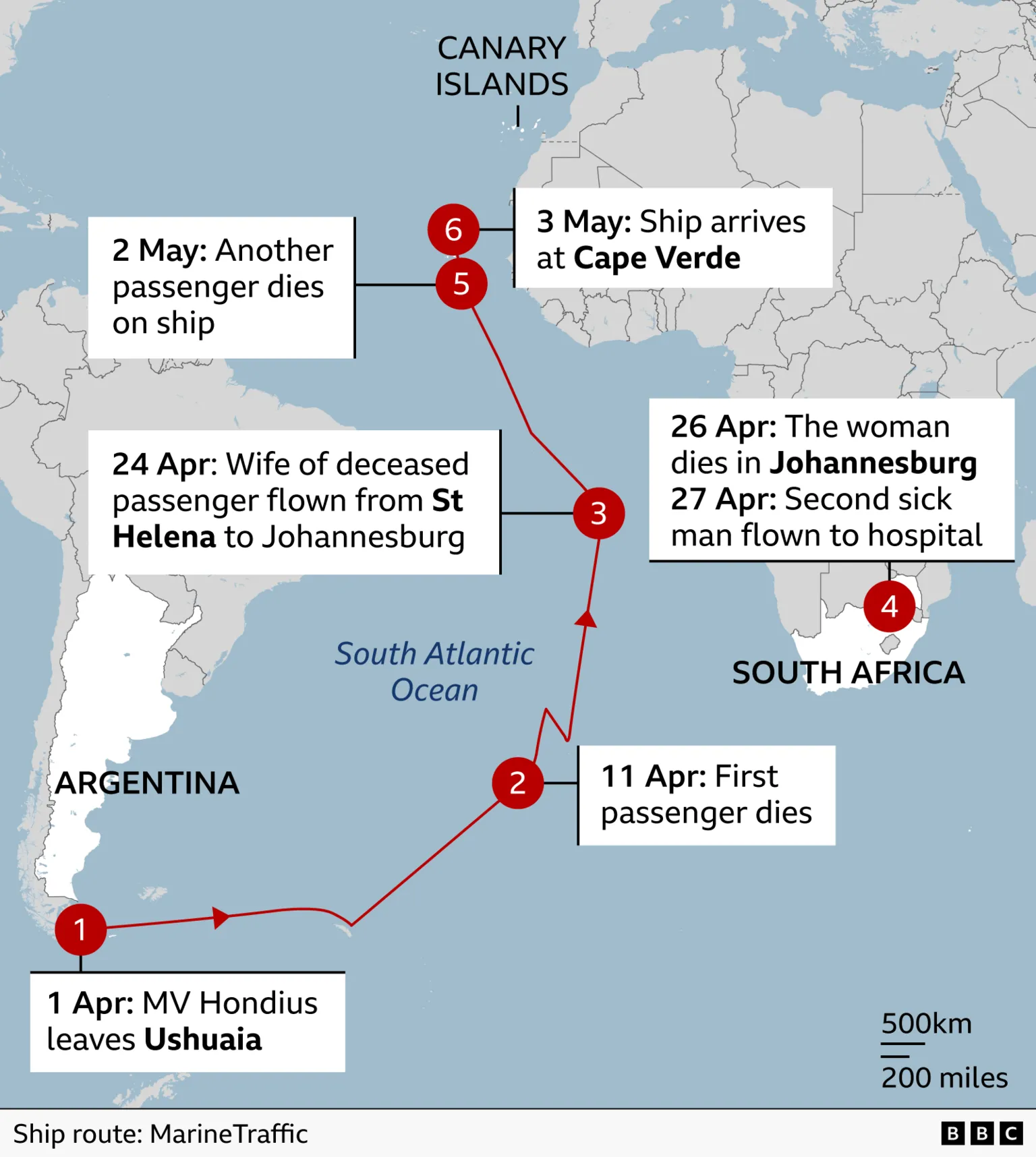
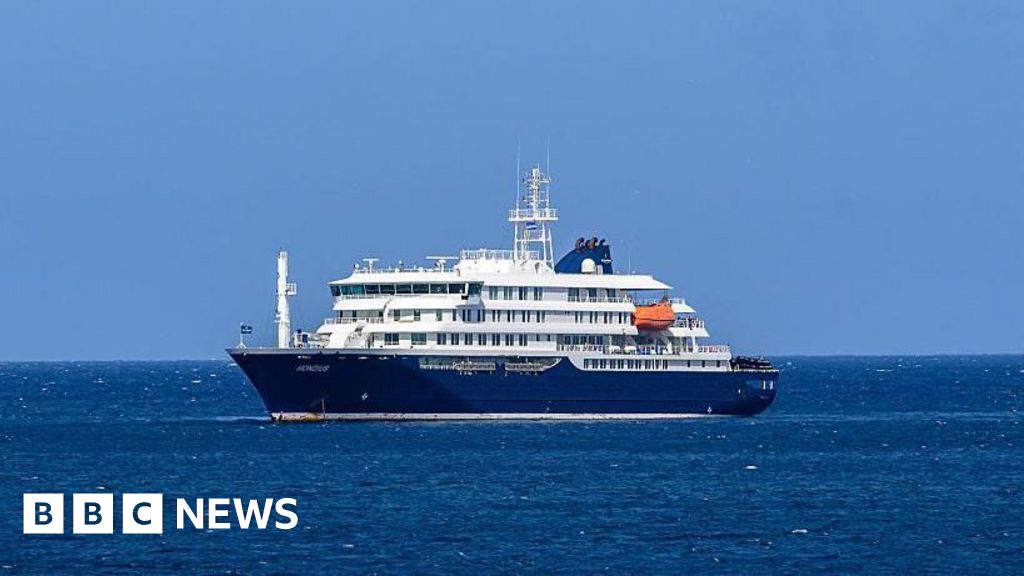
A Dutch cruise ship, the MV Hondius, is sailing toward the Canary Islands after a hantavirus outbreak killed three people and left two crew members critically ill. Spain's Ministry of Health granted permission late Tuesday, stating that Cape Verde, where the ship was anchored, lacked the capacity to handle the situation. "The Canary Islands are the closest location with the necessary capabilities," the ministry said in a statement. "Spain has a moral and legal obligation to assist these people, among whom are also several Spanish citizens." The ship, operated by Oceanwide Expeditions, set sail from Argentina about a month ago. Since the outbreak began in early April, three passengers have died: a Dutch woman, her husband, and a German national. The Dutch woman is a confirmed hantavirus case; her husband and the German are not confirmed, though the German died on May 2.
Evacuations Underway for Critically Ill Crew and Passengers
Two crew members, including the ship's British doctor, require urgent medical care and were scheduled for evacuation via a hospital aircraft to the Canary Islands on Tuesday. A third person linked to the deceased German national was also to be evacuated. The Dutch government confirmed it is preparing to receive evacuated passengers. A 69-year-old British national, previously evacuated to South Africa, remains in intensive care with a confirmed hantavirus infection. South Africa's health ministry identified the Andes strain of hantavirus in the two confirmed cases. This strain is known to cause human-to-human transmission among close contacts, raising concerns about further spread aboard the ship.
Strict Quarantine Measures on Board
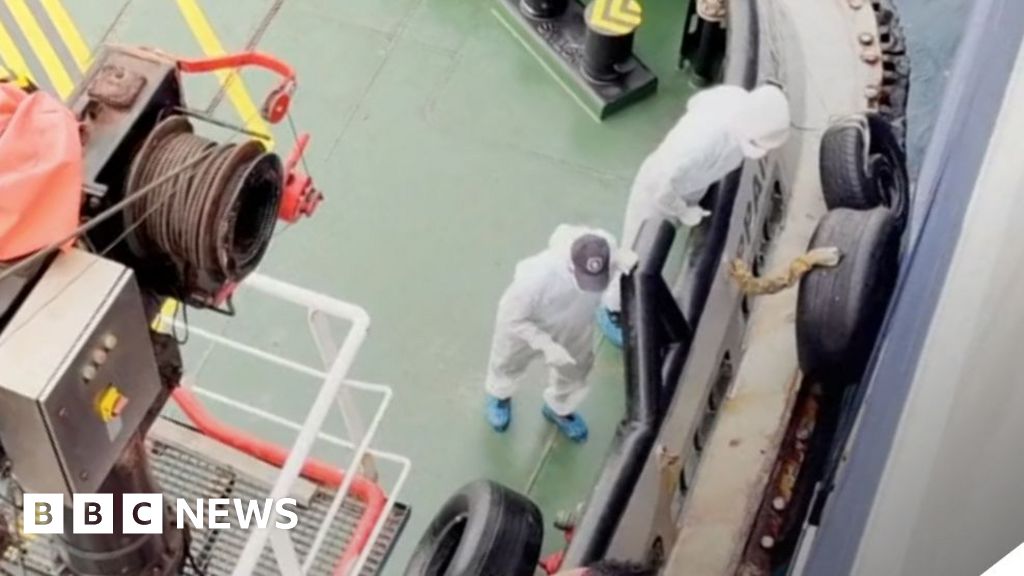
Of the 149 people from 23 countries still aboard, 22 are British nationals besides the doctor. Oceanwide Expeditions said all remaining passengers and crew are under "strict precautionary measures." The company plans to sail to Gran Canaria or Tenerife, a journey expected to take three to four days. Spain's health ministry noted the exact port had not yet been decided. Upon arrival, passengers will be examined, treated, and repatriated to their respective countries. The ministry will coordinate with the European Centre for Disease Prevention and Control and the WHO. All necessary safety measures will be taken, including medical care in special facilities and vehicles to avoid contact with the local population and protect health workers.
Hantavirus: Rare Rodent-Borne Disease with Human Transmission Risk
Hantavirus is a rare viral disease typically spread through contact with infected rodents' urine, droppings, or saliva. The Andes strain, identified in this outbreak, is exceptional because it can spread between humans through close contact. Symptoms include fever, muscle aches, and respiratory distress, which can be fatal. The World Health Organization has assessed the public risk as low, but the incident underscores the vulnerability of tourism-dependent economies. Cape Verde, a growing cruise tourism hub, denied docking to prioritize containment, highlighting the delicate balance between public health and economic activity.
Economic Fallout for Cape Verde and Regional Tourism
The outbreak has disrupted Cape Verde's tourism sector, which forms the backbone of its service-driven economy. Cruise tourism links the island nation to European and transatlantic travel circuits. A single high-profile incident with fatalities can erode traveler confidence, at least in the short term. Experts say the incident exposes weaknesses in port health systems and crisis response mechanisms across Africa. Improved preparedness is crucial to safeguarding investor confidence and sustaining the continent's travel and maritime growth. While the immediate health risk is low, the economic ripple effects could be significant.
Next Steps: Repatriation and Investigation
Once the MV Hondius reaches the Canary Islands, all passengers and crew will undergo medical examination and testing. Those cleared will be repatriated to their home countries. The WHO and European health authorities will continue monitoring the situation. Oceanwide Expeditions has not commented on the long-term operational impact. The Dutch government is coordinating with Spanish authorities to ensure safe evacuation of its citizens. The investigation into the outbreak's origin continues, with focus on possible rodent exposure or human-to-human transmission.
A Test for Global Health Protocols
The MV Hondius outbreak serves as a stark reminder that even isolated health scares can cascade through interconnected systems. Spain's decision to accept the ship, despite the risks, reflects a commitment to international humanitarian principles. Yet the incident also raises questions about the preparedness of port states to handle emerging infectious diseases. As the ship nears the Canary Islands, the world watches how authorities manage the delicate task of containing a rare virus while maintaining public trust. The outcome will likely influence future protocols for cruise ship outbreaks and the balance between trade, tourism, and health security.
The bottom line
- Three people died and two crew members are critically ill from a hantavirus outbreak on the MV Hondius.
- The Andes strain, capable of human-to-human transmission, has been confirmed in two cases.
- Spain granted docking in the Canary Islands, citing moral obligation, after Cape Verde denied entry.
- 149 passengers from 23 countries remain under strict quarantine aboard the ship.
- The incident highlights vulnerabilities in tourism-dependent economies like Cape Verde.
- Global health authorities assess public risk as low, but economic impacts may be significant.




Hantavirus Confirmed in UK National as Three Die on Atlantic Cruise Ship

JAMB Sets May 11 for 2026 Policy Meeting Amid Glitches and Security Concerns

Hezbollah and IDF Clash in Close-Range Combat Near Lebanon Border, Wounding Soldiers