Nigeria's Passport Ranks Higher, But Visa-Free Access Shrinks
Despite a climb on the Henley Index, Nigerian citizens face more visa requirements, a trend linked to administrative changes in other nations.
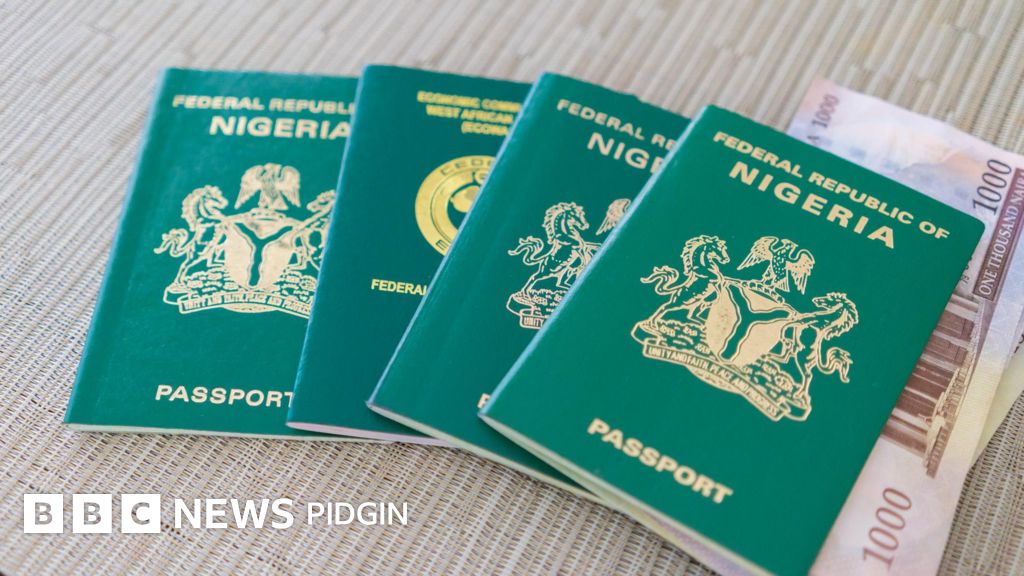
NIGERIA —
Key facts
- Nigeria's passport ranks 89th globally on the latest Henley Passport Index.
- This represents a rise from 94th in 2025 and 95th in January 2024.
- Visa-free access for Nigerian passport holders has decreased to 44 countries.
- This is down from 46 destinations in January 2025 and 45 in January 2024.
- Several African nations, including Ethiopia, Zambia, and Zimbabwe, have recently moved to require visas for Nigerians.
- The Nigerian passport's best historical ranking was 62nd in 2006.
- Its lowest point was 103rd in 2021.
- Ghana ranks 67th globally, with 23 more visa-free destinations than Nigeria.
A Paradoxical Rise in Global Standing
Nigeria's passport has ascended to the 89th position in the latest Henley Passport Index, a move that signals an improvement in its global mobility score. This latest ranking, released in April 2026, sees Nigeria climb from 94th place in 2025 and 95th in January 2024. The ascent, occurring since President Bola Tinubu assumed office in May 2023, marks a notable shift from previous years. However, this numerical improvement masks a more complex reality for Nigerian travellers. The upward tick in the overall ranking belies a concerning contraction in the number of countries Nigerian citizens can enter without a prior visa. While the passport gains ground on paper, the practical ease of international travel for its holders has diminished. This juxtaposition raises questions about the true measure of passport strength and the factors influencing global access. The Henley Passport Index, now in its 21st year, evaluates 199 passports worldwide based on data from the International Air Transport Association (IATA). It assesses travel access to 227 destinations, assigning equal ranks to passports with identical global access scores. The index aims to quantify the diplomatic influence and international standing of a nation's travel document.
Shrinking Horizons: The Decline in Visa-Free Access
Despite the improved global ranking, Nigerian passport holders can now access only 44 countries visa-free, a reduction from 46 destinations in January 2025 and 45 in January 2024. This decline is attributed to administrative changes implemented by several nations, primarily in Africa, that have recently shifted Nigeria to a "visa required" category. Countries such as Ethiopia, Zambia, Zimbabwe, Lesotho, Mauritania, and São Tomé and Príncipe have, in recent years, altered their policies to mandate visa applications for Nigerian citizens. These changes, often described as administrative rather than stemming from formal bilateral disputes, have directly impacted the visa-free score for Nigeria. For instance, Ethiopia, which previously offered visa-on-arrival, now requires Nigerians to obtain visas from its embassy in Abuja. Similarly, Zimbabwe has moved from a visa-on-arrival system to requiring prior visa applications. These shifts collectively contribute to the paradox of a higher ranking accompanied by reduced travel freedom.
Behind the Numbers: Explaining the Divergence
The discrepancy between Nigeria's rising rank and its dwindling visa-free destinations can be explained by the methodology of the Henley Index and the specific policy shifts by other countries. The index's ranking system allows a nation's position to improve if other countries that were previously ranked lower fall further behind. Several nations that once occupied lower positions on the index have experienced their own declines, inadvertently elevating Nigeria's relative standing without any direct improvement in its passport's inherent strength or the number of visa-free agreements. This phenomenon highlights how global mobility rankings can be influenced by the performance of others as much as by one's own progress. Furthermore, the report notes that some Pacific island nations, such as Fiji and Samoa, maintain open-door or minimal-visa-requirement policies that broadly benefit developing nations. These policies, while beneficial for travellers from certain countries, do not appear to have offset the visa requirements imposed by African neighbours.
Historical Context and Regional Comparisons
The Nigerian passport has experienced significant fluctuations in its global standing over the years. Its highest-ever rank was 62nd in 2006, indicating a period of greater international travel ease. Conversely, it reached its lowest point in 2021, ranked 103rd, underscoring a period of considerable travel restrictions. The current ranking of 89th places Nigeria below several fellow African nations, including Niger, Mali, Gabon, Cameroon, Egypt, Liberia, Chad, and Burkina Faso. This regional comparison reveals a disparity in travel freedom within the continent. Within West Africa, Nigeria finds itself near the bottom of the rankings. Neighbouring Ghana, for example, holds a global rank of 67th, offering its citizens access to 67 visa-free destinations—23 more than Nigeria. This contrast underscores the challenges Nigerian travellers face compared to their regional peers.
Government Efforts and Future Outlook
The Tinubu administration has been credited with efforts to address the visa restriction issues. A specific instance highlighted involved the resolution of a visa restriction with Ethiopia, which coincided with Ethiopian Airlines increasing its flight frequency to Nigeria. This development was lauded by officials, including the Minister of Aviation and Aerospace Development, Festus Keyamo, and the Minister of Interior, Olubunmi Tunji-Ojo. However, the broader trend of countries imposing visa requirements suggests that systemic administrative changes, rather than isolated diplomatic wins, are shaping the landscape for notes that none of the countries that shifted to prior-visa requirements cited formal bilateral disputes, pointing towards internal policy decisions. The future trajectory of Nigeria's passport ranking and visa-free access will likely depend on sustained diplomatic engagement and potential policy reversals by the nations that have recently tightened their entry requirements. The ongoing fluctuations serve as a reminder of the dynamic nature of international relations and their direct impact on individual mobility.
The bottom line
- Nigeria's passport has risen to 89th on the Henley Index, up from 94th in 2025.
- Despite the ranking improvement, visa-free access for Nigerians has decreased to 44 countries.
- Several African nations, including Ethiopia and Zimbabwe, have recently imposed visa requirements on Nigerian citizens.
- The passport's ranking can be influenced by the decline of other countries' positions, not just Nigeria's own improvements.
- Nigeria's passport has historically ranked as high as 62nd in 2006 and as low as 103rd in 2021.
- Neighbouring Ghana holds a higher global rank with significantly more visa-free destinations.






Knicks vs 76ers: Embiid's Return Fuels Playoff Showdown at MSG

Dangote Refinery Reverses Petrol Price Hike Amid Market Volatility

Lakers Face 15.5-Point Spread, Largest of LeBron's Career, as Thunder Host Game 1 Without Doncic