May's Flower Moon Rises as a Micromoon, Sparking Debate Over Lunar Definitions
The full moon on May 1 appears slightly smaller than average as it reaches apogee, but astronomers disagree on whether it qualifies as a true micromoon.
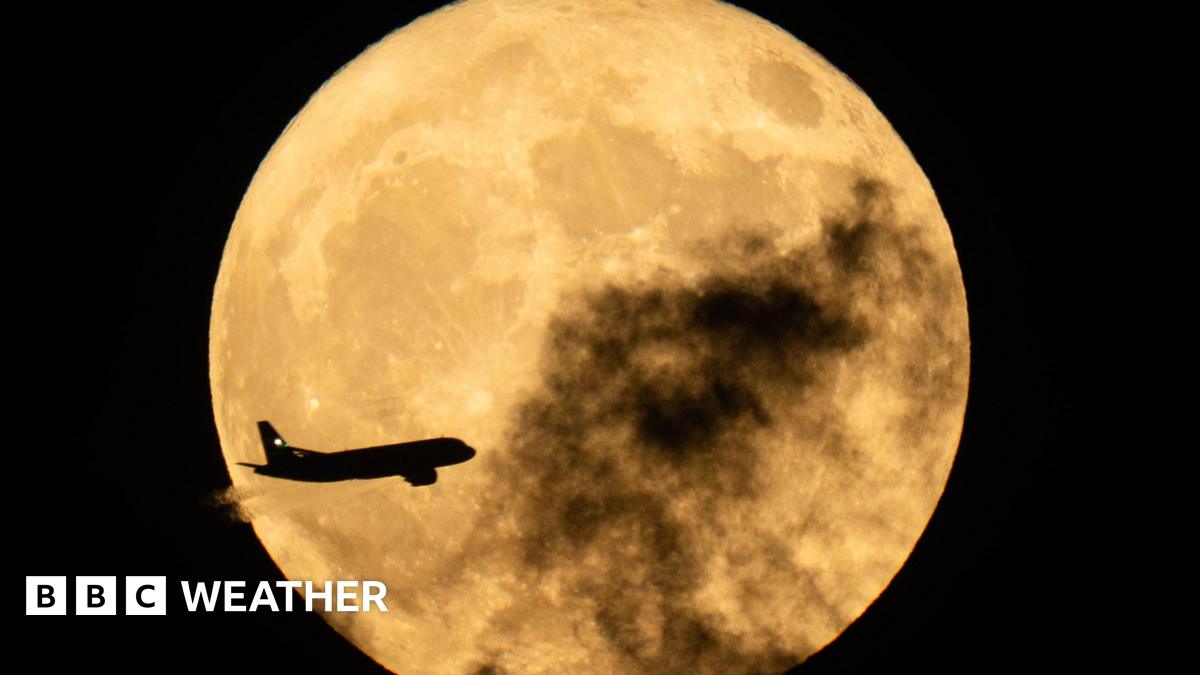
NEW ZEALAND —
Key facts
- May's full Flower Moon peaks at 18:23 on Friday, May 1.
- The moon will be at apogee, roughly 406,000 km (252,000 miles) from Earth.
- A micromoon appears about 12-14% smaller than a supermoon and 7% smaller than an average full moon.
- The moon's elliptical orbit causes a distance variation of about 43,000 km (26,000 miles) between apogee and perigee.
- Two independent sources list either two or three full micromoons in 2026, depending on definition.
- A second full moon on May 30-31, known as a Blue Moon, will be the year's most distant at 406,135 km (252,360 miles).
- The new micromoon of December 9, 2026, will be the most distant new moon of the year at 404,687 km (251,460 miles).
A Diminished Flower Moon Rises
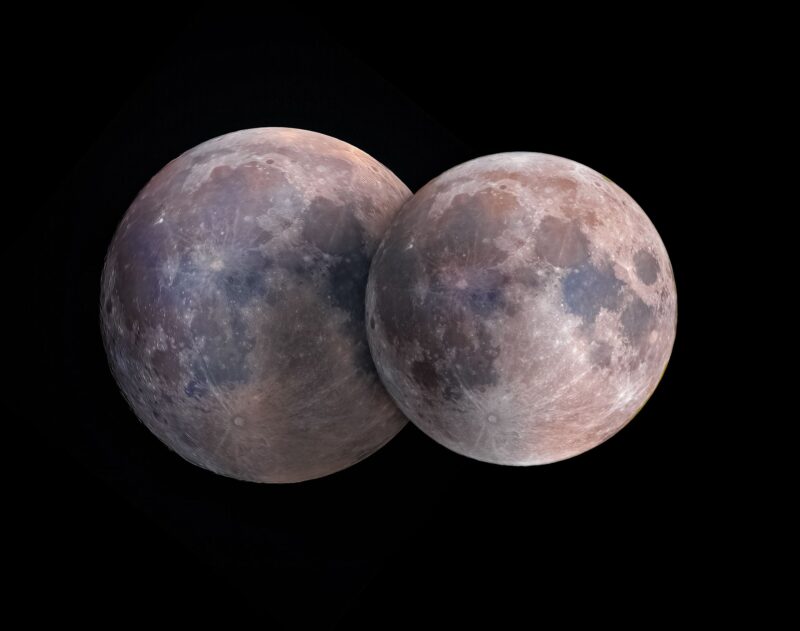
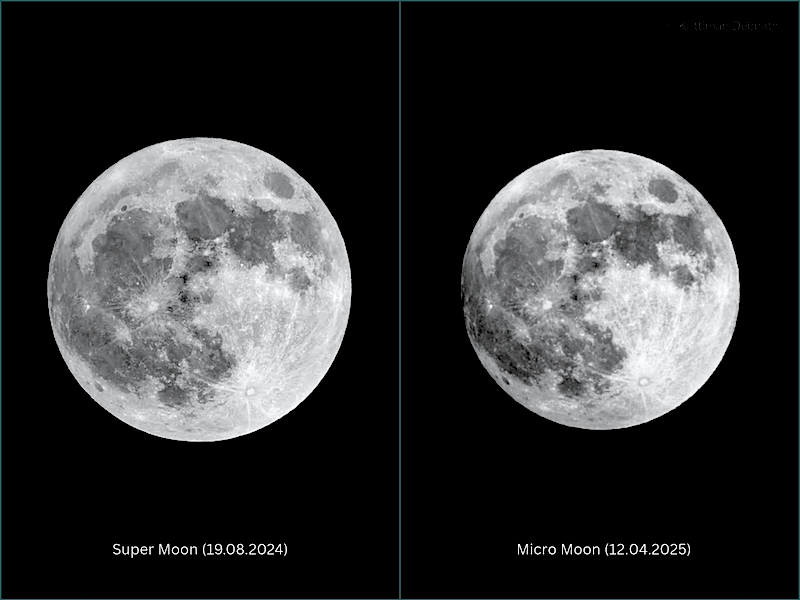
The full moon that illuminates Friday night's sky will be the Flower Moon of May, but it will appear slightly smaller and fainter than usual. At its peak at 18:23, the moon will be near its farthest point from Earth, a position astronomers call apogee, roughly 406,000 kilometers (252,000 miles) away. This phenomenon, known as a micromoon, occurs when a full or new moon coincides with apogee. Because the moon's orbit is elliptical, its distance from Earth varies by about 43,000 kilometers (26,000 miles) each month, making the micromoon appear about 12-14% smaller than a supermoon and 7% smaller than an average full moon. To the naked eye, the difference is barely perceptible, though it can be captured in photographs.
The Flower Moon's Name and Seasonal Significance
The term 'Flower Moon' is thought to refer to the abundance of spring blooms that appear in May, when flowers begin to blossom in earnest. This naming tradition, rooted in Native American and colonial folklore, assigns distinct names to each full moon based on seasonal cues. For skywatchers who miss Friday's event, a rare second full moon will occur at the tail end of May, on May 30-31. This second full moon is known as a Blue Moon, a term for the second full moon within a single calendar month. That moon will be even more distant than the first, making it the year's most distant full moon at 406,135 kilometers (252,360 miles).
Disagreement Over Micromoon Definitions
There is no strict definition for how close to apogee a full moon must be to qualify as a micromoon, leading to disagreement among astronomical sources. According to the late Fred Espenak's AstroPixels website, the Flower Moon of May 1 qualifies as a micromoon, along with the Blue Moon of May 30-31 and the Strawberry Moon of June 29, totaling three micromoons in 2026. However, Timeanddate.com does not consider the May 1 full moon distant enough, listing only the May 30-31 Blue Moon and the June 29 Strawberry Moon as micromoons. Both sources agree on the June 29 Strawberry Moon, but the discrepancy highlights the lack of a universally accepted threshold. The moon's distance changes continuously, so the exact cutoff is arbitrary.
The Science of Apogee and Perigee
The moon's orbit around Earth takes about a month—the word 'month' itself derives from 'moon-th.' Each month, the moon reaches a nearest point (perigee) and a farthest point (apogee). When a full moon occurs near apogee, it is called a micromoon; when near perigee, a supermoon. The difference between apogee and perigee is approximately 43,000 kilometers (26,000 miles), which sounds substantial but results in only a subtle visual change. The micromoon appears slightly smaller and may be a touch less bright than average, though the effect is often unnoticeable without photographic comparison.
New Micromoons and Future Events
Micromoons are not limited to full moons; new moons can also be micromoons. In 2026, the only new micromoon will occur on December 9, when the moon will be 404,687 kilometers (251,460 miles) away, making it the most distant new moon of the year. For those interested in observing micromoons, the upcoming Blue Moon on May 30-31 offers another opportunity. Depending on the definition used, 2026 will feature either two or three full micromoons, with the Strawberry Moon of June 29 rounding out the series. The lack of a formal definition means enthusiasts may need to decide for themselves which events to count.
What Lies Ahead for Lunar Observers
As spring progresses, the Flower Moon serves as a reminder of the moon's dynamic relationship with Earth. The debate over micromoon definitions underscores the challenges of categorizing celestial events when precise boundaries are absent. For now, skywatchers can enjoy the Flower Moon on Friday, albeit with a slightly diminished appearance. Those who miss it can look forward to the Blue Moon at month's end, which will be even more distant. The micromoon phenomenon, while subtle, offers a chance to reflect on the moon's elliptical orbit and its ever-changing distance from our planet.
The bottom line
- May 1's Flower Moon is a micromoon, appearing slightly smaller due to its proximity to apogee (406,000 km).
- There is no strict definition for a micromoon, leading to disagreement over which full moons qualify in 2026.
- A second full moon on May 30-31 (Blue Moon) will be the year's most distant at 406,135 km.
- The moon's elliptical orbit causes a 43,000 km variation between apogee and perigee each month.
- Micromoons appear about 12-14% smaller than supermoons and 7% smaller than average full moons.
- The only new micromoon of 2026 occurs on December 9, at 404,687 km.
Reaves returns but Lakers fall 99-93 to Rockets, fail to close out series

May 2026 Brings Rare Blue Moon and Flower Moon in One Month

Red Bull CEO Mintzlaff Reveals True Reasons Behind Christian Horner’s Sacking After British Grand Prix