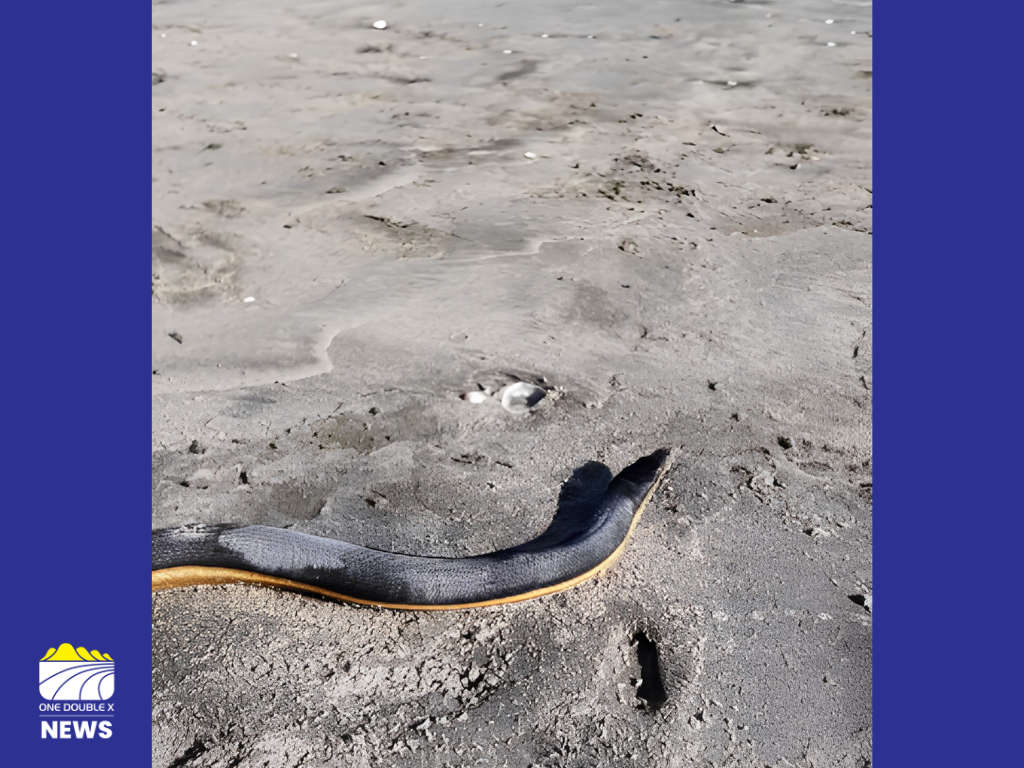
Venomous yellow-bellied sea snake found on Ōhope Beach dies after DoC removal
The rare visitor, driven ashore by weather events, was retrieved by conservation staff but succumbed, likely due to hypothermia from New Zealand's cold waters.

NEW ZEALAND —
Key facts
- A live yellow-bellied sea snake was discovered on Ōhope Beach by a beachgoer on the morning of May 4, 2026.
- Department of Conservation ranger and project lead biodiversity Pearson Tukua identified the snake and removed it from the beach.
- The snake later died after removal.
- Marine senior science advisor Karen Middlemiss said sea snakes occasionally drift into New Zealand waters during weather events.
- Yellow-bellied sea snakes are highly venomous but generally docile unless provoked.
- New Zealand has no recorded cases of anyone being bitten by a sea snake.
- Sea snakes are protected under the Wildlife Act 1953, making it illegal to kill, harass, or possess them without a permit.
- DoC urges anyone who encounters a sea snake to keep away and call 0800 DOC HOT.
A rare and venomous visitor
A yellow-bellied sea snake, one of the most venomous marine reptiles, washed ashore alive on Ōhope Beach in the Bay of Plenty yesterday morning, prompting a response from the Department of Conservation (DoC). The snake, discovered by a beachgoer, was identified by DoC staff and removed from the beach, but it later died. Marine senior science advisor Karen Middlemiss explained that sea snakes are occasional visitors to New Zealand waters, often driven south by storm events. 'When you get storm events up there that are driving the oceans south, then they can get sort of flipped into different currents down here,' she said. The yellow-bellied sea snake spends its entire life at sea, so finding one on the beach is a sign it is unwell. Middlemiss noted that such strandings are often due to hypothermia from New Zealand's colder sea temperatures.
DoC response and legal protections
DoC ranger and project lead biodiversity Pearson Tukua said staff identified the snake as a yellow-bellied sea snake and removed it from the beach. 'Staff removed the snake from the beach, and it later died,' he stated. Sea snakes are protected under the Wildlife Act 1953, making it illegal to kill, harass, or possess them or any part of them without a permit. DoC senior ranger Karl Fisher emphasized that it was illegal to kill the snake and that the public should alert authorities rather than 'taking matters into their own hands.' DoC asks anyone who encounters a sea snake to keep themselves and their pets well away and call 0800 DOC HOT immediately so staff can assist.
Venomous but not aggressive
Although highly venomous, yellow-bellied sea snakes are generally docile and only pose a risk if provoked. Middlemiss stated that there is no record of anyone in New Zealand being bitten by a sea snake or krait. The snakes typically inhabit warmer tropical waters north of New Zealand, but weather events can carry them into local currents. Once in New Zealand waters, they often do not survive long due to the colder temperatures. DoC's social media post reiterated that the snakes are 'highly venomous but generally calm and not a risk unless handled.'
Broader context of sea snake strandings
This incident is part of a pattern of sea snake strandings in New Zealand. Earlier, a yellow-bellied sea snake was found dead on Rangiahua/Flat Island near Great Barrier Island. Another was found alive on a beach but later died, likely 'hit with something,'. Middlemiss noted that it is 'reasonable to expect' more sea snake sightings in New Zealand as storm surges drive them south. The snakes are not naturally found on land, so strandings indicate they are unwell. The Department of Conservation continues to monitor the situation and urges the public to report any sightings.
What to do if you encounter a sea snake
DoC advises anyone who finds a sea snake to keep a safe distance and avoid handling the animal. Contact 0800 DOC HOT immediately so trained staff can assist. It is illegal to kill, harass, or possess sea snakes or any part of them without a permit. The public should not attempt to remove or harm the snake. By following these guidelines, beachgoers can help protect both themselves and these protected marine reptiles.
The bottom line
- A yellow-bellied sea snake was found alive on Ōhope Beach on May 4, 2026, and later died after DoC removal.
- The snake was likely suffering from hypothermia due to New Zealand's cold waters, a common cause of strandings.
- Sea snakes are protected under the Wildlife Act 1953; killing or harassing them is illegal.
- New Zealand has no recorded sea snake bites, as the snakes are docile unless provoked.
- sightings and keep a safe distance.


Four Cups a Day: New Study Reveals Coffee’s Gut-Brain Mood Boost, Caffeine Not Required
Real Madrid's Global Empire: 15 Champions League Titles, 350 Million Fans, and the Galácticos Legacy

ConocoPhillips Plans More Wells at DS-1H as Alaska North Slope Output Edges Up
