New Zealand and Singapore Sign Landmark Deal to Keep Essential Goods Flowing in Crises
The world's first legally binding bilateral agreement guarantees no export restrictions on fuel, food, and medical supplies, directly addressing New Zealand's vulnerability as it imports all its refined fuel.

NEW ZEALAND —
Key facts
- New Zealand imports 100% of its refined fuels (petrol, diesel, jet fuel); one-third comes from Singapore.
- Singapore imports 90% of its food; New Zealand is a key supplier.
- The Agreement on Trade in Essential Supplies (AOTES) was signed by ministers Tan See Leng and Todd McClay on May 4.
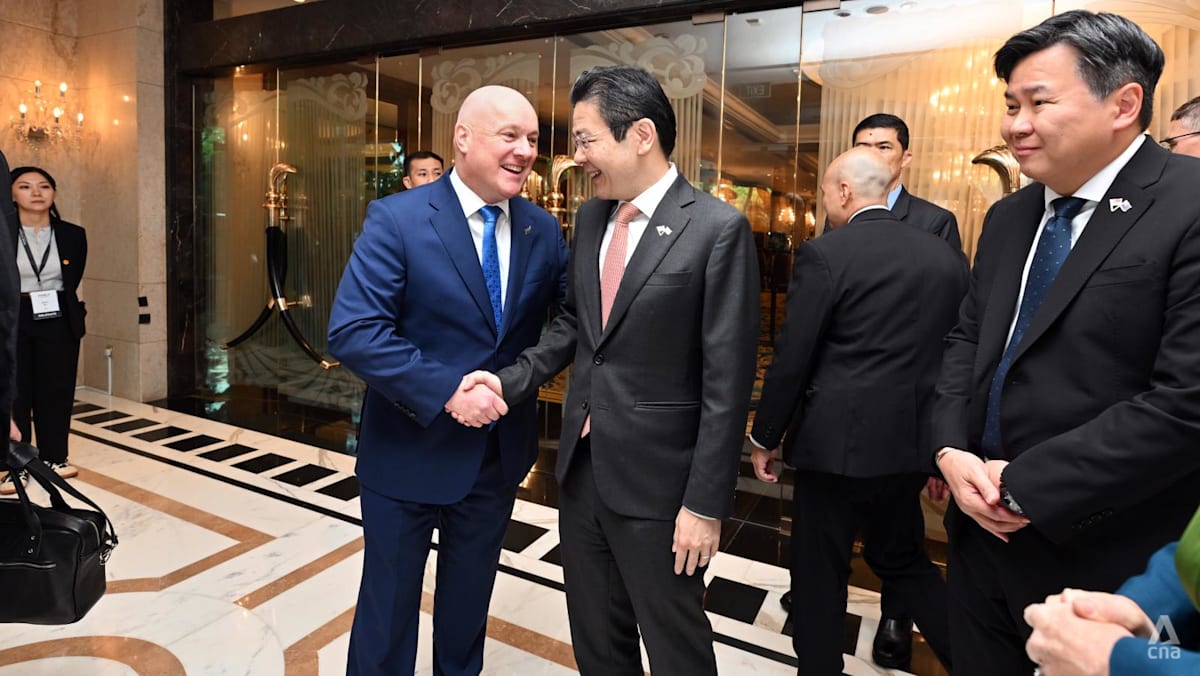
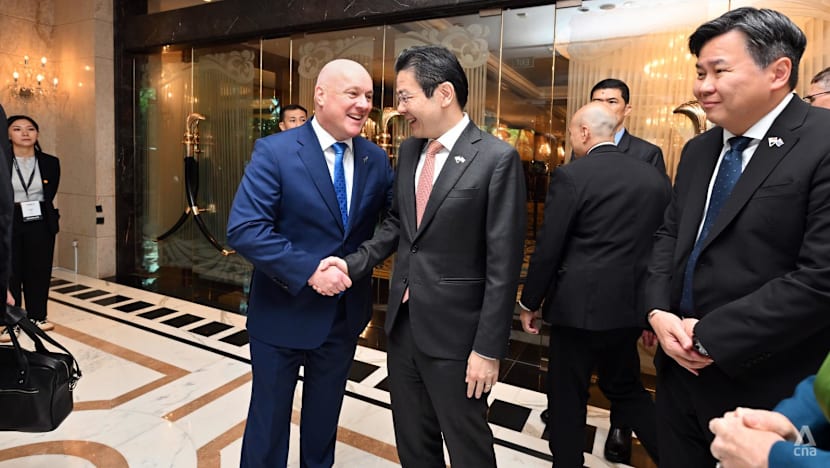
- Prime Ministers Christopher Luxon and Lawrence Wong witnessed the signing and held a joint press conference.
- The deal will be incorporated into the existing New Zealand-Singapore Free Trade Agreement after domestic approvals.
- Both countries committed not to impose unnecessary export restrictions on an agreed list of goods including fuel, food, medical equipment, and construction materials.
- Luxon said the agreement had already proven its worth amid global volatility and rising fuel prices.
- Both leaders are open to other nations joining the agreement, similar to the CPTPP's expansion.
A Pact Born of Crisis: Guaranteeing Supply Chains Under Strain
New Zealand and Singapore have signed the world's first legally binding bilateral agreement to ensure that essential goods — including fuel, food, and medical supplies — continue to flow between them even during emergencies. The Agreement on Trade in Essential Supplies (AOTES) commits neither country to impose unnecessary export restrictions on a predefined list of critical goods, formalising a mutual pledge to keep supply chains open when global volatility tempts nations to turn inward. The deal was signed on Monday by Singapore's Minister-in-charge of Energy, Science and Technology Tan See Leng and New Zealand's Minister for Trade and Investment Todd McClay at the Singapore-New Zealand Annual Leaders' Meeting, witnessed by Prime Ministers Christopher Luxon and Lawrence Wong. It will be incorporated into the existing bilateral free trade agreement once domestic procedures in both countries are completed.
Fuel for New Zealand, Food for Singapore: The Symbiotic Exchange
The agreement addresses a stark asymmetry in each country's vulnerabilities. New Zealand imports 100% of its refined fuels — petrol, diesel, and jet fuel — and about a third of that comes from Singapore. For New Zealand, any disruption in Singapore directly threatens its economic resilience and energy security. Singapore, on the other hand, imports 90% of its food, relying heavily on New Zealand as a trusted supplier. Prime Minister Luxon underscored the practical stakes: 'The past few months have shown we live in a volatile world — Kiwis are seeing that every time they fill up their car. That is why we are hustling in the world to protect New Zealand and build our resilience in uncertain times.' He added that the agreement turns trust into action, 'keeping fuel flowing to New Zealand when it matters most.'
A First-of-Its-Kind Commitment Not to Shut Each Other Out
The AOTES is the first legally binding bilateral agreement of its kind, establishing a framework for both countries to facilitate the movement of goods, share information, and consult each other before or during supply chain disruptions. The list of goods exempt from export restrictions includes fuel, food, medical equipment, and construction materials. Prime Minister Wong emphasised the significance of the commitment: 'It means that even in times of crisis or shortages, we will keep essential goods flowing — food, fuel and other critical supplies. We will not shut each other out.' He noted that in difficult times, every country is tempted to look inward, but that leads to broken supply chains and worse outcomes for all. The agreement, he said, is 'our answer, a commitment that we will do things differently.'
Building on COVID-Era Precedents and Looking to Expand
The AOTES follows similar agreements made during the COVID-19 pandemic to maintain supply chains and prevent tariffs and other trade barriers on essential goods. Both leaders expressed openness to expanding the pact to include other nations. Luxon said he discussed with Wong the potential for other countries to join, noting that the landmark CPTPP trade deal started with just a handful of members before growing. 'There's potentially a group of countries that might be interested in that,' Luxon said. He described the agreement as 'inventing new trade architecture and conceiving of new ways to build partnership and relationship,' adding that 'the sky is the limit' for its potential.
Global Volatility as Backdrop: Iran, Hormuz, and Rising Fuel Prices
The signing comes against a backdrop of heightened global volatility, which has manifested in New Zealand through rising fuel prices and increased scrutiny of the nation's fuel supply security. The war in Iran and the blocking of the Strait of Hormuz have underscored the fragility of global energy supply chains. Luxon noted that the agreement had already proven its worth, providing reassurance amid these uncertainties. New Zealand's reliance on imported refined fuel makes it particularly exposed to geopolitical shocks. The AOTES, by guaranteeing continued access to Singapore's refining capacity, directly addresses that vulnerability. For Singapore, the pact ensures a steady flow of food from New Zealand, reinforcing food security for the city-state.
What Comes Next: Domestic Approvals and Potential Expansion
The agreement will take effect after both countries complete their domestic approval processes. Once in force, it will be incorporated into the existing New Zealand-Singapore Free Trade Agreement, creating a legally binding obligation to maintain open trade in essential goods during crises. Both leaders signalled their willingness to expand the agreement to other like-minded nations. Luxon drew a parallel with the CPTPP's evolution from a small group to a major trade bloc, suggesting that the AOTES could similarly grow. The agreement establishes a framework for information sharing and consultation that could serve as a model for future multilateral arrangements.
A Practical Step in an Uncertain World
The AOTES represents a concrete, practical response to the fragility of global supply chains exposed by the pandemic and geopolitical tensions. By locking in mutual commitments before a crisis hits, New Zealand and Singapore have created a mechanism that reduces uncertainty for businesses and consumers. Luxon described the partnership as 'active, practical and future focused,' while Wong framed it as a signal that 'even under strain, trusted partners will keep faith with one another.' The agreement may prove to be a template for other countries seeking to insulate essential supply chains from political and economic shocks. In a world where the temptation to hoard and restrict is ever-present, New Zealand and Singapore have chosen a different path — one that bets on openness and mutual reliance as the surest route to resilience.
The bottom line
- New Zealand and Singapore signed the world's first legally binding bilateral agreement to keep essential goods flowing during crises, banning export restrictions on fuel, food, medical supplies, and construction materials.
- The deal directly addresses New Zealand's dependence on Singapore for one-third of its refined fuel and Singapore's reliance on New Zealand for food imports.
- The Agreement on Trade in Essential Supplies (AOTES) will be incorporated into the existing free trade agreement after domestic approvals.
- Both prime ministers expressed openness to expanding the pact to other nations, drawing parallels with the CPTPP's growth.
- The agreement builds on COVID-era supply chain cooperation and responds to recent global volatility, including rising fuel prices and geopolitical tensions in the Middle East.
- The pact establishes a framework for information sharing and consultation, providing businesses and consumers with greater confidence and stability.





Police Commissioner Richard Chambers Demands 60-Day Resolution for Employment Cases Amid Senior Officer Probe

Florida and California lead US home price declines as insurance costs surge

Georgia Begins Issuing Up to $500 Tax Refunds for Fourth Time in Five Years
