Heinz Wattie's closures expose New Zealand's manufacturing hollowing-out as 350 jobs cut
The company blames rising costs and consumer shifts, but a 2021 supermarket delisting and flat revenue for a decade point to a deeper volume crisis.
NEW ZEALAND —
Key facts
- Heinz Wattie's will close four plants in Auckland, Christchurch, Dunedin, and Hastings, cutting 300–350 jobs.
- Revenue was flat for nearly a decade while costs rose; output prices rose 12% in two years, but volumes fell.
- Foodstuffs removed Wattie's frozen range from 200+ North Island stores in 2021, replacing it with Pams and Value brands.
- Industry margin data shows food manufacturers gained 6.4 percentage points of margin over two years; no industry-wide margin squeeze.
- Anti-dumping duty of 17.78% imposed on Chinese peach exporter J&G International after Heinz Wattie's complaint.
- Average employee tenure at the Christchurch plant is about 30 years; one worker's last job interview was in 1979.
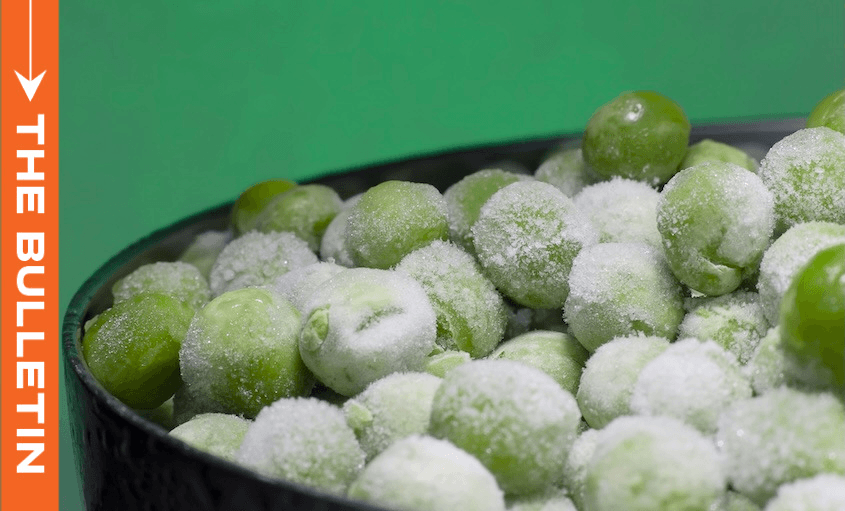
- 220 Canterbury growers supplying 36,000 tonnes of peas annually face contract losses.
- Four of New Zealand's five anti-dumping duties stem from Heinz Wattie's complaints over cheap peaches.
A sudden shutdown after decades of service
Last week, Heinz Wattie's announced it would close four manufacturing facilities across New Zealand this year, eliminating between 300 and 350 jobs. The company's managing director, Andrew Donegan, told media that revenue had been flat for nearly a decade while costs rose steadily. For many workers, the shock is compounded by the length of their tenure. At the Christchurch plant, forklift driver and E tū delegate Kathy Perrin said the average length of service for permanent staff was around 30 years; one employee noted her last job interview was in 1979. The union has also raised concerns about seasonal workers, some with more than 20 years of service, who face redundancy without financial compensation. Perrin told RNZ the factory floor was still in shock: “We could see we were a bit top-heavy and we thought there’d be redundancy, not a plant closure. This is just – it’s traumatising.”
The supermarket pivot that reshaped the frozen aisle
A key, largely unreported turning point came in 2021, when Foodstuffs sharply cut Wattie's frozen ranges in New World, Pak'nSave and Four Square, replacing them with its own Pams and Value house brands. As Jonathan Milne wrote for Newsroom, “When the supermarkets remove your products from their chillers, it’s hard to maintain consumer awareness and affection for your brand.” The delisting affected more than 200 North Island supermarkets, stripping Wattie's of critical shelf space. Donegan's own language in the closure announcement pointed to a volume problem, not a margin crisis: revenue flat, costs rising. In a high-inflation environment, flat revenue means either prices are falling (they are not; output prices are up 12% in two years) or volumes are falling. Wattie's is selling less product.
Industry margins tell a different story
When you follow the money through Stats NZ's Producers Price Index, which tracks what each link in the supply chain pays for its inputs and charges for its outputs, the narrative stops fitting the numbers. Over the eight quarters from December 2023 to December 2025, every link in the food chain except meat processors gained margin. The industry category that contains Wattie's and McCain gained 6.4 percentage points of margin. Their output prices rose more than twice as fast as the prices they paid for raw materials, packaging, energy and labour. This is not the profile of an industry in a margin crisis. The real margin squeeze is on meat processors: AFFCO, Silver Fern Farms and their peers saw input costs rise 35.9% over two years, but could only pass on 9.6% to customers — a 26-percentage-point gap.
Anti-dumping duties and the peach paradox
In July last year, Heinz Wattie's convinced the Government to reinvestigate claims that discounted Chinese peaches were being dumped into New Zealand at lower prices than possible, causing the domestic industry “to suffer material injury.” Nine months later, Commerce and Consumers Affairs Minister Cameron Brewer placed a duty of 17.78 percent on preserved peaches produced by Chinese brand J&G International. J&G did not participate in the process but was found to be undercutting Wattie's name brand peaches by 57 percent and its budget brand Oak by 37 percent. Volumes of dumped peach imports increased by 176 percent between July 2021 and June 2025, with J&G's exports to New Zealand comprising 20 percent of total trade in a 12-month period. Shortly after the complaint, Wattie's told multiple peach growers it would no longer need their fruit as it cuts down on canning New Zealand peaches, attributing the decision to declining demand for premium domestic canned peaches as consumers choose imported fruit instead.
A pattern of multinational exits and hollowing out
Heinz Wattie's is a prominent name in a lengthening list of multinationals closing their New Zealand operations, from Unilever in Petone in 2014, to Cadbury in Dunedin in 2018, to James Hardie in Penrose in 2020. Speaking to RNZ's Susan Edmunds, Simplicity's Shamubeel Eaqub described a cycle of “hollowing out” of the business landscape that accelerates in downturns: “Every time there’s a recession, it feels like we lose another bunch and then it’s smaller again.” BusinessNZ chief executive Katherine Rich said that while many smaller food companies were thriving, the threat to New Zealand's large-scale manufacturing sector was acute: “It’s a factor of globalisation and the fact that this is a very high-cost market to try and manufacture in.” E tū's Finn O'Dwyer-Cunliffe said the government needed to do more to save jobs and protect local manufacturing: “We’re watching iconic New Zealand brands disappear from our production lines. That’s not good for workers, it’s not good for regional economies, and it’s not good for the country.”
Food security risks and regulatory gaps
As Wattie's steps back from frozen vegetables, questions are being raised about what will take its place on supermarket shelves. Foodstuffs and Woolworths already import canned and frozen vegetables for their house brands from China, South Africa, Thailand and Italy. Process Vegetables' David Hadfield warned this creates food security risks: supply disruptions – such as the shipping routes affected by the conflict in the Middle East – leave New Zealand more exposed as it increasingly relies on imports. A further concern was raised by Tearfund's Claire Gray, who noted that New Zealand has no modern slavery legislation, unlike the UK and EU. New Zealand “runs the risk of becoming a dumping ground” for food produced in slavery conditions that is locked out of markets with tighter regulations, she told RNZ.
Political responses and the path ahead
Minister for regulation David Seymour said red tape around vegetable growing was partly to blame. The government says its regulation-cutting drive has already improved profitability in horticulture – and the RMA replacement will go further. “I wish the new law had been in place in time to save these businesses, but this Government is passing it as fast as any government could,” said Seymour. The Green Party has asked for a parliamentary inquiry. The proposed closures will likely end contracts with 220 Canterbury growers who collectively produce around 36,000 tonnes of peas annually. Donegan said the company had no choice but to act: “If we don’t make these changes now, it’s going to be quite challenging to run the business for the future.” The union called it multinationals “making a choice to walk away.”
The bottom line
- Heinz Wattie's is closing four plants and cutting 300–350 jobs, citing flat revenue and rising costs, but industry margin data shows no margin squeeze in food manufacturing.
- A 2021 Foodstuffs delisting that replaced Wattie's frozen products with house brands is a key factor in the volume decline that made plants uneconomic.
- The company successfully lobbied for an anti-dumping duty on Chinese peaches, yet simultaneously cut contracts with domestic peach growers.
- The closures add to a pattern of multinational exits from New Zealand manufacturing, described by economists as a 'hollowing out' that accelerates in recessions.
- Increased reliance on imported vegetables raises food security concerns, especially given supply chain disruptions and the absence of modern slavery legislation.
- The government points to regulatory reform as a solution, but the union and Green Party call for more immediate intervention, including a parliamentary inquiry.




One NZ Outage Fixed After Disrupting Services Across South Island and Lower North Island

Taylor Swift and Travis Kelce's July 3 Wedding Plans Leak Despite Strict NDAs

Meryl Streep doubled her asking price for 'The Devil Wears Prada' after betting on its success
