Pistons Coach Faces Tough Choices on Caris LeVert's Playoff Role
Despite a difficult season, Caris LeVert's minutes in the playoffs are under scrutiny as the Pistons face the Cavaliers.
PHILIPPINES —
Key facts
- Caris LeVert played nine minutes in Game 1 of the playoff series against the Cavaliers.
- During his nine minutes on the court in Game 1, LeVert was 0-for-1 from the field with two rebounds.
- LeVert has a 11.8% usage rate and 34.2% True Shooting in 85 playoff minutes this season.
- LeVert has made 1 of 6 three-point attempts in the playoffs.
- Daniss Jenkins is leading the Pistons in scoring with 11 points off the bench in Game 2.
- Cade Cunningham scored five points on 2-of-4 shooting in the first half of Game 2.
- Donovan Mitchell leads all scorers with 12 points in the first half of Game 2.
Playoff Minutes Under Scrutiny
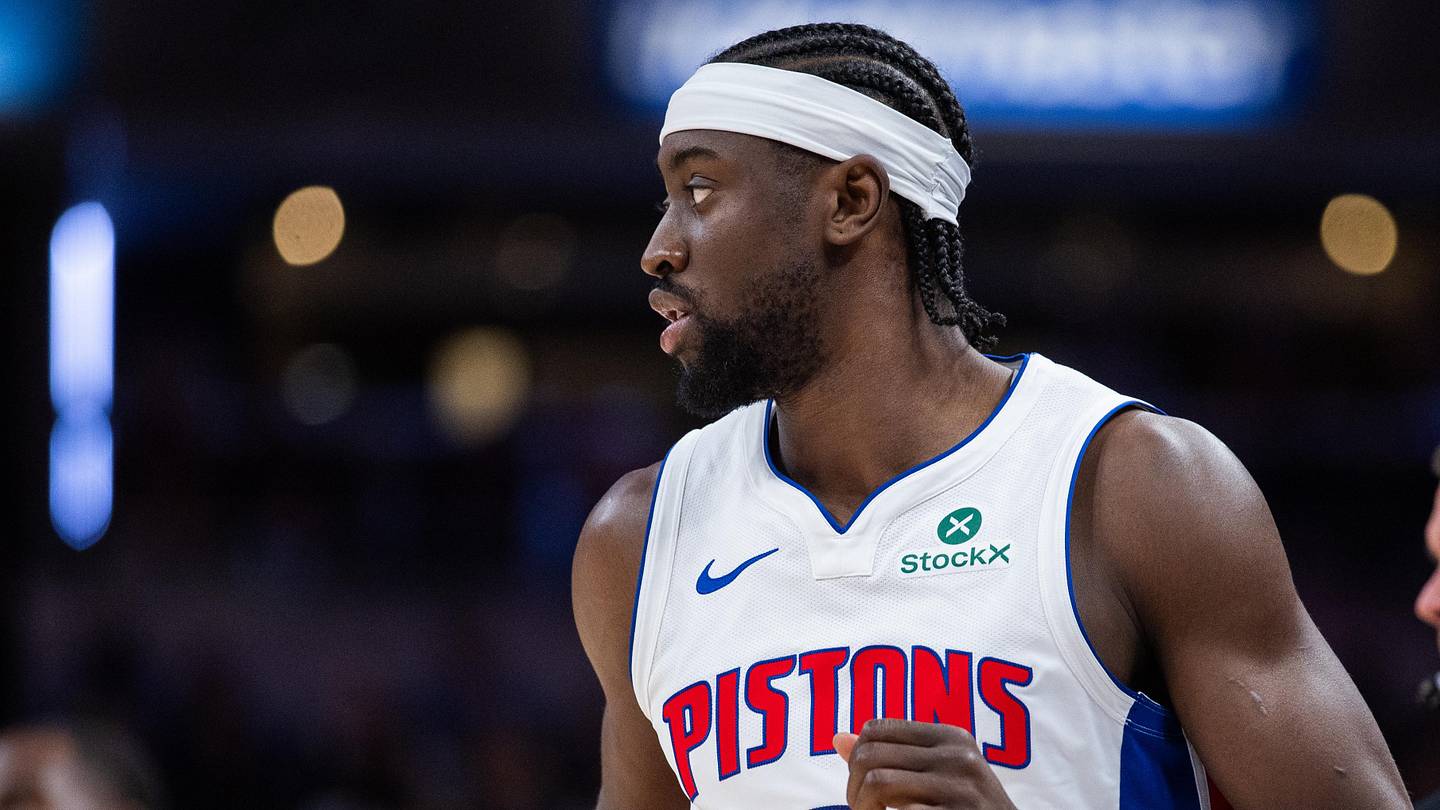
Detroit Pistons head coach JB Bickerstaff confronts a critical juncture in the Eastern Conference Semifinals, where the playing time of veteran guard Caris LeVert is increasingly under examination. Following a regular season marked by career-low statistics, LeVert's contributions in the postseason are being weighed against the team's performance and the emergence of younger talent. The coach's decisions regarding LeVert's role are becoming a focal point as the Pistons navigate their series against the Cleveland Cavaliers. The opening game of the playoff series against Cleveland saw LeVert return to the rotation after limited action in the previous round against Orlando. He logged nine minutes, a significant increase from his five-minute appearance in Game 6 against the Magic. However, the on-court impact of these minutes is being closely scrutinized, raising questions about his value to the team in high-stakes games. On paper, the nine minutes LeVert played in Game 1 coincided with a 13-point advantage for the Pistons. Yet, a deeper look reveals a stark absence of statistical production. LeVert did not record any points, going 0-for-1 from the field, and contributed only two rebounds. This lack of offensive engagement has become a recurring theme, prompting debate about his effectiveness.
A Season of Struggles and Statistical Anomalies
LeVert's tenure with the Pistons has been characterized by a decline in performance, culminating in what is described as his worst season in Detroit. Offensively, he has often been an afterthought, rarely initiating plays and struggling to create high-percentage shots or consistently make jumpers. This offensive invisibility extends into the playoffs, where his usage rate has been a mere 11.8% across 85 minutes. His efficiency metrics are particularly concerning. LeVert's True Shooting percentage stands at a dismal 34.2% in the playoffs, a figure that underscores his difficulty in converting scoring opportunities. Furthermore, his turnover rate has surpassed his assist rate, indicating a tendency to cede possession without generating positive outcomes for the team. Beyond his struggles with the ball, LeVert's impact when not initiating offense is also being questioned. His three-point shooting, which saw him convert 33.3% in the regular season, has faltered in the playoffs, with only one successful attempt in six tries. Opponents are reportedly not guarding him closely on the perimeter, which in turn complicates offensive spacing for his teammates.
Defensive Lapses and Emerging Talent
While LeVert has shown defensive improvement earlier in his career, his performance in the current playoff run has not met expectations. Reports suggest he appeared a step slower and less athletic against Cleveland's perimeter players in Game 1, raising concerns about his ability to contain opposing guards. This defensive drop-off, coupled with his offensive struggles, places him in a precarious position within the Pistons' rotation. The team possesses sufficient perimeter talent, potentially rendering LeVert's contributions redundant. The emergence of players like Daniss Jenkins, who can handle backup guard minutes effectively, further complicates LeVert's case for consistent playing time. Jenkins, in particular, is highlighted as someone capable of performing many of LeVert's functions at a higher level. Alongside other Pistons rotation players such as Javonte Green and Ron Holland, LeVert faces stiff competition for minutes. The ultimate decision rests with coach Bickerstaff, whose strategy for Game 2 remains a subject of anticipation.
Pistons Maintain Halftime Lead in Game 2
In the second game of the series, the Pistons managed to secure another halftime lead over the Cavaliers, showcasing balanced scoring and efficient shooting. Despite the team's overall success, no starting player had reached double-digit points by halftime. Daniss Jenkins led the Pistons with 11 points coming off the bench, while Tobias Harris contributed nine points as the highest-scoring starter. Star player Cade Cunningham had a relatively quiet first half, tallying only five points on 2-of-4 shooting. The Pistons demonstrated strong offensive execution, shooting 54 percent from the field and converting 7-of-15 three-point attempts. However, the team faced foul trouble, with both Ausar Thompson and Isaiah Stewart accumulating three fouls before halftime. This presented a challenge for Bickerstaff's lineup management. Conversely, the Cavaliers struggled with their field goal percentage, shooting under 40 percent and making only 3-of-14 three-pointers. Their ability to stay in the game was largely buoyed by their free-throw performance, where they converted 10-of-12 attempts in the first half. Donovan Mitchell paced the Cavaliers with 12 points, leading all scorers at the break.
LeVert's Sporadic Offensive Spark
Amidst the back-and-forth action of Game 2, Caris LeVert managed to contribute offensively with his second three-pointer of the night. This moment of successful shooting offered a brief spark, contrasting with his earlier struggles. The game saw significant contributions from various Pistons players, including a pull-up jumper by Jenkins and a dunk by Duren assisted by Jenkins. Cunningham also contributed with a corner three and a powerful dunk. The Cavaliers, led by Mitchell's scoring, remained competitive, with players like Jarrett Allen and Max Strus also finding ways to score. Despite the Pistons' overall strong first half, the game remained a contest, with the Cavaliers consistently trying to close the gap. The Pistons' ability to maintain their lead hinged on contributions from across the roster, highlighting the team's depth as they aimed to extend their advantage in the series.
The bottom line
- Caris LeVert's playoff performance is being closely monitored due to a career-worst regular season and low efficiency metrics.
- LeVert's limited offensive output and defensive lapses in Game 1 against the Cavaliers have led to questions about his role.
- The emergence of younger players like Daniss Jenkins provides the Pistons with alternative options for backup guard minutes.
- Despite struggles, LeVert has seen minutes in both Game 1 and Game 2, contributing a three-pointer in the latter.
- The Pistons secured halftime leads in both Game 1 and Game 2, demonstrating balanced scoring and overall team strength.
- Coach JB Bickerstaff faces a tactical challenge in balancing LeVert's experience with the team's need for consistent, high-level performance.


NBA Playoffs Deliver Thrilling Finishes and Record-Setting Performances
Cavaliers and Pistons Set for Second-Round Showdown After Game 7 Victories

Timberwolves Stumble in Game 2, Series Shifts to Minnesota