Seismology Tools Combine Fault Lines and Seismic Feeds to Gauge Risk
Interactive platforms blend proximity to active fault lines, the frequency of local quakes, and geological data to offer data-driven estimates of earthquake danger.

PHILIPPINES —
Key facts
- The risk score utilizes official U.S. Faults classified as active, particularly those with movement in the Holocene epoch (last 11,700 years).
- The assessment weighs recent earthquake activity, specifically examining events within a 500-kilometer radius over the preceding week.
- The final seismic risk score is a weighted blend, scaled from 0 (lowest) to 100 (highest).
- High seismic risk zones include areas situated on four tectonic plates, such as those in the Pacific Ring of Fire and parts of California.
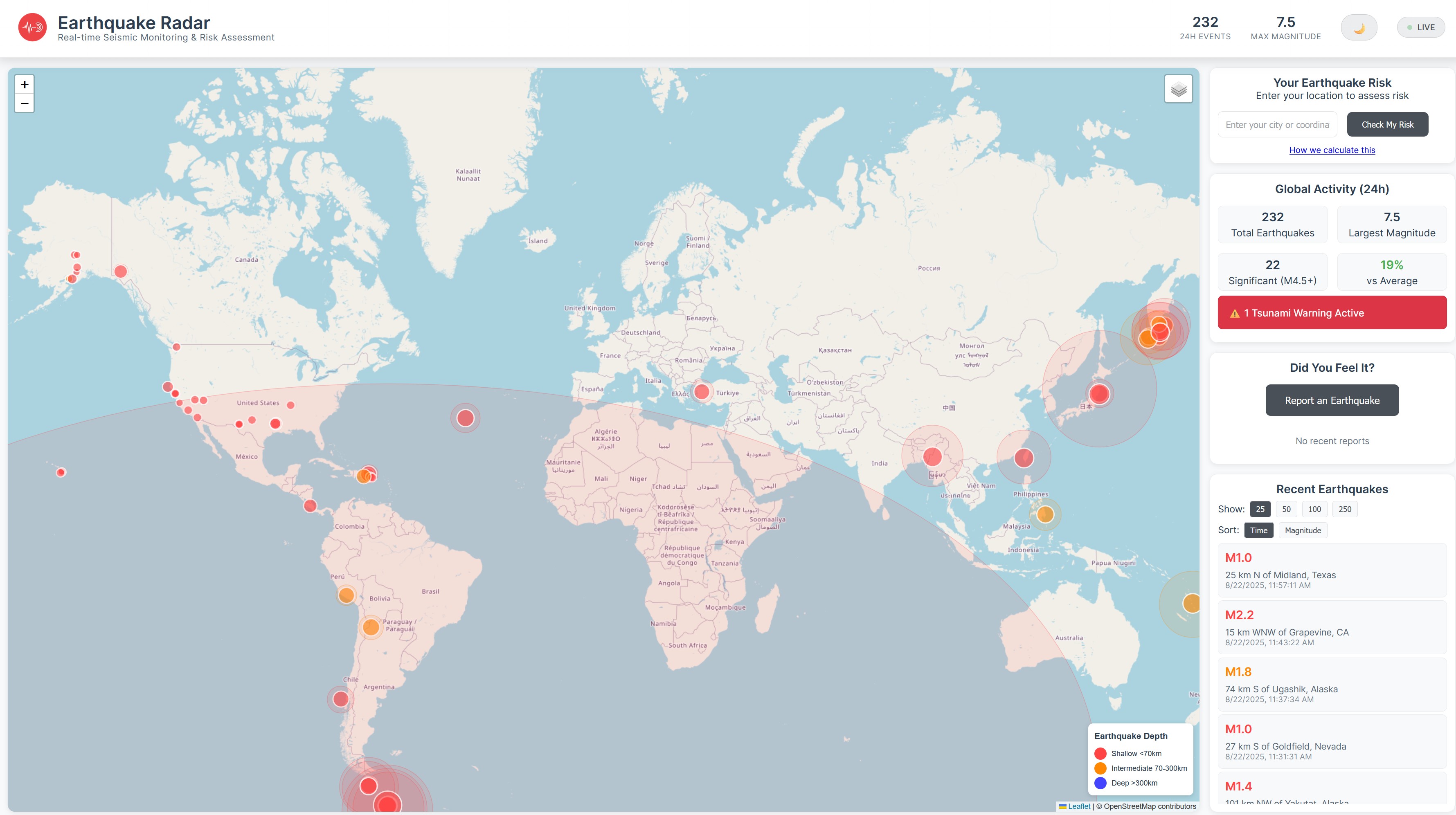
- The tool integrates live data from USGS seismic feeds, providing magnitude and epicenter details by country and state.
- Activity can be driven by plate boundaries, such as the Cocos and North American plates, or by industrial processes like oil and gas operations.
- Seismic tracking capabilities extend to regions like the Mediterranean seismic zone and the San Andreas Fault system.
Assessing Ground Danger: How Seismic Risk is Measured
A spectrum of digital resources is now available to track global seismic activity and assess localized geological danger. These interactive platforms aggregate vast amounts of data, combining historical fault analysis with real-time monitoring to offer users a probabilistic assessment of risk. The methodology relies on two primary data inputs: the proximity to known active fault lines and recent localized seismic energy. The risk assessment is quantified by a final score, ranging from 0, indicating the lowest danger, to 100, signaling the highest danger. This weighted blend aims to provide a balanced, data-driven guide for understanding potential seismic hazard. Crucially, the systems emphasize that this risk score is not a guarantee. The scientific community maintains that earthquakes remain unpredictable, and any calculated score should be regarded as a helpful snapshot, not infallible prediction.
Building the Risk Score: Proximity and Recent Activity
To calculate the risk, the initial step involves determining a location and measuring its distance from officially recognized active fault systems within the United States. Particular emphasis is placed on faults that show evidence of movement throughout the Holocene epoch—a time frame spanning roughly the last 11,700 years, which carries significant weight in the final calculation. Beyond static fault proximity, the system critically analyzes recent seismic feeds. It examines live data from the USGS, specifically focusing on any significant earthquake events occurring within a 500-kilometer radius of the user's location over the preceding week. The frequency and magnitude of these recent quakes directly influence the calculated score. Larger and more frequent seismic occurrences within this defined radius heighten the risk assessment. The resulting number is therefore a composite measure, blending both the inherent geological risk posed by nearby faults and the immediate, observable seismic energy flow.
Geological Hotspots: Where the Earth's Plates Conflict
Global tracking capabilities highlight specific regions defined by complex and intense tectonic activity. Several areas are noted for their high seismic risk, often due to their position atop multiple converging or moving tectonic plates. The Pacific Ring of Fire exemplifies this immense activity, generating frequent, high-magnitude quakes alongside regular volcanic seismicity. Similarly, Southern California and the larger San Andreas Fault system generate continuous attention due to their dense populations sitting directly on active fault lines. Major geological boundaries, such as the junction of the Cocos and North American plates, are primary drivers of destructive earthquakes. These volatile intersections, alongside the Alpide belt, underpin a global understanding of high seismic danger zones.
Varying Sources of Seismicity: Beyond Tectonic Shifts
While the collision of tectonic plates drives the most spectacular quakes, seismic activity can also originate from specialized or human-induced sources. The monitoring tools track phenomena ranging from volcanic systems to industrial operations. In volcanic zones, such as Kilauea and Mauna Loa, the movement of magma beneath the surface generates distinct seismic signals. Similarly, human activity can induce tremors; for instance, oil and gas operations in the Permian Basin have been shown to generate induced seismicity. Other geological anomalies are also tracked, including rare but notable seismic events along fault lines like the Ramapo Fault system, or the moderate-to-strong quakes commonly observed in the Mediterranean seismic zone.
The Global Scope of Seismic Monitoring
The monitoring infrastructure offers comprehensive tracking of every recorded earthquake on Earth within the last hour, detailing verified magnitudes and epicenters down to the state and country level. This granular level of data allows users to follow not only live activity but also historical events and specific fault systems. The ability to drill down into a country or state tracker provides a deep view into local geological dynamics. This detailed approach ensures that users, from seismologists to concerned citizens, can follow the activity related to official monitoring agencies and specific regional fault systems. These platforms serve not merely as real-time trackers, but as educational resources, illustrating the complex interplay between human development and the Earth’s powerful, underlying geological processes.
The bottom line
- Seismic risk is derived from a weighted blend: proximity to active faults (especially Holocene-era faults) and recent quake frequency (within 500km/week).
- The resulting risk score (0 to 100) is a guide, not a guarantee; the danger inherent in earthquakes means they remain fundamentally unpredictable.
- Global activity hotspots are characterized by plate collisions, notably the Pacific Ring of Fire, the Cocos/North American plate boundary, and the San Andreas system.
- Seismic triggers are varied, including plate tectonics, volcanic activity (e.g., Kilauea), and human actions like gas extraction (e.g., Permian Basin).
- Advanced platforms provide live, country- and state-level tracking of verified magnitudes and epicenters, supplemented by historical fault data.