Andreeva Adapts to Rome's Clay After Madrid Success
The 19-year-old Russian tennis prodigy navigates a shift in playing conditions and maintains focus on future victories.
PHILIPPINES —
Key facts
- Mirra Andreeva reached singles and doubles finals in Madrid.
- She is 19 years old.
- Andreeva is competing in the WTA 1000 Roma 2026.
- significant differences between Madrid and Rome's court conditions.
- Andreeva won a tournament and lost a final on clay prior to Rome.
- She maintains contact with her first coach from childhood.
A New Challenge on Roman Clay
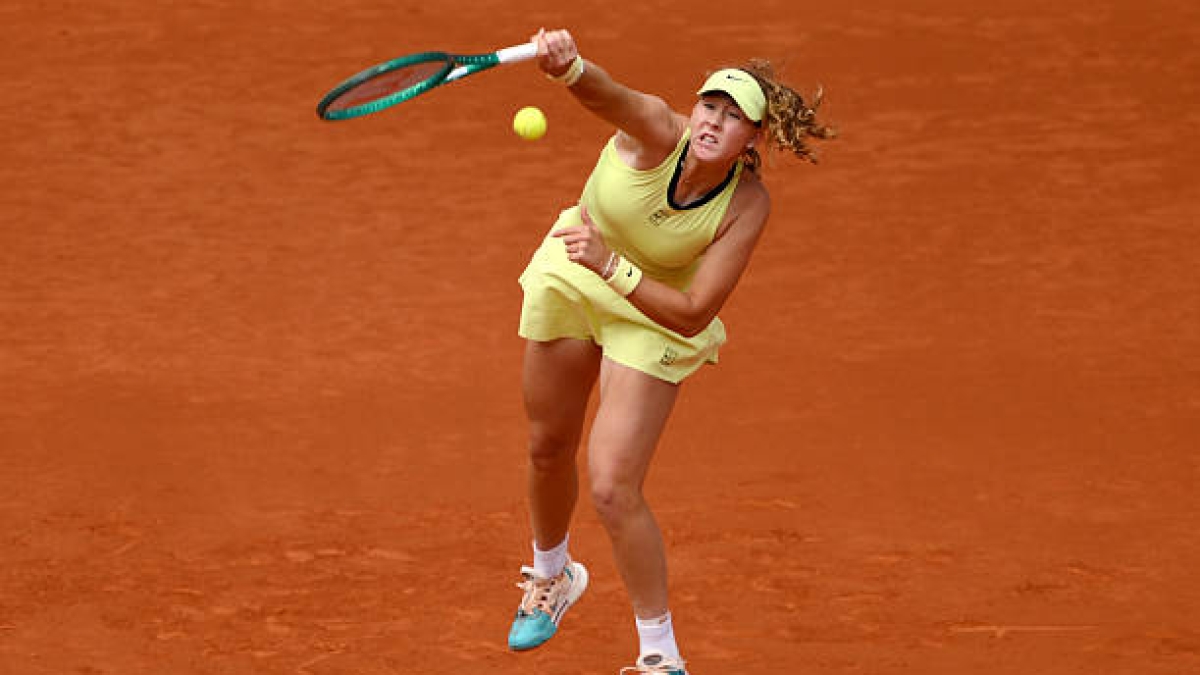
Mirra Andreeva arrives at the WTA 1000 Roma 2026, fresh from a demanding two-week stint at the Mutua Madrid Open where she contested both the singles and doubles finals. This dual success has solidified her status as a prominent figure on the professional tennis circuit. However, the young Russian player is resolutely focused on leaving the Madrid chapter behind to concentrate entirely on the task at hand in Rome. Her performance in Madrid, coupled with her consistent presence in the latter stages of tournaments, underscores a remarkable trajectory for a player of her tender age. At just 19, Andreeva has navigated the immense expectations surrounding her with a natural composure, demonstrating a maturity that belies her years. She approaches the Rome tournament with considerable ambition, tempered by a realistic understanding of the significant challenges presented by the Italian capital's clay courts, which differ markedly from those in Madrid.
Reflections on Madrid's Success
"Of course, it was two very good weeks in Madrid, both in singles and doubles," Andreeva stated, reflecting on her recent achievements. "I think there are many positive things to take from those two weeks. Now Madrid is in the past, so we have to forget what happened there and try to focus entirely on performing well here in Rome." She acknowledged the exceptional start to her clay-court season, which included winning one tournament and reaching the final in another over three consecutive weeks. Despite these successes, a desire for ultimate victory remains paramount. "Overall, I would say it's an incredible start to the clay tour. But, obviously, I'm not completely happy because every tournament I play, I want to go for it and win it," she explained. "I try to focus on the positive part and think that they have been great weeks on clay."
Adapting to Shifting Conditions
The transition from Madrid to Rome presents a distinct tactical puzzle for Andreeva. She noted the significant difference in playing conditions, particularly the impact of altitude and court moisture. "In Madrid, I hit the ball, and it shot off due to the altitude, bouncing a lot, and I loved it," she recalled. "Today it had also rained, and the court was heavier, the balls became larger, and they don't fly as much." This necessitates a strategic adjustment. "You have to be smart to adapt your game and not keep hitting as hard as in Madrid. Here you have to build points in a different way," Andreeva observed, highlighting the need for a more nuanced approach on the slower, heavier Roman clay.
A Foundation Built on Early Guidance
Andreeva emphasizes that her approach to the game is built upon a solid technical foundation, nurtured by her earliest coaching experiences. She maintains a connection with the coach who first introduced her to tennis between the ages of six and nine. "I'm still in touch with the first coach I worked with from six to eight or nine years old. Basically, she taught me the basics of technique and how to play a little," Andreeva shared. "Every time things go well for me, or occasionally, we write to ask how life is going and what's happening." This enduring relationship provides a valuable sounding board. "I think it's important to maintain even a small connection with the first coach who helped you understand this sport," she added. "She always asks me if I know how my opponent plays. I give her my point of view, and then she adds advice or corrects me if I'm wrong. Afterwards, we discuss together how to play the match."
Personal Growth Amidst Professional Ascent
While her on-court performance suggests rapid maturation, Andreeva perceives her personal evolution as more subtle. She believes she has cultivated a greater sense of calm away from the competitive arena. "I don't feel like I have changed much as a person, but maybe I have become calmer off the court," she commented. Previously, her post-match routines involved extensive time with family, a practice she now balances with a more introspective approach. This shift reflects a growing understanding of the demands of elite professional sport and a developing strategy for managing energy and focus across a demanding schedule.
The bottom line
- Mirra Andreeva is navigating the transition to the WTA 1000 Roma 2026 after reaching two finals in Madrid.
- She is 19 years old and has quickly established herself as a top player.
- Andreeva acknowledges significant differences in court conditions between Madrid and Rome, requiring game adaptation.
- She won a clay-court tournament and lost another final prior to Rome, indicating strong recent form.
- The young player values her connection with her first coach for technical and strategic advice.
- Andreeva aims for continuous improvement and victory in every tournament she enters.







Orlando Magic fire coach Jamahl Mosley after first-round playoff collapse

Cavaliers and Pistons Set for Second-Round Showdown After Game 7 Victories

Timberwolves Stumble in Game 2, Series Shifts to Minnesota