Almería to Become Global Hub as Longest Solar Eclipse of Century Darkens Andalucía
On 2 August 2027, a total solar eclipse will plunge 115 municipalities into darkness, with Almería province at the center of a multi-year astronomical program.
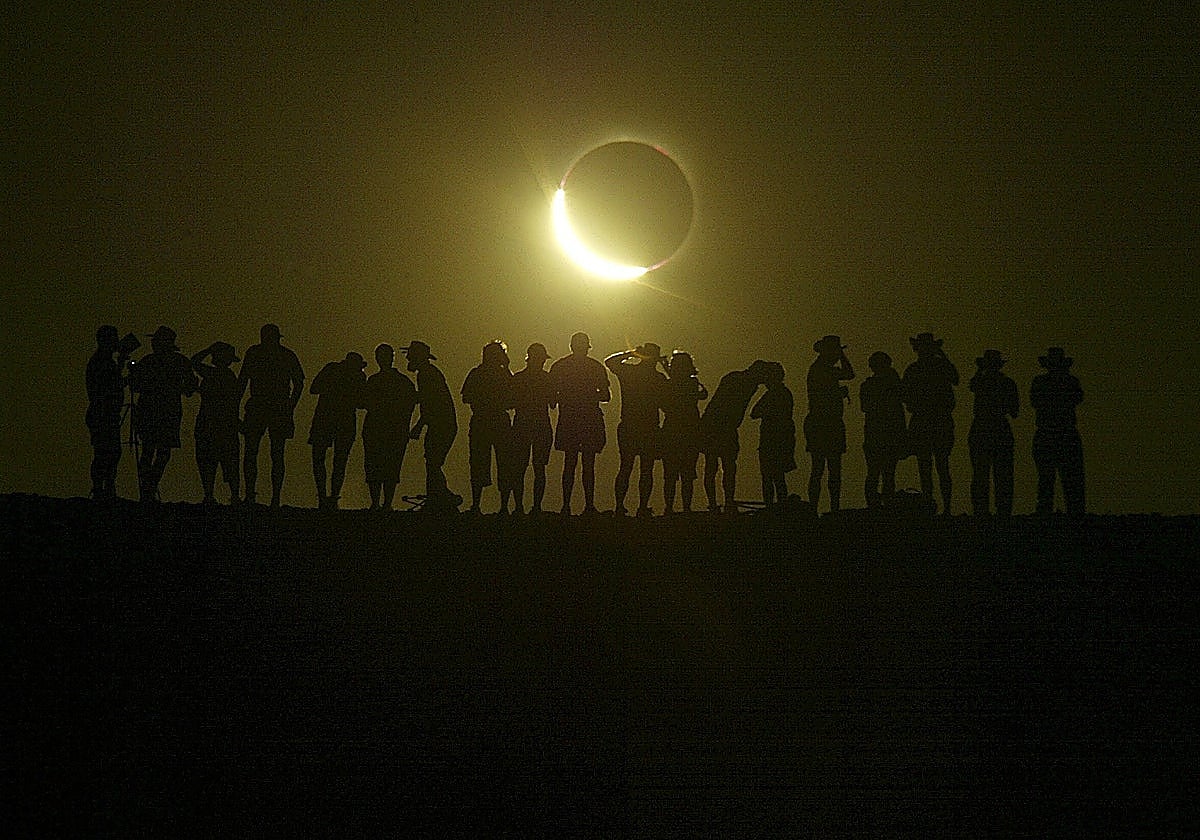
PHILIPPINES —
Key facts
- Total solar eclipse on 2 August 2027 will be the longest of the century, not to return for 157 years.
- 115 municipalities across Andalucía will experience total darkness; 10 of them are in Almería province.
- Calar Alto Observatory (CAHA) leads the scientific committee coordinating the event.
- A sequence of three eclipses begins on 12 August 2026 with a total eclipse partially visible in Andalucía.
- An annular solar eclipse on 26 January 2028 will be visible across the region except extreme southeast Almería.
- An online search engine will help the public find the best viewing spots in Almería province.
- Citizen science projects and 'Cafés with Science' meetings will engage the public on dark sky protection.
- Public must use approved glasses for solar observation and never look for more than 30 seconds.
A Once-in-a-Century Darkness Over Andalucía
On 2 August 2027, the longest total solar eclipse of the 21st century will sweep across southern Spain, turning day into night for more than four minutes. The event, described by the Junta de Andalucía as of extraordinary scientific, social and informative relevance, will plunge 115 municipalities across the region into complete darkness. Ten of those municipalities lie in Almería province, which is poised to become a global epicentre for astronomy tourism. This eclipse marks the climax of a rare sequence of three solar events visible from Andalucía over a span of 18 months. The first, on 12 August 2026, will be a total eclipse partially visible in the region. The third, an annular solar eclipse on 26 January 2028, will be visible throughout Andalucía except in the extreme southeast of Almería province.
Calar Alto Observatory Takes the Lead
To coordinate the scientific and public engagement efforts, a steering committee has been formed with the Calar Alto Observatory (CAHA) at its helm. CAHA, a state-of-the-art astronomical centre located in Almería, will oversee the planning of scientific observations and dissemination activities. The observatory's leadership underscores the province's growing reputation as a hub for astronomy and dark-sky conservation. Organisers have already launched an online campaign under the slogan '#ElEclipseNoSeImprovisa' (#TheEclipseIsNotImprovised), signalling that preparations are well underway. The campaign aims to inform the public about safe viewing practices and the scientific opportunities the eclipses present.
Tools for the Public: From Search Engines to Science Cafés
A dedicated online search engine will be made available to help residents and visitors identify the best locations in Almería province to watch each solar event. The platform is part of a broader effort to make astronomy accessible to all. In parallel, citizen science projects will invite the public to contribute to real research, while meetings called 'Cafés with Science' will allow leading researchers to discuss dark-sky protection and environmental sustainability with citizens. Almería is already a pioneer in night-sky quality, a factor that organisers hope will attract astronomy enthusiasts from around the world. The province's dark skies are a key asset for both scientific observation and tourism.
A Trio of Eclipses and a Cultural Legacy
Beyond the scientific and tourism dimensions, the eclipse sequence will leave a lasting cultural and educational imprint. A travelling exhibition titled 'Eclipsarte' will explore the historical relationship between art and science, connecting the celestial events to human creativity across the ages. Practical astronomy courses for all levels will also be offered, ensuring that the public can deepen their understanding of the cosmos. The organisers emphasise that solar observation must always be conducted with approved glasses and never for more than 30 seconds at a time to avoid eye damage. This safety message is a cornerstone of the public information campaign.
Global Significance and the Long Wait Ahead
The 2027 total solar eclipse is being billed as the longest of the century, with a totality duration that will not be surpassed for another 157 years. This rarity elevates the event from a regional spectacle to a global phenomenon, drawing astronomers, tourists, and media attention to Andalucía. The Junta de Andalucía's designation of the eclipse as an event of extraordinary relevance reflects the high stakes for the region's scientific community and tourism industry. As the countdown begins, Almería is positioning itself as a world-class destination for astronomical events, leveraging its natural assets and institutional expertise to maximise the impact of this once-in-a-lifetime occurrence.
Preparations Underway and the Road Ahead
With the first eclipse in the sequence just over a year away, the steering committee is working to finalise the programme of activities. The online search engine and citizen science initiatives are expected to go live in the coming months, while the 'Eclipsarte' exhibition will tour municipalities across the province. The success of these efforts will depend on effective coordination between scientific institutions, local governments, and the public. For Almería, the eclipses represent not just a scientific milestone but an opportunity to cement its reputation as a leader in astronomy tourism and dark-sky preservation. The province's ability to deliver a seamless experience for visitors and researchers alike will determine whether this celestial alignment translates into lasting economic and cultural benefits.
The bottom line
- The total solar eclipse of 2 August 2027 will be the longest of the century, with a return interval of 157 years.
- 115 municipalities in Andalucía, including 10 in Almería, will experience total darkness.
- Calar Alto Observatory leads the scientific coordination, supported by a steering committee.
- A sequence of three eclipses (2026, 2027, 2028) will be visible from the region, with the 2027 event as the climax.
- Public engagement tools include an online search engine, citizen science projects, and 'Cafés with Science'.
- Safe viewing requires approved glasses and observation limited to 30 seconds at a time.

Raptors Face Elimination as Barnes and Ingram Injuries Mount

Maxey and George Power 76ers Past Celtics 106-93, Forcing Game 7

Williams Returns to Lead Phoenix Past TNT in Overtime Thriller