Pakistan’s Labour Day: A Holiday Without Protection for Millions of Workers
As banks close and speeches are delivered, the vast majority of Pakistan’s labour force remains outside formal contracts, social security, and legal recourse.

PAKISTAN —
Key facts
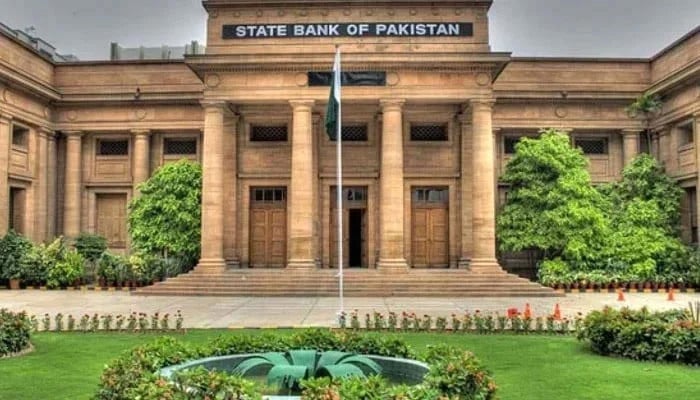
- The State Bank of Pakistan declared May 1 a public holiday for banks nationwide.
- Pakistan’s labour force continues to expand, but protections remain uneven and often symbolic.
- Most workers operate without formal contracts, social security, health coverage, or legal recourse.
- Persistent inflation and market instability have eroded real wages, creating a widespread 'working poor' condition.
- Minimum wage laws exist but are not uniformly enforced across provinces.
- Social protection systems cover only registered workers, excluding the vast informal sector.
A Public Holiday, a Broken Promise
The State Bank of Pakistan announced on Tuesday that all banks will remain closed on May 1 for Labour Day, a public holiday declared by the government. The notification, a brief administrative directive, underscores the official recognition of a day meant to honour workers’ rights and contributions. Yet for the millions of Pakistanis who toil in factories, on construction sites, and in the sprawling informal economy, the holiday rings hollow. Labour Day, also known as May Day, is observed annually on May 1 to express solidarity with labourers and to honour the achievements of the working class. Its purpose, as the central bank’s notification itself states, is to initiate steps for providing job protection against exploitation. But in Pakistan, the gap between the holiday’s intent and the daily reality of workers has become a defining feature of the labour ecosystem.
The Expanding Labour Force, the Shrinking Safety Net
Pakistan’s labour force continues to grow, yet the protections that should accompany that growth remain uneven and, in many cases, purely symbolic. Workers across the country routinely operate outside formal contracts, without social security, health coverage, or legal recourse. Even where laws exist, enforcement is sporadic, leaving legislation and lived reality far apart. This disconnect is not new, but economic pressures have deepened the strain. Persistent inflation and market instability have eroded real wages, leaving workers with diminishing purchasing power. For many households, employment no longer guarantees financial stability. The term 'working poor' has become a widespread condition, describing those who work full-time yet remain unable to meet basic needs.
The State and Market’s Shared Failure
The state’s response has been largely rhetorical. Speeches on Labour Day routinely romanticise work, but policy neglects the very people who carry the burden of the economy. Minimum wage laws, though notified, are not enforced uniformly across provinces. Social protection systems cover only registered workers, excluding the vast informal sector that powers urban centres like Karachi. Employers, for their part, often exploit the lack of oversight. Without formal contracts, workers have no legal standing to demand fair wages, safe conditions, or overtime pay. The result is a labour market where exploitation is the norm, not the exception. When these systemic failures go unaddressed, observing May Day becomes a mere ritual.
The Numbers Behind the Crisis
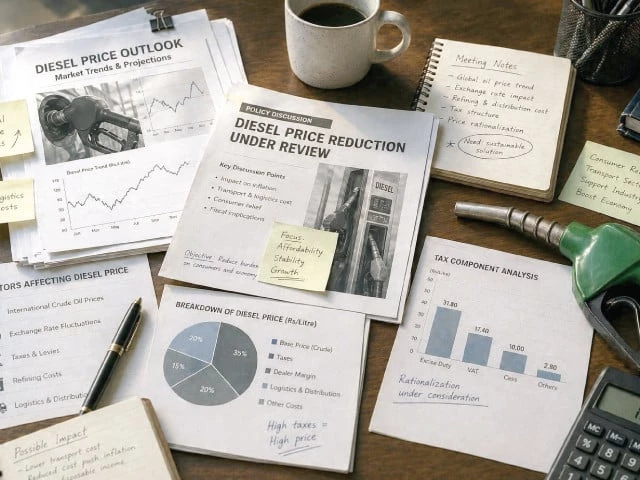
The scale of the problem is staggering. Pakistan’s informal economy accounts for a large majority of employment, yet these workers are invisible to official protections. Real wages have fallen sharply amid double-digit inflation, with the purchasing power of the average worker declining month after month. The government’s recent decision to raise petrol prices by Rs6.51 per litre and high-speed diesel by Rs19.39 per litre will further squeeze household budgets. Meanwhile, the State Bank’s notification of a public holiday does nothing to address the underlying issues. The bank itself will remain closed, but the workers who build the country’s infrastructure, staff its factories, and run its services will not see any change in their conditions. The holiday, in effect, masks the absence of meaningful action.
A Call to Action, Still Unanswered
May Day is rooted in the historic struggle for workers’ rights, a call to action against exploitation and indifference. That call remains relevant in Pakistan today, perhaps more urgently than ever. What is required, observers argue, is not rhetorical solidarity or fragmented reforms, but a coherent labour agenda. Minimum wage laws must be enforced uniformly across provinces, not merely notified. Social protection systems need expansion beyond registered workers to include informal labour through innovative mechanisms. Without such steps, the country will fail its workforce and undermine the very foundation of its economic future.
What Comes Next: A Test of Political Will
The government’s actions in the coming months will be closely watched. Prime Minister Shehbaz Sharif has directed a comprehensive strategy to stabilise electricity tariffs, but labour reforms have not been prioritised. The high-level committee constituted over the One Constitution Avenue dispute and the ongoing tensions at the DHA checkpoint in Karachi suggest that official attention is elsewhere. For workers, the immediate outlook is grim. Inflation continues to erode wages, and the informal economy shows no signs of formalising. Until the state translates its Labour Day speeches into enforceable rights and economic justice, the holiday will remain what it has become: a day off for banks, but not a day of change for those who need it most.
The bottom line
- Pakistan’s Labour Day is a public holiday for banks, but most workers lack formal contracts, social security, or legal recourse.
- The labour force is expanding, but protections are symbolic and enforcement is sporadic.
- Inflation and market instability have created a widespread 'working poor' class where employment no longer guarantees stability.
- Minimum wage laws are not uniformly enforced across provinces, and social protection excludes the informal sector.
- Meaningful reform requires a coherent labour agenda, not rhetorical solidarity or fragmented measures.
- Without enforceable rights and economic justice, Labour Day remains a ritual rather than a catalyst for change.

Rain Washes Out Second T20I in Chattogram, Bangladesh Clinch Series
Rain Washes Out Second T20I as Bangladesh Secures Series Lead
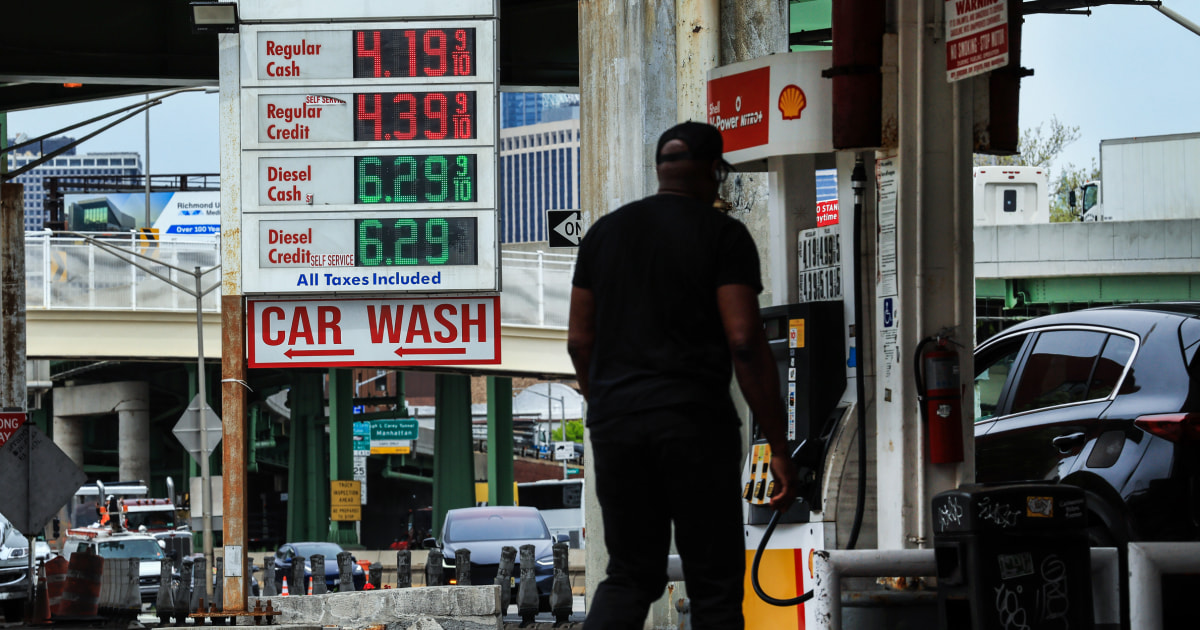
U.S. gas prices hit record $4.23 as Iran war and Strait of Hormuz blockade squeeze supply