Iraq's Political Outsider: Businessman Ali al-Zaidi Tapped as Prime Minister-Designate
The 40-year-old multimillionaire, with no prior political office, emerges as a surprise compromise candidate to break months of deadlock within the Shia Coordination Framework.

PAKISTAN —
Key facts
- Ali al-Zaidi, 40, was named prime minister-designate by President Nizar Amedi on Monday.
- He holds Bachelor’s degrees in law and finance and a Master’s in banking and finance.
- Al-Zaidi chairs the National Holding Company, a conglomerate founded in 2017 with interests in agriculture, real estate, banking, logistics, and renewable energy.
- He also chairs Shaab University and the Ishtar Medical Institute, and previously chaired Al-Janoob Islamic Bank, which faced Central Bank sanctions.
- The Coordination Framework, Iraq's largest Shia bloc, missed the April 26 constitutional deadline to name a candidate before selecting al-Zaidi.
- Voter turnout in the last parliamentary elections was 56.1%, with about 12 million votes cast in a country of 46-47 million people.
- The U.S. maintains roughly 2,500 troops in Iraq, while Iran-backed armed groups, including those in the Popular Mobilization Forces, are estimated at over 100,000 fighters.
A Surprise Nomination Breaks Political Stalemate
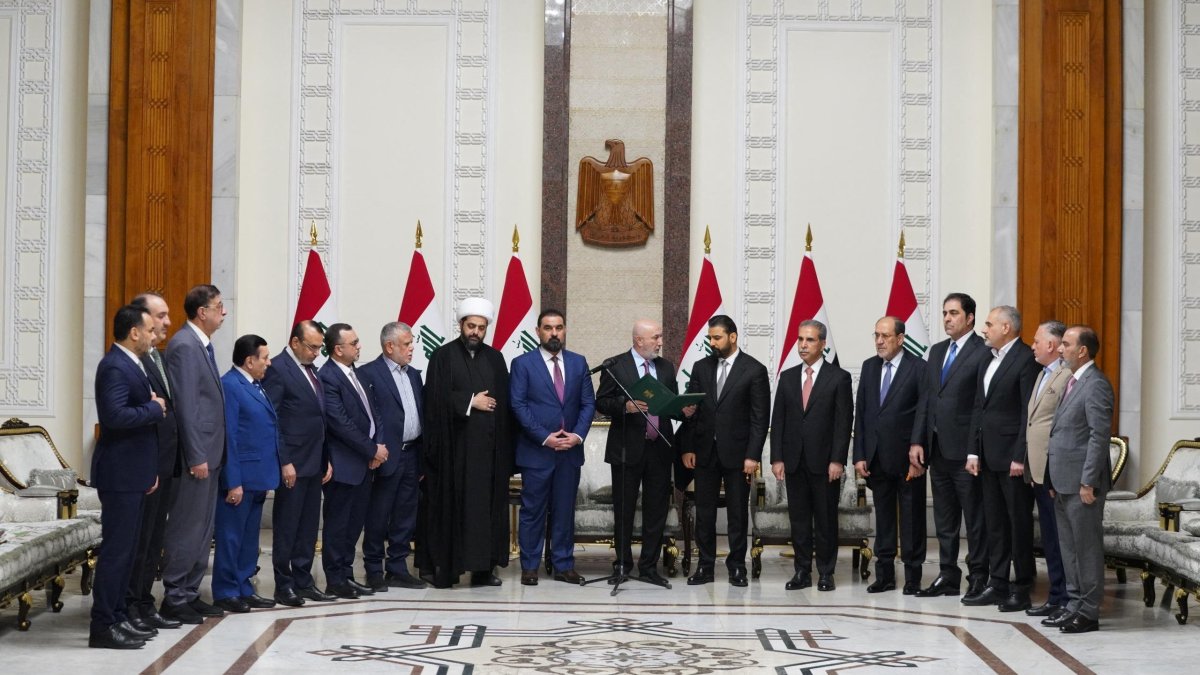
After months of political wrangling, Iraq’s Coordination Framework on Monday named Ali al-Zaidi, a multimillionaire business figure, as the compromise candidate of the governing Shia bloc. “After considering the names of the candidates, Ali al-Zaidi was chosen to be the candidate of the Coordination Framework bloc, as the largest bloc in the House of Representatives, to occupy the position of prime minister and form the next government,” a Coordination Framework statement read after a meeting in the capital Baghdad. Shortly after that, Iraq’s President Nizar Amedi appointed 40-year-old al-Zaidi as prime minister-designate and tasked him with forming a government, averting a constitutional crisis. Al-Zaidi’s elevation comes after months of a frantic search for a compromise candidate acceptable to both local factions and foreign powers. Former President Nouri al-Maliki, a deeply divisive pro-Iran figure, was forced to withdraw from the race following opposition from US President Donald Trump. Outgoing Prime Minister Mohammed Shia al-Sudani, who was brought to power by the Coordination Framework in 2022, failed to get the backing for a second term. Both Iran and the US have close ties with Baghdad.
Who Is Ali al-Zaidi? A Businessman with No Political Track Record
Unlike his predecessors, al-Zaidi has no history in political office or government administration. Born in the capital, Baghdad, to a prominent family originating in the southern province of Dhi Qar, he built his career in the private and academic sectors. He holds Bachelor’s degrees in law and finance, as well as a Master’s degree in banking and finance, and is a member of the Iraqi Bar Association. Al-Zaidi sits at the helm of the National Holding Company, a conglomerate established in 2017 with interests spanning agriculture, real estate, banking, logistics, and renewable energy. His portfolio extends to the education and health sectors as well, where he serves as chairman of the board for Shaab University and the Ishtar Medical Institute. He also previously chaired the board of Al-Janoob Islamic Bank. have noted that the bank previously faced sanctions from the Central Bank of Iraq, adding a layer of scrutiny to al-Zaidi’s financial background. His sudden ascent was born out of a severe political deadlock within the Coordination Framework, Iraq’s largest Shia parliamentary bloc, which had already missed its constitutional deadline to name a candidate by April 26.
A Generational Shift in a System of Familiar Faces
Since 2003, Iraq has now reached its eighth prime minister-designate and, notably, its youngest nominee to date. Al-Zaidi, a surprise pick announced immediately after the constitutional deadline, is a 40-year-old businessman, signaling a potential generational shift in the country’s political leadership. In comparison, figures such as Nouri al-Maliki, Haider al-Abadi and Mustafa al-Kadhimi all took office in their late 50s or early 60s, making al-Zaidi’s appointment a clear break from the traditional leadership profile. Younger leadership is often praised worldwide, but usually in countries with less complex political and geopolitical pressures. Iraq, in contrast, operates under both intense internal divisions and external influence, where the prime minister, as the highest executive authority, is typically the one who carries the weight of these challenges. In a system where new voices are rarely introduced, and both the government and the public are largely accustomed to familiar figures, his nomination stands out even more.
Deep-Rooted Crisis: Low Turnout and Structural Gridlock
Iraq remains one of the most politically complex countries in the region, and the parliamentary elections held last year on Nov. 11, alongside escalating tensions following the recent U.S.-Iran confrontation, have pushed the country into a deeper structural crisis. The depth of the crisis is reflected in the numbers, where voter turnout in the latest elections was officially reported at around 56.1%, or roughly 12 million voters, in a country of nearly 46 million to 47 million people, a gap that highlights a widening disconnect between the political system and the people. Following the elections, choosing the speaker of Parliament was one of the easier steps, allowing lawmakers to return to regular sessions, but beyond that, things became much more difficult to move forward. Although a president has now been elected and a prime minister designated, divisions between the Kurdistan Democratic Party (PDK) and the Patriotic Union of Kurdistan (PUK) slowed progress, dragging out talks over the presidency for weeks at a critical moment. At the same time, the Coordination Framework struggled to agree internally on its prime minister candidate, further delaying government formation and reinforcing the sense that the political process remains stuck.
Balancing U.S. and Iranian Influence: A Financial and Security Tightrope
On the ground, the U.S. maintains roughly 2,500 troops in Iraq, while Iran-backed armed groups, including those operating alongside the Popular Mobilization Forces (PMF), are estimated to include more than 100,000 fighters. But the issue is not only about numbers or military presence. It also extends to financial leverage, as Iraq’s oil revenues are largely held in accounts at the Federal Reserve Bank of New York, giving Washington significant influence over Iraq’s economic lifelines. This means that balancing between these competing powers is not just a security challenge, but also a financial one, where decisions on currency flows, sanctions and access to funds can directly shape Iraq’s internal stability. Managing both Iranian and U.S. influence inside Iraq has proven difficult to contain stably. Iran operates largely through armed proxies, while the U.S. maintains an official military presence, and their tensions have repeatedly played out on Iraqi soil.
Reform Expectations vs. Political Realities
Yes, the ability to balance competing forces in such a complicated environment is essential. But in Iraq’s case, balancing alone will not be enough to deal with the country’s deep-rooted corruption. It also requires real, decisive reforms, stronger rule of law, and the courage to confront powerful political and militia networks that benefit from maintaining the status quo. Without accountability, transparency and a clear plan that goes beyond short-term deals, any effort will likely remain symbolic rather than lead to real change. Al-Zaidi, as a political outsider, may bring a fresh perspective, but he faces immense pressure from entrenched interests. His lack of political experience could be both an asset—allowing him to break with past practices—and a liability, as he navigates a system designed to maintain balance among factions rather than effective governance. The coming weeks will test whether he can form a government and begin addressing Iraq’s profound challenges.
The bottom line
- Ali al-Zaidi, a 40-year-old businessman with no political background, has been named Iraq's prime minister-designate after months of deadlock.
- He chairs the National Holding Company and previously chaired Al-Janoob Islamic Bank, which faced Central Bank sanctions.
- Al-Zaidi is the youngest prime minister-designate since 2003, breaking the pattern of older, established politicians.
- Voter turnout in the last elections was only 56.1%, reflecting deep public disengagement from the political system.
- Iraq must balance the competing influences of the U.S. (2,500 troops and control over oil revenues) and Iran (over 100,000 militia fighters).
- Al-Zaidi faces the challenge of implementing reforms against powerful political and militia networks resistant to change.




Pakistan Meteorological Department Dismisses Viral 'Heat Burst' Warning as Unfounded
Riyan Parag fined 25% of match fee for vaping in IPL dressing room
Chief Minister of Khyber Pakhtunkhwa — and what comes next