Pakistan's Diesel Price Surge 56% as Refinery Policy Stalls, Exposing Strategic Vulnerability
While India and Bangladesh shield consumers from global oil shocks, Islamabad passes costs directly to citizens and raises petroleum levy, deepening a crisis in domestic refining.
PAKISTAN —
Key facts
- Petrol in Pakistan rose from Rs257 to Rs399.86 per litre since February 1, a 56% increase.
- Diesel increased from Rs267 to Rs399.58 per litre, a 50% rise over the same period.
- Brent crude oil climbed from $68-70 per barrel to $105-$115, a 54-64% increase.
- India's petrol price remained unchanged at Rs94.72 per litre (approx Rs280 in Pakistani rupees).
- Bangladesh's petrol price stayed at approximately BDT 130 per litre since February 1.
- Pakistan's refining sector absorbed an estimated Rs35 billion in costs in April alone to support consumer pricing.
- Cumulative losses of Pakistan Refinery, Cnergyico and National Refinery reached approximately Rs50 billion over the past five years.
- The government added Rs28 per litre to diesel through the petroleum levy on Thursday evening.
A Sharp Price Hike and a Policy Divide
On Thursday evening, the government announced an increase in diesel prices by adding Rs28 per litre through the petroleum levy, pushing the fuel to around Rs399.58 per litre. This marks a 50 percent rise since February 1, when diesel stood at about Rs267 per litre. Petrol has followed a similar trajectory, climbing 56 percent from Rs257 to Rs399.86 per litre over the same period. The increases stand in stark contrast to the stability seen in neighbouring countries. In New Delhi, petrol has remained at Indian Rs94.72 per litre (approximately Rs280 in Pakistani rupees) since February 1, while diesel holds at around Indian Rs88 per litre. Bangladesh has also kept prices largely unchanged, with petrol at about BDT 130 per litre and diesel near BDT 109 per litre. All three countries faced the same global oil shock: Brent crude rose from $68-70 per barrel to $105-$115, an increase of 54 to 64 percent.
Different Choices, Same Global Price
The divergence is a matter of policy, not market forces. India manages prices by cutting taxes and directing state-owned oil companies — Indian Oil Corporation, Bharat Petroleum and Hindustan Petroleum — to absorb losses on their balance sheets. Bangladesh's government-owned Bangladesh Petroleum Corporation administers prices, absorbing shocks and adjusting infrequently, shifting costs to the public balance sheet. Pakistan, by contrast, passes international price fluctuations through immediately, raises the petroleum levy, and pays domestic refineries import parity prices. The consumer absorbs the shock, the government collects the tax, and refineries operate on thin margins. The outcome, as the refining sector describes it, is a system where fiscal considerations appear to overtake structural reform.
Refinery Policy Stalled for Seven Years
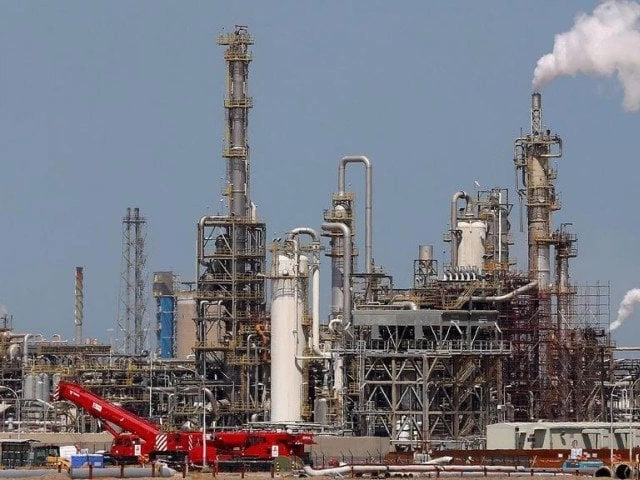
The Special Investment Facilitation Council (SIFC) is now pushing relevant ministries to resolve the General Sales Tax (GST) waiver issue, a key obstacle to implementing a new oil refinery policy that has been pending for two years. The policy itself has been in limbo for nearly seven years, according to industry sources. Had it been executed on time, enabling refineries to upgrade to Euro-V standards and expand capacity, Pakistan could have become a net exporter of refined petroleum products, earning billions of dollars annually. Instead, the country remains heavily reliant on imports, exposing itself to global price shocks and currency pressures. The refining industry argues that a narrative has emerged painting local refineries as inefficient relics, overly dependent on state protection, but that this obscures a more complex story of structural neglect, policy inconsistency, and an entrenched import lobby that has quietly shaped the discourse.
Billions in Losses and a Sector Under Strain
The consequences of policy inertia are measurable. Pakistan Refinery, Cnergyico and National Refinery — particularly those in the southern region — have suffered cumulative losses of approximately Rs50 billion over the past five years. In April alone, the refining sector absorbed an estimated Rs35 billion in costs to support consumer pricing, a figure that underscores both its capacity and its vulnerability. Owing to the GST concession, refineries and oil companies have faced losses of billions of rupees, and the SIFC is now urging ministries to resolve the waiver issue. The industry contends that successive governments have recognised the critical importance of a robust domestic refining base for energy security, balance of payments stability and industrial growth, yet implementation has lagged.
Strategic Assets at Risk
The refining sector emphasises that refineries are not merely industrial units but strategic assets, whose viability determines the country's ability to manage supply disruptions, control pricing volatility and reduce dependence on imports. Undermining them through policy neglect or narrative manipulation risks deepening Pakistan's reliance on external markets at a time when global energy dynamics are increasingly unpredictable. Recent decisions have left several refineries operating on thin margins, and the industry argues that the situation has evolved into a form of indirect subsidy. To maintain lower diesel prices earlier, the government effectively reduced refinery margins to near break-even levels. Now, with the levy being increased, the burden appears to be shifting again, this time directly onto consumers.
The Road Ahead: Reform or Continued Vulnerability
The SIFC's renewed push to resolve the GST waiver issue signals a possible shift, but the track record of delayed implementation raises doubts. The refining industry points to the opportunity cost of delay as not merely financial but strategic, leaving Pakistan exposed to global price shocks and currency pressures. As the government raises the petroleum levy and consumers face mounting costs, the question of whether fiscal considerations will continue to trump structural reform remains open. The contrasting approaches of India and Bangladesh demonstrate that the pain of global oil prices is, ultimately, a policy choice.
The bottom line
- Pakistan's petrol and diesel prices have surged 56% and 50% respectively since February, while India and Bangladesh kept prices unchanged.
- The price divergence stems from policy choices: India and Bangladesh shield consumers via state-owned companies absorbing costs; Pakistan passes through prices and raises the petroleum levy.
- The new refinery policy, aimed at upgrading to Euro-V standards and boosting capacity, has been stalled for seven years, leaving Pakistan reliant on imports.
- Three major refineries — Pakistan Refinery, Cnergyico and National Refinery — have accumulated losses of about Rs50 billion over five years.
- The refining sector absorbed Rs35 billion in costs in April alone to support consumer pricing, highlighting its vulnerability.
- The SIFC is pushing for a GST waiver resolution, but without timely implementation, Pakistan's energy security remains at risk.

Pakistan Meteorological Department Dismisses Viral 'Heat Burst' Warning as Unfounded

Riyan Parag fined 25% of match fee for vaping in IPL dressing room
Chief Minister of Khyber Pakhtunkhwa — and what comes next