Pakistan to End Untargeted Electricity Subsidies by 2027
IMF loan conditions trigger shift to targeted support for vulnerable households, impacting millions.
PAKISTAN —
Key facts
- Pakistan commits to ending untargeted electricity subsidies for residential consumers.
- Subsidies will be channeled through the Benazir Income Support Programme (BISP).
- The shift is a condition for a $1.2 billion IMF climate support loan.
- Consumers using up to 300 units monthly will be affected.
- The new subsidy mechanism is expected to be operational by January 2027.
- Integration with the National Socio-Economic Registry (NSER) is underway.
- An external consultancy firm will be hired to develop the payment framework.
A Sweeping Overhaul of Power Subsidies
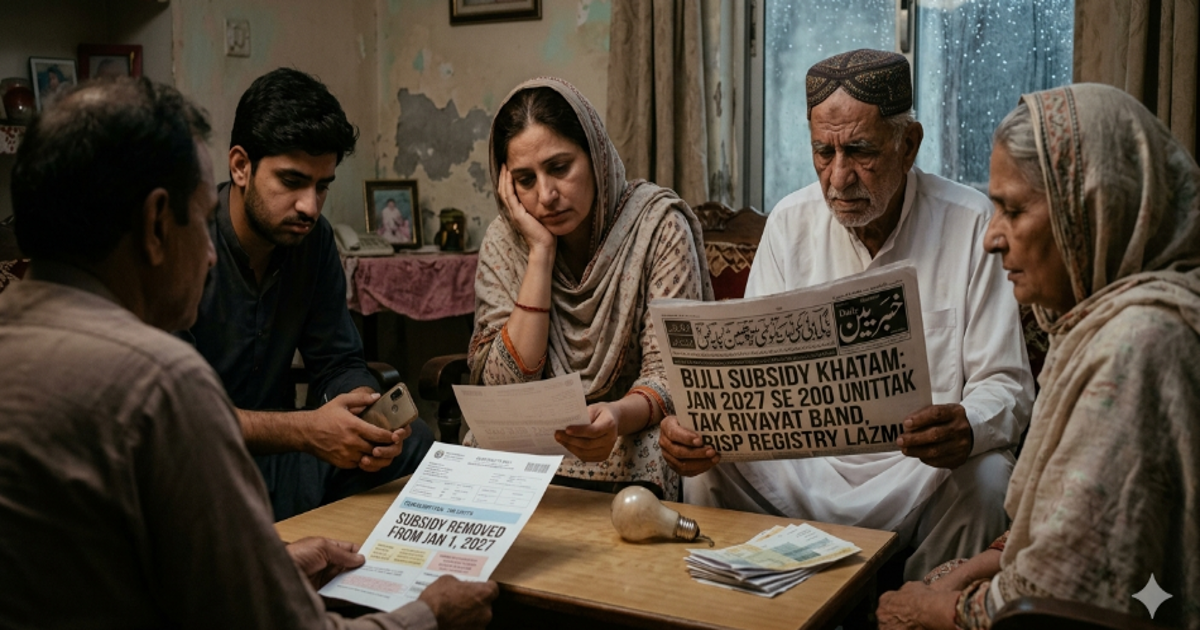
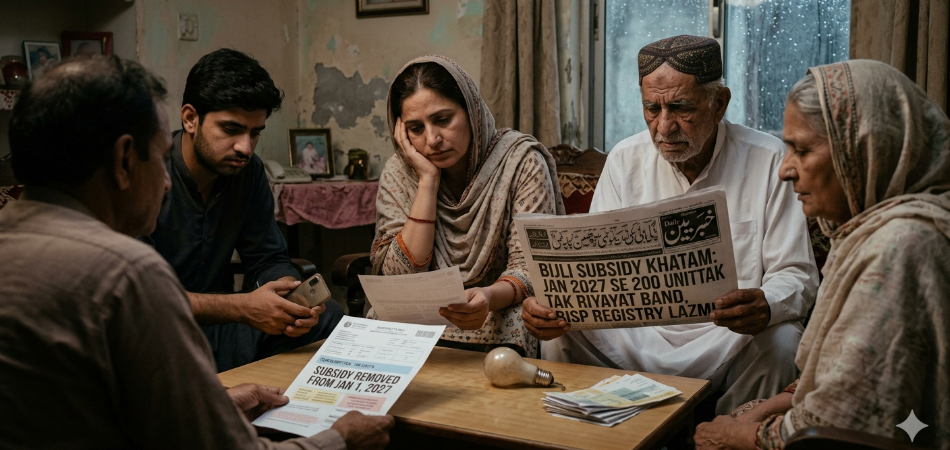
Pakistan is embarking on a significant restructuring of its electricity subsidy system, a move driven by commitments made to the International Monetary Fund (IMF). The government has assured the international body that untargeted subsidies for residential consumers will be phased out, with future support to be delivered exclusively through the Benazir Income Support Programme (BISP). This policy shift, intended to align energy sector reforms with national climate change objectives, is a key condition for a $1.2 billion climate facility loan. The current broad-based relief mechanism benefits residential consumers consuming up to 200 units monthly. However, officials involved in the discussions indicate that the IMF has pushed for a gradual discontinuation of this model, advocating for a targeted support system focused solely on financially vulnerable households. This overhaul is part of a wider fiscal reform strategy aimed at bolstering revenue collection, improving the tax-to-GDP ratio, and alleviating the burden of untargeted subsidies on the national exchequer. The commitment was solidified as part of the second review of the Resilience and Sustainability Facility (RSF), with the IMF executive board expected to approve $200 million of this loan imminently.
Impact on Consumers and Evasion Tactics
The impending changes will directly affect residential consumers using up to 300 units of electricity per month. This includes a significant portion of lower and middle-income households who have, in some instances, employed tactics to circumvent higher tariff rates. These tactics involve dividing consumption across multiple electricity meters installed at a single residence. By splitting their monthly usage, these users have managed to remain below the 300-unit threshold, thereby continuing to benefit from lower, subsidized rates that would otherwise not apply. Officials believe that some consumers intentionally segment their electricity usage across different meters to maintain consumption below the 200-unit threshold, thereby continuing to access lower tariff slabs and subsidized rates. The government is now reviewing such cases as part of the reform process.
The BISP and NSER Integration
Under the proposed framework, electricity subsidies will be exclusively available to deserving families registered with the BISP. This program currently has 10 million registered families, a figure that contrasts with the approximately 22 million electricity users who consume up to 300 units. The revised mechanism will leverage data from the National Socio-Economic Registry (NSER) to ascertain eligibility, ensuring that subsidy support reaches low-income consumers rather than being universally distributed. The government is collaborating with the World Bank to integrate electricity consumer records with the NSER database, facilitating electronic verification of household eligibility for subsidized tariffs. A formal verification exercise is slated to commence once this integration process is complete. This digital linkage is crucial for the efficacy of the targeted subsidy plan, which is scheduled to be enforced from January next year, with system efficacy checks planned for August this year.
Financial Implications and Future Funding
The shift to a targeted subsidy mechanism is projected to free up approximately Rs500 billion, which is currently allocated to tariff differential subsidies. These funds primarily support consumers using up to 200 units, agriculture tube wells, and consumers in tribal areas and Azad Jammu and Kashmir. Finance Minister Muhammad Aurangzeb has highlighted the need to focus on existing financing avenues for climate change initiatives, including loans from the IMF, World Bank, and Asian Development Bank. He also reiterated plans to float $250 million in Panda bonds this month to finance environment-friendly and health projects. The IMF's insistence on this reform stems from its view that a targeted approach will reduce the incentive for overconsumption among higher-income consumers and lessen pressure on industry to maintain tariffs misaligned with costs. Furthermore, the fund believes targeted subsidies will reduce the consumption of subsidized units, thereby minimizing incentives for theft and lowering overall energy prices.
Timeline and Consultancy
The revised subsidy regime is expected to become fully operational by January 2027. This timeline allows for the necessary integration, verification, and system development. To facilitate the disbursement of targeted subsidies, the government plans to appoint an external consultancy firm by the end of the current month. This firm will be tasked with developing the payment and disbursement framework for the new program. Officials are also reviewing the broader reform agenda, which includes the gradual withdrawal of tariff differential and cross-subsidies in the power sector through the upcoming federal budget. These planned reforms are integral to Pakistan's ongoing negotiations and commitments under the IMF program, which emphasizes fiscal consolidation, energy sector reforms, and the reduction of circular debt.
Broader Reform Context
Beyond electricity, the government is exploring other targeted subsidy initiatives. For instance, Sindh has approved a development package that includes Rs2 billion for a motorcycle fuel subsidy, and a Rs515 million fuel subsidy for fishermen. Separately, the government has approved a Rs9 billion subsidy for e-bikes under Phase 2 of the PAVE initiative. Transparency measures are also being introduced, with electricity bills set to display subsidy details via QR codes. This aims to provide consumers with a clearer understanding of the financial support they receive. The overarching goal of these reforms is to create a more sustainable and equitable energy sector. By shifting away from blanket subsidies, Pakistan aims to improve its fiscal health, encourage more efficient energy use, and ensure that support reaches those who genuinely need it most.
The bottom line
- Pakistan is transitioning from untargeted to targeted electricity subsidies, a key IMF condition.
- The Benazir Income Support Programme (BISP) will be the primary channel for future subsidies.
- Consumers using up to 300 units monthly will be affected by the subsidy phase-out.
- Integration with the National Socio-Economic Registry (NSER) is crucial for eligibility verification.
- The reforms aim to save approximately Rs500 billion annually by eliminating untargeted subsidies.
- The new subsidy system is scheduled for full implementation by January 2027.

Apple to Keep iPhone 18 Pro Base Prices Unchanged Despite Rising Memory Costs, Analyst Says

Prominent Cleric Maulana Muhammad Idrees Gunned Down in Charsadda, Sparking Protests

Josh Inglis joins Lucknow Super Giants for Rs 8.6 crore, available for Monday's IPL clash against Mumbai Indians