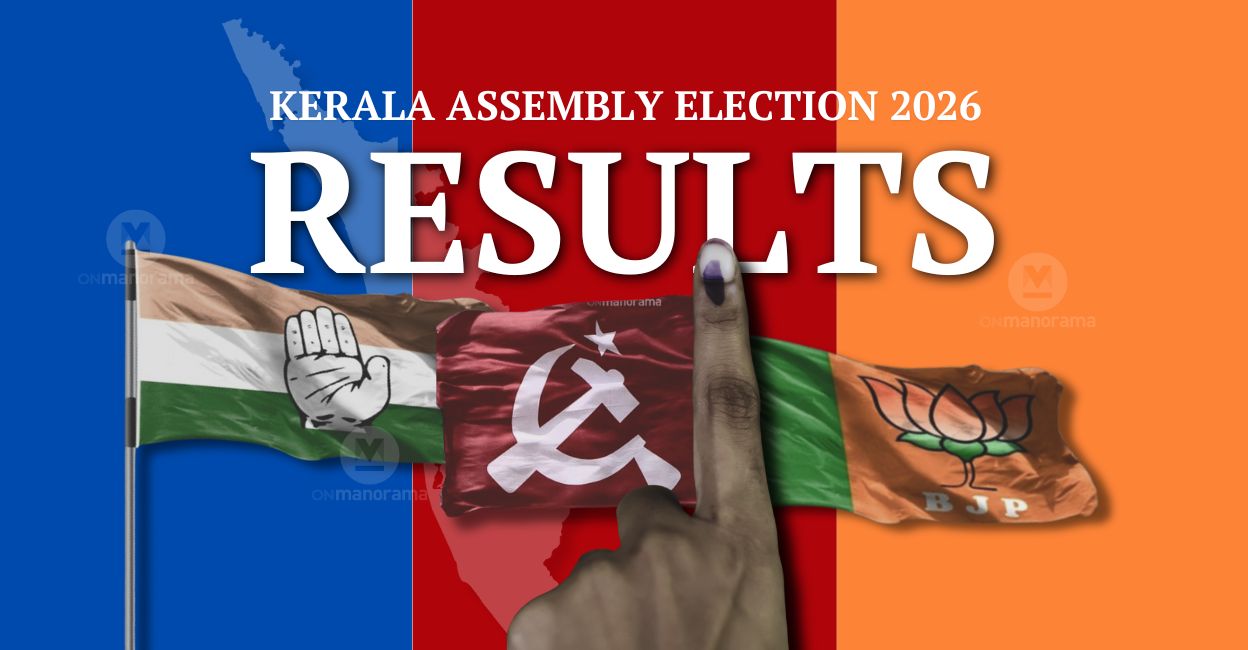
UDF Sweeps Kerala Assembly Elections, LDF Ousted After Decade in Power
Congress-led alliance crosses majority mark with 82-94 seats, as anti-incumbency wave ends Pinarayi Vijayan's tenure.
QATAR —
Key facts
- Counting for 140 seats began at 8 am on May 4, 2026, across 43 locations.
- UDF projected to win 82-94 seats, crossing the majority mark of 71.
- LDF secured 44-56 seats, a sharp decline from 99 in 2021.
- BJP won 3 seats, marking its first representation in the assembly.
- Congress emerged as single-largest party with 63 seats.
- IUML won 22 seats, Kerala Congress 7, and RSP and Kerala Congress (Jacob) added seats.
- VVPAT slips verified in five randomly selected booths per constituency.
- 15,465 personnel deployed, including 140 Returning Officers and 4,208 micro observers.
Decisive Mandate for UDF
The Congress-led United Democratic Front (UDF) has secured a decisive victory in the 2026 Kerala Assembly elections, comfortably crossing the majority mark of 71 seats in the 140-member house. The final tally, declared on May 4, confirms a clear shift in voter sentiment after a decade of Left Democratic Front (LDF) rule. Early trends emerged by 9:30 am, with final results visible by late afternoon. a smooth counting process across 140 centres in 43 locations, overseen by 15,465 personnel.
LDF Suffers Historic Defeat
The ruling LDF, led by Chief Minister Pinarayi Vijayan, has been reduced to 44-56 seats, a dramatic fall from the 99 seats it won in 2021. The CPI(M) secured 26 seats, while the CPI won 8, with smaller allies making marginal gains. The defeat ends the LDF's two consecutive terms in power, a rare feat in Kerala's alternating political history. Exit polls had indicated a tight contest, with the Manorama News–C Voter survey projecting a UDF win of 82-94 seats. The final result aligns with those predictions, underscoring strong anti-incumbency against the Vijayan government.
Congress Emerges as Single-Largest Party
The Congress party has emerged as the single-largest party with 63 seats, forming the backbone of the UDF's victory. Key allies include the IUML with 22 seats, Kerala Congress with 7, and smaller partners like RSP and Kerala Congress (Jacob). The alliance's broad-based mandate reflects a consolidation of anti-LDF votes across constituencies. The UDF's performance marks a significant turnaround from the 2021 elections, when it won only 41 seats. The victory is attributed to a wave of discontent over issues such as unemployment, inflation, and governance failures.
BJP Opens Account with Three Seats
The Bharatiya Janata Party (BJP) has won three seats in the 2026 elections, a modest but notable increase from zero in 2021. The party's vote share is expected to rise slightly, though it remains a distant third in Kerala's bipolar political landscape. Independents and smaller parties secured three seats, with one more leading. The BJP's gains, while limited, signal a gradual expansion in a state where it has historically struggled. The party's performance will be closely watched as it seeks to build a foothold in southern India.
Counting Process and Transparency Measures
Counting began at 8 am on May 4 with postal ballots, followed by Electronic Voting Machines (EVMs). Up to 14 EVMs were used per centre for counting rounds. To ensure transparency, VVPAT slips were verified in five randomly selected booths per constituency; in case of discrepancies, VVPAT slips were treated as final. Chief Electoral Officer Rathan U Kelkar confirmed that all arrangements were in place for a smooth process. A total of 15,465 personnel were deployed, including 140 Returning Officers and 4,208 micro observers. Strict guidelines were issued for party agents and candidates present in counting halls.
Government Formation and Leadership Selection
With the UDF's victory confirmed, attention now turns to government formation. A Congress Legislature Party (CLP) meeting is expected to take place the day after the results, where the leader of the legislature party will be chosen. An appointed observer is set to travel to Kerala to oversee the proceedings and facilitate consensus on leadership. The new chief minister is likely to be from the Congress, given its dominant position within the alliance. The UDF's return to power marks a significant political turnaround in Kerala, ending the LDF's decade-long rule.
Kerala's Political Pendulum Swings Again
The 2026 election results reaffirm Kerala's tradition of alternating between the LDF and UDF, a pattern broken only by the LDF's consecutive wins in 2016 and 2021. The anti-incumbency wave against Pinarayi Vijayan's government proved decisive, with voters opting for change after two terms. The outcome also highlights the resilience of Kerala's bipolar politics, with the BJP unable to make significant inroads despite a slight increase in seats. As the UDF prepares to take office, the state faces challenges including fiscal stress, unemployment, and infrastructure development. The new government's ability to address these issues will shape its tenure.
The bottom line
- UDF won a decisive majority with 82-94 seats, ending LDF's decade-long rule.
- Congress emerged as single-largest party with 63 seats, leading the alliance.
- LDF suffered a major defeat, dropping from 99 seats in 2021 to 44-56.
- BJP won 3 seats, its first representation in the Kerala Assembly.
- Counting was conducted smoothly on May 4 with VVPAT verification for transparency.
- CLP meeting scheduled to choose new chief minister, with Congress likely to lead.





Texas Supreme Court Blocks Extended Polling Hours in Dallas County Amid Primary Turmoil
Congress-led UDF Sweeps Kerala Assembly Elections, Ending LDF's 10-Year Rule

Vijay's TVK Surges Ahead in Tamil Nadu, Threatening Dravidian Dominance