New Mexico judge to decide if Meta is a public nuisance in landmark child safety trial
The second phase of the state's lawsuit against the Facebook parent could force sweeping changes to Instagram and Facebook after a jury already found the company misled the public.

SERBIA —
Key facts
- A jury in March ordered Meta to pay $375 million for violating New Mexico's unfair practices act.
- The state is seeking approximately $3.7 billion in abatement costs plus injunctive relief.
- Attorney General Raúl Torrez wants an independent monitor to oversee Meta's compliance.
- Meta argues the demanded changes are 'technically impractical' and could force it to leave New Mexico.
- The bench trial will determine if Meta's platforms constitute a 'public nuisance' under state law.
- The case is part of a wave of litigation experts compare to the tobacco industry's 'Big Tobacco' moment.
A high-stakes bench trial begins in Santa Fe
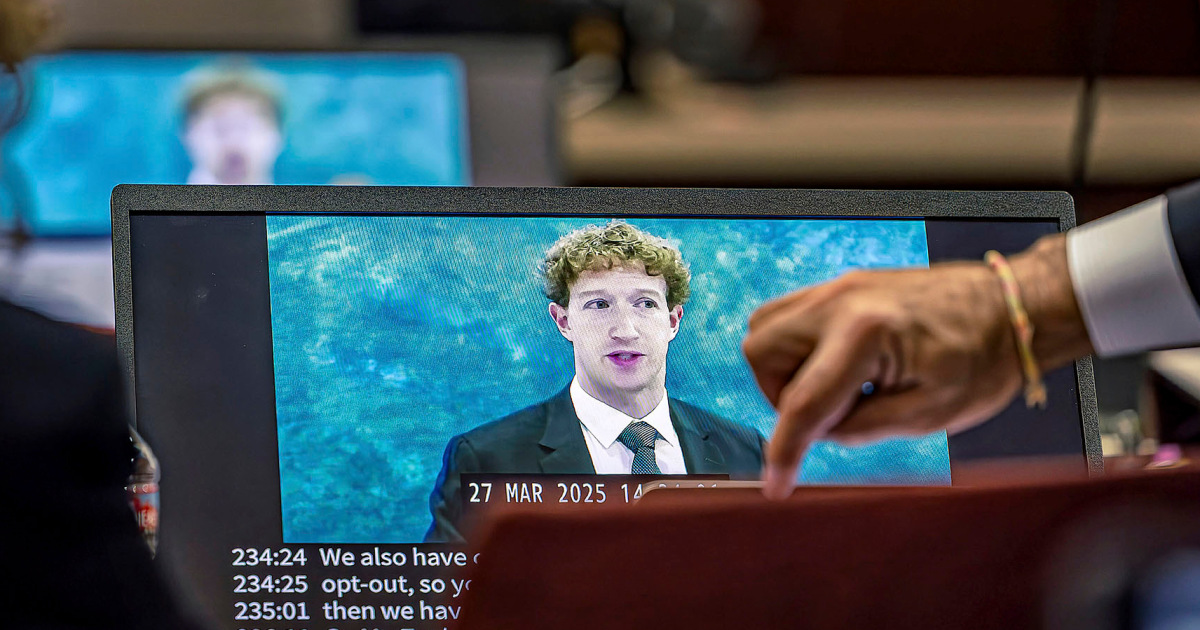
Meta Platforms returned to a Santa Fe courthouse on Monday for the second phase of a child safety lawsuit that could fundamentally alter how the company operates in New Mexico. The juryless bench trial, expected to last three weeks, will decide whether the company's Facebook and Instagram platforms have created a 'public nuisance' under state law. A finding of public nuisance would empower the judge to order wide-ranging remedies, including age-verification technologies, changes to recommendation algorithms, and an end to features like autoplay and infinite scroll for minors. The state is also seeking an independent monitor to ensure compliance, with Attorney General Raúl Torrez stating that 'Meta can't be trusted to regulate itself.'
The first phase: a $375 million verdict and a finding of willful misconduct
The current trial follows a March jury verdict that found Meta willfully violated New Mexico's Unfair Practices Act by misrepresenting the safety of its platforms for young users. The jury ordered the company to pay $375 million in damages, a sum calculated based on the number of offenses. That verdict set the stage for the present phase, where the judge must determine whether Meta's actions amount to a public nuisance. If so, the state is seeking approximately $3.7 billion in abatement costs, as well as injunctive relief that Torrez described as 'fundamentally restructuring how Meta is allowed to do business in the state.'
The state's case: addiction, exploitation, and a call for structural reform
New Mexico's lawsuit, filed by Torrez, a Democrat, accuses Meta of designing its platforms to addict young users and failing to protect children from sexual exploitation. The attorney general's office argues that the company's algorithms prioritize engagement over well-being, leading to a mental health crisis among adolescents. In a press briefing last week, Torrez said the case aims to 'set a new standard, not only in the state of New Mexico but nationally and potentially globally, for a new set of expectations for how social media companies are expected to conduct themselves.' The state is demanding that Meta implement effective age verification, redesign its algorithms to promote quality content for minors, and eliminate features that encourage compulsive use.
Meta's defense: technical impossibility and disputed science
Meta has pushed back vigorously, arguing that many of the changes sought by the state are 'technically impractical, impossible for any company to meet and disregard the realities of the internet,' according to a company spokesperson. In court filings, Meta also contends there is no scientific evidence linking social media to mental health problems. The company has warned investors that legal and regulatory pressures in the European Union and the United States 'could significantly impact our business and financial results.' A Meta spokesperson further criticized the state's focus, saying, 'The New Mexico Attorney General’s focus on a single platform is a misguided strategy that ignores the hundreds of other apps teens use daily.'
A 'Big Tobacco' moment for social media
Legal experts have characterized the New Mexico case as part of a broader reckoning for social media companies, drawing parallels to the tobacco industry's downfall in the 1990s. Nikolas Guggenberger, an assistant professor at the University of Houston Law Center, noted that 'if one compares the power held by big tobacco companies today, and compares it to the 1980s or even 90s, I mean there's no comparison. They really just don't have that position anymore.' The New Mexico trial is one of several major cases this year. In March, Meta and Google's YouTube lost a personal injury trial in Los Angeles involving a plaintiff who alleged she became addicted to Instagram and YouTube as a child. Thousands of other lawsuits across the U.S. accuse Meta and other platforms of intentionally designing addictive products for young people.
What comes next: potential remedies and industry-wide implications
If the judge declares Meta a public nuisance, the court could order sweeping changes that go beyond monetary penalties. Torrez has called for an independent monitor to oversee Meta's compliance, arguing that the company has demonstrated it cannot self-regulate. The state's proposed remedies include age verification, algorithmic redesign, and the elimination of features like infinite scroll for minors. Meta has countered that such demands could force the company to leave New Mexico altogether. The outcome of this trial could set a precedent for similar cases nationwide, potentially reshaping how social media platforms operate and are regulated. The judge's decision, expected after the three-week trial, will be closely watched by policymakers, advocates, and the tech industry.
The bottom line
- A New Mexico judge will decide whether Meta's platforms are a public nuisance, potentially forcing major product changes.
- The state seeks $3.7 billion in abatement costs and an independent monitor to oversee Meta's compliance.
- Meta argues the demanded changes are technically impossible and that there is no causal link between social media and mental health issues.
- The case is part of a wave of litigation that experts compare to the tobacco industry's downfall in the 1990s.
- A jury already found Meta willfully violated consumer protection law, ordering $375 million in damages.
- The trial's outcome could set a national and global precedent for social media regulation.



Jannik Sinner Reaches Madrid Final, Chasing Fifth Consecutive Masters 1000 Title

Васкршњи крос у Белотићу окупио заједницу у знаку спорта и хуманости

Никола Јокић: 'Да смо у Србији, сви бисмо добили отказ'
