Montenegro Jolted by Magnitude 3.7 Earthquake
near Herceg Novi, felt across the region, raising concerns about building standards.
SERBIA —
Key facts
- A 3.7 magnitude earthquake struck Montenegro near Herceg Novi.
- The tremor occurred at approximately 10 a.m. local time.
- indicate the earthquake originated at a depth of 0 kilometers.
- The seismic event was felt in neighboring Croatia and Bosnia and Herzegovina.
- Another tremor of magnitude 3.4 was recorded near Morinji in the Bay of Kotor.
- This second event had a focal depth of 13 kilometers.
- details a 3.2 magnitude quake 17 kilometers northeast of Herceg Novi at a depth of 6 kilometers.
Coastal Montenegro Shaken by Morning Tremor
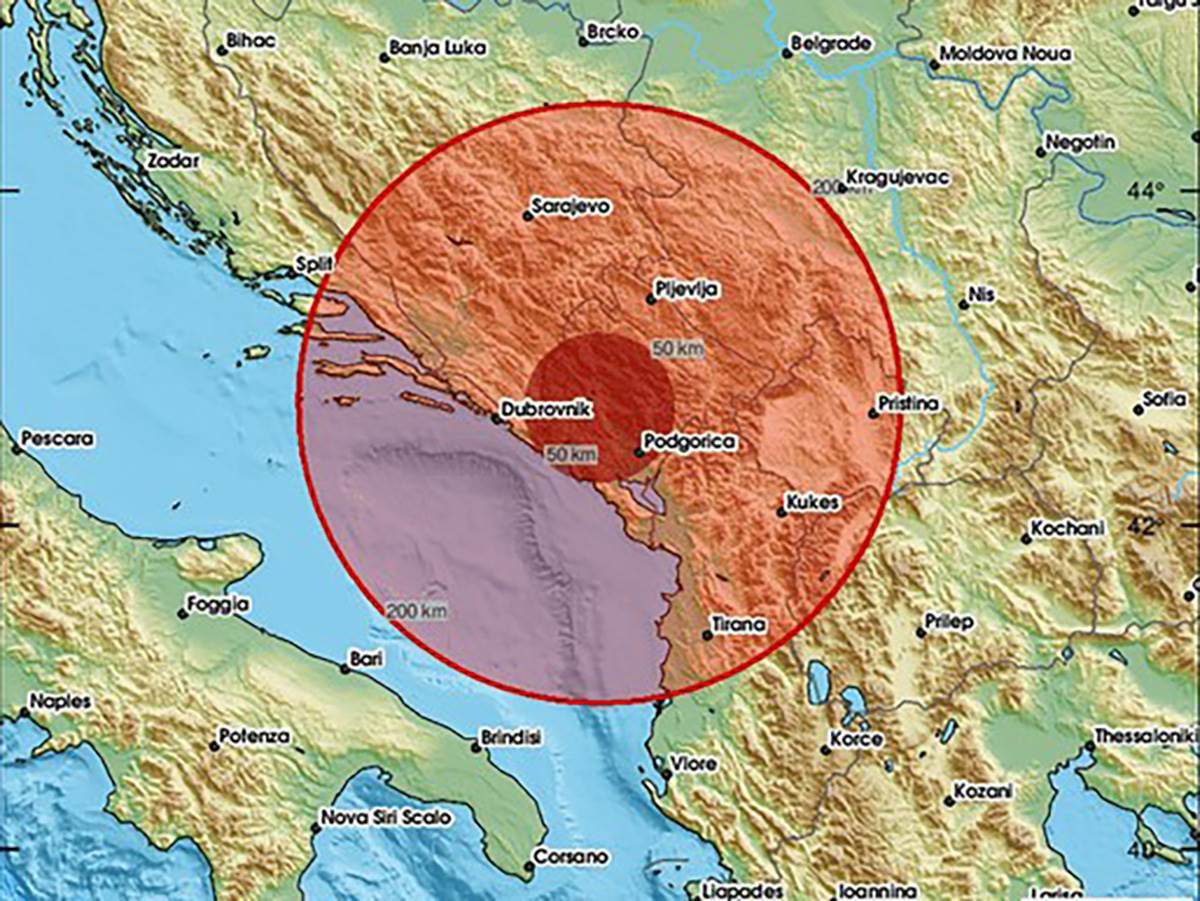
A seismic event with a magnitude of 3.7 on the Richter scale struck Montenegro on Tuesday morning, with its epicenter located near the coastal town of Herceg Novi. The Republic Seismological Institute confirmed the incident, which occurred around 10 a.m. local time. from the institute indicated an unusually shallow depth of 0 kilometers for the earthquake. Residents in Herceg Novi described a significant jolt, with some noting that windows rattled and the shaking lasted for several seconds. Similar accounts emerged from Tivat, where individuals in offices reported monitors on desks swaying and a rumbling sound emanating from buildings. The tremors were not confined to Montenegro, extending their reach to parts of Croatia and Bosnia and Herzegovina, where brief but noticeable shaking was reported by citizens in areas including Dubrovnik.
Conflicting Data on Seismic Event Details
from the Republic Seismological Institute placed the earthquake's depth at 0 kilometers and magnitude at 3.7, subsequent information presented a slightly different picture. Another seismic event, registering 3.4 on the Richter scale, was recorded near Morinji in the Bay of Kotor. This tremor was noted to have originated at a depth of 13 kilometers. detailed an earthquake of magnitude 3.2, with its epicenter situated 17 kilometers northeast of Herceg Novi. This particular event was recorded at a depth of 6 kilometers, and its effects were also felt across Croatia. Residents in Herceg Novi described rattling windows and swaying structures, while those in shaking monitors and a rumbling sound reminiscent of a passing truck.
Echoes of Past Disasters Fuel Anxiety
Despite the relatively low magnitudes of the recent tremors, each seismic event in Montenegro invariably stirs apprehension among the populace. This anxiety is particularly pronounced among older residents who vividly recall the devastating 7.0 magnitude earthquake that struck the country in 1979. The memory of that cataclysmic event, which caused widespread destruction, continues to shape the collective consciousness regarding seismic risks. Experts have consistently warned that Montenegro lies in a highly seismically active zone, with the potential for a powerful earthquake in the coastal region always a present concern. While earthquakes remain unpredictable, the inherent vulnerability of the region means that any tremor, however minor, serves as a stark reminder of the ever-present risk.
Concerns Over Building Standards and Preparedness
Beyond the immediate physical sensations of the earthquake, a deeper concern is emerging regarding the nation's preparedness and adherence to safety standards in seismically active areas. An assessment of the situation under the National Earthquake Protection Plan has revealed a less than satisfactory state of affairs. Serious issues have been identified in the practical implementation of safety measures. These include a disregard for construction standards in earthquake-prone zones, inadequate spatial planning, and excessive building heights in certain areas. Recommendations made after previous seismic events, suggesting a maximum of four to eight stories depending on construction methods, appear to have been overlooked in some instances.
Vulnerable Structures and Call for Greater Vigilance
Particular attention is being paid to structures where large numbers of people congregate, with schools being a primary focus. The national coordinator for protection, rescue, and risk management has emphasized the need for greater societal engagement in preparing for and mitigating the impacts of earthquakes. Institutions, citizens, and all societal actors are being urged to enhance their preparedness for protection and rescue operations. The Directorate for Protection and Rescue has reiterated its commitment to providing expert assistance, information, and educational resources to bolster the nation's resilience against seismic threats.
The bottom line
- Montenegro experienced multiple seismic events, with the largest registering 3.7 on the Richter scale near Herceg Novi.
- The tremors were felt across a wide area, including parts of Croatia and Bosnia and Herzegovina.
- on the exact depth and magnitude of the earthquakes have emerged.
- Recent seismic activity has heightened public anxiety, particularly due to the historical precedent of a major 1979 earthquake.
- Concerns are being raised about the enforcement of building codes and safety standards in seismically active regions of Montenegro.
- Authorities are calling for increased preparedness and adherence to protective measures against potential future earthquakes.

Пожар на Телепу: Несрећа или нешто више?

Barcelona Clinch La Liga Title with Dominant El Clasico Victory Over Real Madrid

Strickland Secures Two-Time Middleweight Title in Newark Showdown
