Artificial Intelligence, explained
The organisation behind the Oscars is, for the first time, addressing the eligibility of films that use artificial intelligence in new rules for the 2027 Academy Awards.
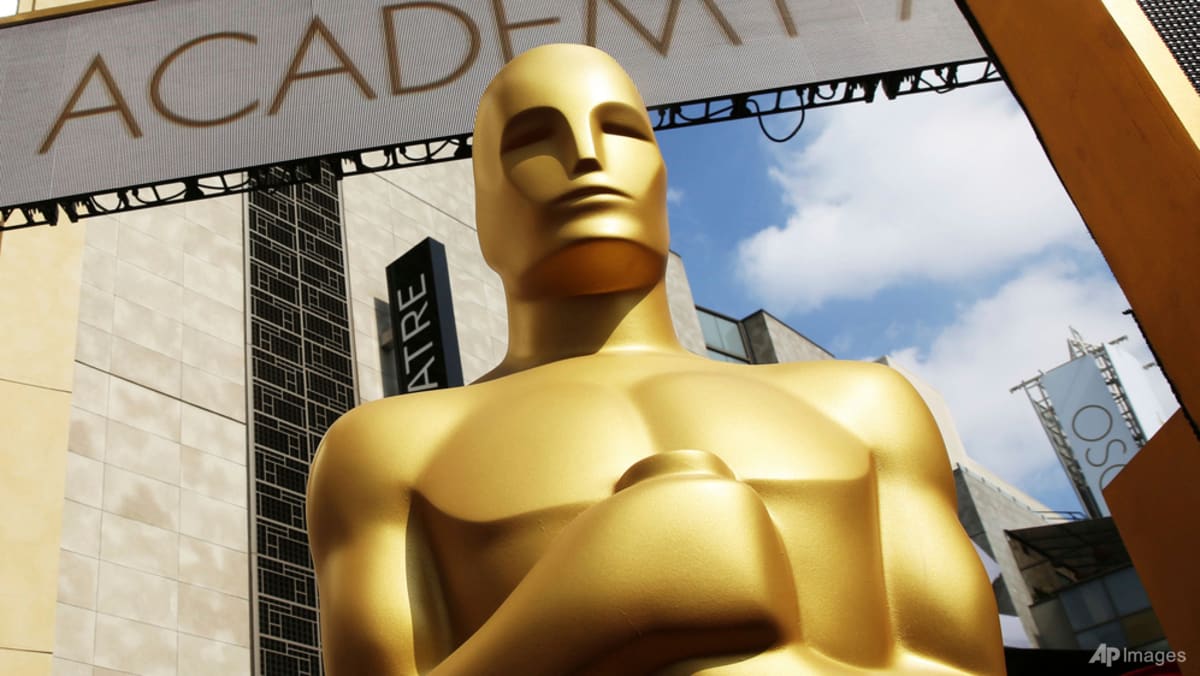
SINGAPORE —
The organisation behind the Oscars is, for the first time, addressing the eligibility of films that use artificial intelligence in new rules for the 2027 Academy Awards. Artificial Intelligence has emerged this Saturday as one of the stories drawing attention in Singapore.
Key facts
- The organisation behind the Oscars is, for the first time, addressing the eligibility of films that use artificial intelligence in new rules for the 2027 Academy Awards.
- The academy that controls the Oscars on Friday issued new award eligibility requirements around the use of artificial intelligence in film.
- As part of its annual review of Oscar eligibility rules, the Academy is tackling one of the global filmmaking community's biggest concerns: Generative artificial intelligence.
- The Academy of Motion Picture Arts and Sciences released updates across many categories on Friday (May 1).
- The academy, which controls the US film industry's most prestigious award, on Friday issued updated rules for what kind of work in movies and documentaries would be considered eligible for an Oscar as the use of artificial intelligence (AI) technology grows.
What we know
Going deeper, the academy that controls the Oscars on Friday issued new award eligibility requirements around the use of artificial intelligence in film.
On the substance, as part of its annual review of Oscar eligibility rules, the Academy is tackling one of the global filmmaking community's biggest concerns: Generative artificial intelligence.
Beyond the headlines, the Academy of Motion Picture Arts and Sciences released updates across many categories on Friday (May 1).
More precisely, the academy, which controls the US film industry's most prestigious award, on Friday issued updated rules for what kind of work in movies and documentaries would be considered eligible for an Oscar as the use of artificial intelligence (AI) technology grows.
It is worth noting that If questions arise regarding the aforementioned use of generative artificial intelligence, the Academy reserves the right to request more information about the nature of the use and human authorship.
By the numbers
At this stage, the Academy of Motion Picture Arts and Sciences (AMPAS) on Friday (May 1) released updates across many categories, stressing the importance of human authorship while not banning AI.
On a related note, For instance, last year’s Palme d’Or-winner at Cannes, It Was Just An Accident from Iranian filmmaker Jafar Panahi, was not submitted as Iran’s official entry for the 98th Academy Awards, but France’s.
Going deeper, If, say, this year’s best actor winner, Michael B Jordan, has two extraordinary leading performances in two different films in 2026, he could possibly get two best actor nominations.
On the substance, In 2001, at the 73rd Oscars, Steven Soderbergh was nominated for best director for both Traffic and Erin Brockovich, winning the prize for the former.
What they're saying
“As we do every year, we made a lot of, we think, really smart and progressive changes,” AMPAS CEO Bill Kramer told The Associated Press. “Obviously, as the Academy becomes more global, we need to think about how we are inviting international films into the Oscars conversation.”
“Humans have to be at the centre of the creative process,” said Academy president Lynette Howell Taylor. “As AI continues to evolve, our conversations around AI will do so along with that.
“We will review that on a case-by-case basis,” Kramer said. “We, like everybody in our industry and world, we will be assessing this every year.”
The wider context
On a related note, For songs in which the first music cue plays over the end credits, that song must overlap with at least the film’s last 15 seconds before the credits roll in order to be considered eligible.
Going deeper, the Academy of Motion Picture Arts and Sciences has clarified that only acting and writing for films done by humans will be considered eligible to win an Oscar.
“We never stop looking at ways to improve our eligibility process,” Taylor said.
Beyond the headlines, the actor Val Kilmer, who died in 2025, is set to be recreated with AI technology in order to be a lead role in an upcoming movie.
More precisely, Technology has been part of filmmaking for many years, with the use of computer-generated imagery (CGI) being used widely since the 1990s.
The bottom line
- The academy that controls the Oscars on Friday issued new award eligibility requirements around the use of artificial intelligence in film.
- As part of its annual review of Oscar eligibility rules, the Academy is tackling one of the global filmmaking community's biggest concerns: Generative artificial intelligence.
- The Academy of Motion Picture Arts and Sciences released updates across many categories on Friday (May 1).




Decoding Alex Zanardi

Singapore Sees 40% Surge in Cancer Screenings as Urothelial Cancer Claims Marathoner
DBS Reports Record Total Income of S$5.95 Billion in 1Q2026, Lifts Dividend to S$0.81