Cybercrime Group Claims Massive Data Theft from Instructure's Canvas Platform
Hackers threaten to release millions of student and staff records after breaching education technology firm Instructure.

SINGAPORE —
Key facts
- The ShinyHunters group claims to have stolen 280 million data records.
- The breach allegedly impacts 8,809 educational institutions globally.
- Exposed data includes names, email addresses, and private messages.
- Hackers have set a May 12 deadline for institutions to negotiate.
- Instructure confirmed a data breach affecting user names, emails, and messages.
- The Canvas platform experienced disruptions for some users.
- University of Colorado Boulder acknowledged awareness of the breach affecting Instructure.
Massive Data Heist Alleged by Cybercrime Syndicate
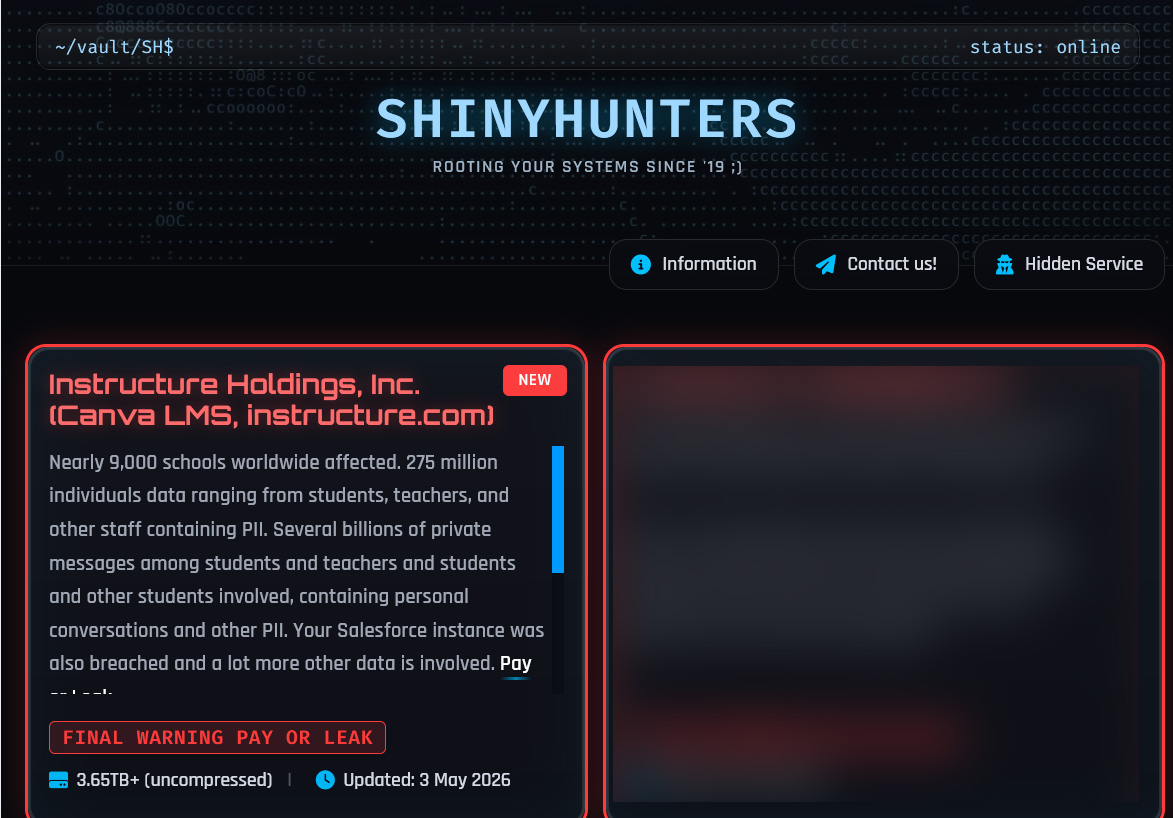
A vast trove of student and staff data, potentially numbering 280 million records, has allegedly been exfiltrated from Instructure, the education technology giant behind the widely used Canvas learning management system. The cybercrime group ShinyHunters has claimed responsibility for the breach, which threatens to expose sensitive information from thousands of educational institutions worldwide. The group has published a list of 8,809 colleges, school districts, and online education platforms purportedly affected by the attack, with record counts for each institution ranging from tens of thousands to millions. Instructure, a company whose Canvas platform facilitates coursework management, assignments, grading, and communication for schools and universities, confirmed it was investigating a cyberattack last Friday. The company later disclosed a data breach where user names, email addresses, and private messages were compromised. While Instructure has not provided extensive details, some universities have begun to acknowledge the potential ramifications. The University of Colorado Boulder issued a warning, stating it was aware of the data breach involving Instructure, the parent company of Canvas, and that it was a nationwide event affecting multiple institutions. Rutgers University, however, reported no direct impact to its campus and confirmed Canvas remained operational. Tilburg University indicated an investigation was underway to determine the extent of the breach and whether its students' and staff's data had been compromised, with further clarity sought from the supplier.
Hackers Leverage Platform Features for Data Extraction
The threat actors claim to have exploited Canvas's data export features, including DAP queries, provisioning reports, and user APIs, to harvest hundreds of gigabytes of user records, messages, and enrollment data. This method allowed for the systematic extraction of information from the affected institutions. ShinyHunters has a history of targeting major corporations, including universities and cloud database companies, with the aim of stealing large volumes of personal information. Their modus operandi typically involves threatening to release the data online unless a ransom is paid. The group has previously been linked to breaches affecting numerous entities, and their claims often include an element of exaggeration to amplify pressure on victims and media attention. A sample of the allegedly stolen data, reviewed by TechCrunch, included private messages between teachers and students, names, email addresses, and in some instances, phone numbers. While the sample did not contain passwords or other data types Instructure stated were unaffected, it confirmed the exposure of deeply personal communications and identifying information.
A Deadline for Negotiation and Disruption
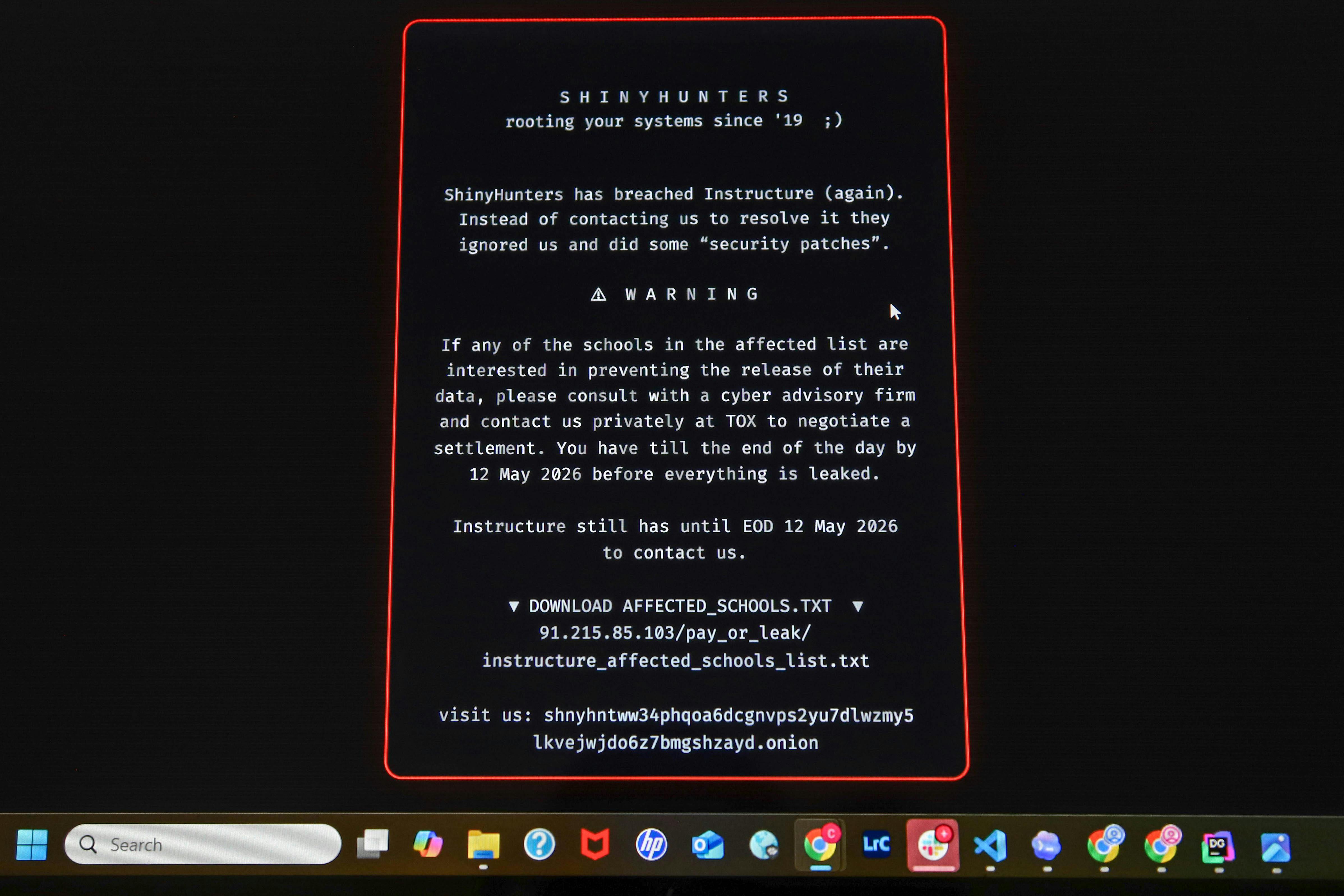
The hackers have set a stark ultimatum for educational institutions: negotiate a settlement by May 12, or face the public release of their compromised data. This deadline was communicated through messages posted on the Canvas pages of affected universities, including the University of Pennsylvania. ShinyHunters stated that Instructure had ignored their previous attempts to resolve the issue, opting instead for 'security patches.' The group asserted that Instructure had not fully addressed the vulnerabilities they identified, leading to the current situation. The warning on Canvas pages specified a deadline of 'the end of the day by 12 May 2026' before 'everything is leaked.' This cyberattack has not only led to a significant data privacy concern but has also caused operational disruptions. Students at the University of Pennsylvania, for example, were temporarily unable to access Canvas on Thursday afternoon after ShinyHunters shut down access to the interface. The platform was later replaced with a message indicating 'scheduled maintenance,' a move that masked the ongoing cyber incident.
Scope of the Breach and Unanswered Questions
The scale of the alleged data theft is immense, with ShinyHunters claiming to have affected close to 9,000 schools globally and compromising the data of 275 million individuals. This figure includes students, teachers, and other staff members. The group also claims that the total number of unique emails included in the stolen data amounts to 231 million. While Instructure has confirmed a data breach and is publishing updates on its official page, spokesperson Kate Holmes declined to answer specific questions about the incident when contacted, referring inquiries to the company's public statements. The company stated that some of its products, including Canvas, were restored for customers as of Tuesday after undergoing maintenance. University officials, such as those at Penn, have initiated investigations and are collaborating with Instructure to restore access and ascertain the full impact. The fact that the issue is not limited to a single institution but affects multiple universities using Canvas underscores the widespread nature of this cyber threat. The list of allegedly affected institutions, including all eight Ivy League universities, highlights the broad reach of the attack.
Broader Implications for Educational Technology
This incident casts a shadow over the security of educational technology platforms, which hold vast amounts of sensitive personal data. The reliance of modern education on such systems makes them attractive targets for cybercriminals seeking to exploit vulnerabilities for financial gain or disruption. The breach raises critical questions about the security protocols of companies like Instructure and the efficacy of their response to cyber threats. The alleged use of platform export features to exfiltrate data suggests a need for enhanced internal monitoring and access controls within these systems. As the May 12 deadline approaches, the educational community remains on edge, awaiting further developments and clarity from Instructure. The long-term consequences of this breach, including potential identity theft and reputational damage for affected institutions, are yet to be fully understood.
The bottom line
- The ShinyHunters group claims to have stolen 280 million records from Instructure's Canvas platform.
- The breach allegedly impacts 8,809 educational institutions worldwide, including universities and school districts.
- Exposed data includes student and staff names, email addresses, and private messages.
- Hackers have issued a May 12 deadline for institutions to negotiate settlements to prevent data release.
- Instructure has confirmed a data breach and is working to restore services.
- The incident highlights significant cybersecurity risks within the education technology sector.





Louis Vuitton Wins S$510,000 in Singapore Counterfeit Case

Singapore COE premiums hit new highs as Category A crosses S$124,790

Mount Dukono Eruption Kills Three Hikers, Including Two Singaporeans