Millions of Americans Gain Path to Canadian Citizenship as Law Change Takes Effect
A Canadian court ruling that struck down a first-generation limit on citizenship by descent has opened the door for millions of U.S. residents, sparking a surge in applications amid political uncertainty.

SINGAPORE —
Key facts
- Canada's Bill C-3, effective Dec. 15, 2024, repealed a 2009 first-generation limit on citizenship by descent.
- Immigration, Refugees and Citizenship Canada expects tens of thousands of applications from the U.S.
- Ellen Robillard, 52, of New York, is applying for citizenship for herself and her 19-year-old son.
- Zack Loud of Minnesota learned he and his siblings are already considered Canadian citizens through their grandmother.
- Immigration attorney Nicholas Berning said his practice is 'pretty much flooded' with citizenship cases.
- his practice went from 200 citizenship cases a year to over 20 consultations per day.
- USCIS began enhanced security checks for green card and citizenship applicants on April 27, 2026.
- The U.S. House approved a budget outline that could add $70 billion in immigration enforcement funding over three years.
A Legal Shift Opens Citizenship to Millions
A Canadian court ruling that declared a first-generation limit on citizenship by descent unconstitutional has reshaped the landscape for millions of Americans. The change, enacted through Bill C-3 of Canada’s Citizenship Act and effective Dec. 15, 2024, reverses a 2009 restriction imposed by Canada’s Conservative government that had barred Canadians born abroad from passing citizenship to children also born outside Canada. Immigration, Refugees and Citizenship Canada, the federal department overseeing immigration, now expects tens of thousands of applications from the United States. Under the new law, anyone born before Dec. 15 who can prove a direct Canadian ancestor — a grandparent, great-grandparent or even more distant relative — is already considered a citizen and may apply for a certificate of citizenship. For those born on or after that date, the Canadian parent must have lived in Canada for at least 1,095 days. The ruling and subsequent legislation have effectively eliminated the so-called 'first-generation' barrier that had disqualified many descendants.
Personal Stories of Discovery and Relief
Ellen Robillard, a 52-year-old New York State resident and mother of a 19-year-old son, first explored Canadian citizenship after Donald Trump’s 2016 election but abandoned the idea when she learned her son would not qualify under the old law. Her mother was born in Nova Scotia. After the law changed, Robillard decided to apply for herself and her son, motivated by growing political violence and personal threats. “I really don’t recognize my world anymore,” Robillard said. A spring trip to Nova Scotia last year helped her reconnect with her heritage. “The experience of being there was so interesting. I felt like a different person there. It was so much less stressful. Everyone was nicer,” she said. Zack Loud of Farmington, Minnesota, was surprised to learn that under the new law, Canada already considered him and his siblings citizens because their grandmother is Canadian. “My wife and I were already talking about potentially looking at jobs outside the country, but citizenship pushed Canada way up on our list,” he said.
Immigration Lawyers Overwhelmed by Demand
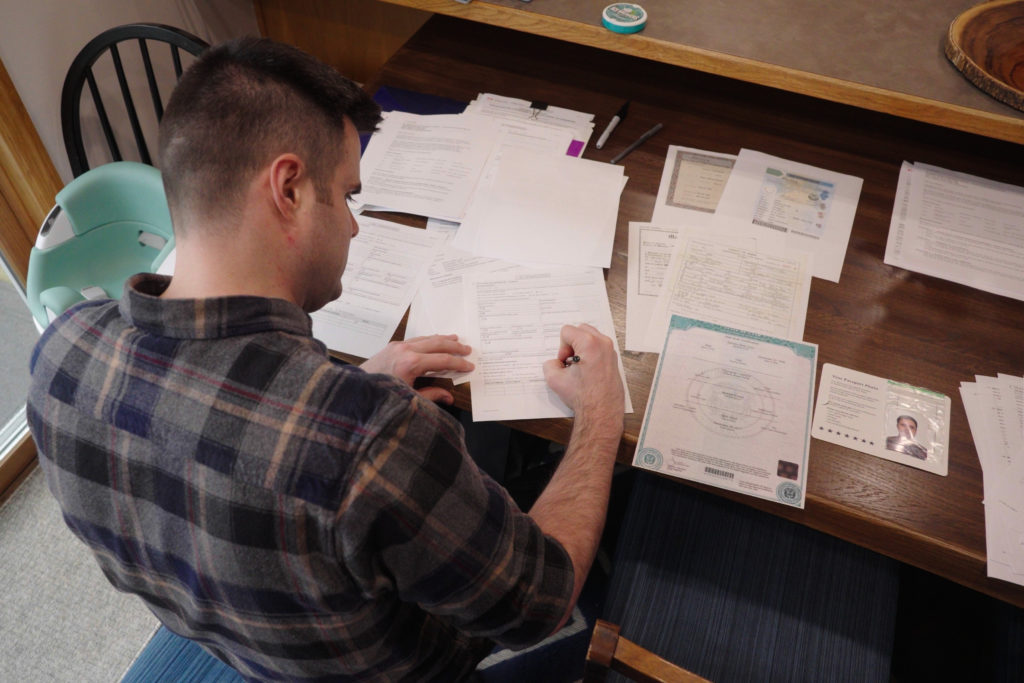
Immigration attorneys on both sides of the border report a sharp increase in inquiries. Nicholas Berning, an attorney at Boundary Bay Law in Bellingham, Washington, said his practice is “pretty much flooded with this” and has shifted other work to process citizenship cases. Amandeep Hayer, a Vancouver-area immigration lawyer, said his practice went from about 200 citizenship cases a year to more than 20 consultations per day. Hayer, who advocated for the new law in parliament, emphasized that descendants of Canadians are already considered citizens. “You are Canadian, and you’re considered to be one your whole life,” he said. “That’s really what you’re applying for, the recognition of a right you already have vested.” The surge reflects a combination of family heritage, job opportunities, and political concerns in the United States.
U.S. Immigration Policy Tightens Simultaneously
While Canada has broadened access to citizenship, the United States has moved in the opposite direction. On April 27, 2026, U.S. Citizenship and Immigration Services began applying enhanced security checks to many immigration benefit applications requiring fingerprints, including green card and naturalization cases. Internal guidance instructed officers not to approve affected cases until the expanded FBI criminal history checks are complete. The practical effect is likely to be longer wait times for applicants, even for cases otherwise ready for a decision. The change may affect people applying for lawful permanent residence, U.S. citizenship, asylum-related benefits, and certain family-based petitions. Separately, the U.S. House of Representatives approved a budget outline that could provide $70 billion in additional immigration enforcement funding over three years, passing 215-211 with no Democratic support.
Broader Political Context Fuels Interest
The timing of Canada’s law change coincides with heightened political uncertainty in the United States. Ellen Robillard, who leads her local Democratic Committee in a suburb of Rochester, New York, said she fears that if political violence escalates, she could become a target. She has received veiled threats on social media and was once followed home after a protest. She has suffered from burnout, depression and insomnia over political disagreements and has fallen out with friends and family. “If things start deteriorating here with our economy, I know that I can just get in the car and go. It’s an option anyway,” Robillard said. For many applicants, the Canadian citizenship application serves as a contingency plan — a way to secure an exit strategy should conditions in the U.S. worsen.
What Comes Next for Applicants and Policy
The Canadian government expects a significant influx of applications, though processing times remain uncertain. Attorneys advise applicants to gather documents proving their Canadian ancestry, such as birth certificates, and to be prepared for potential backlogs. Meanwhile, U.S. immigration policy continues to evolve: the Supreme Court appeared receptive to arguments limiting judicial review of decisions ending Temporary Protected Status for Haitians and Syrians, a case that could affect hundreds of thousands of TPS holders. The Board of Immigration Appeals also ruled that Deferred Action for Childhood Arrivals status alone is not enough to terminate removal proceedings, requiring immigration judges to consider other factors. These developments underscore the contrasting directions of the two countries’ immigration policies — Canada expanding citizenship by descent, the United States tightening security and enforcement.
The bottom line
- Canada’s Bill C-3, effective Dec. 15, 2024, eliminated the first-generation limit on citizenship by descent, making millions of Americans eligible.
- Applicants born before Dec. 15 need only prove a Canadian ancestor; those born after must show their Canadian parent lived in Canada for 1,095 days.
- a surge in consultations, with some practices shifting resources to handle citizenship cases.
- The U.S. has simultaneously tightened immigration security, with enhanced FBI background checks for green card and naturalization applicants starting April 27, 2026.
- Political uncertainty and personal safety concerns are driving many Americans to pursue Canadian citizenship as a backup plan.
- The Canadian government expects tens of thousands of applications, but processing times and backlogs remain unclear.





Singapore Sees 40% Surge in Cancer Screenings as Urothelial Cancer Claims Marathoner

DBS Reports Record Total Income of S$5.95 Billion in 1Q2026, Lifts Dividend to S$0.81

Mandatory TB Screenings Ordered for Bedok Central After 13 Genetically Linked Cases Found