ComfortDelGro’s Global Ambitions Clash with a Stagnant Share Price as CFO Pushes New Narrative
Despite a 75% surge in UK operating profit and over 55% of revenue now coming from overseas, the Singapore transport giant’s stock has barely budged, weighed down by debt and a fading taxi legacy.
SINGAPORE —
Key facts
- ComfortDelGro’s share price has been flat over 12 months while its 75%-owned subsidiary SBS Transit rose over 30%.
- Group CFO Christopher White, appointed in 2026, says the market still views CDG as a domestic taxi operator despite 55% of revenue from overseas.
- In FY2025, UK & Europe operating profit jumped 75% year-on-year, driven by the Addison Lee acquisition and Manchester bus launch.
- CDG’s net debt stood at S$729 million as of the latest reporting, compared to a net cash position of S$60 million in FY2019.
- Earnings per share fell to 10.63 cents, below the pre-COVID range of 12 to 14 cents; dividends dropped from ~10 cents to 8.5 cents.
- The taxi segment’s revenue rose from S$669 million (FY19) to S$1.03 billion, but profit only inched from S$104 million to S$121 million.
- Over 55% of group revenue now comes from overseas operations across 13 countries, including bus networks in London, Manchester, and Australian cities.
A Taxi Icon’s Identity Crisis
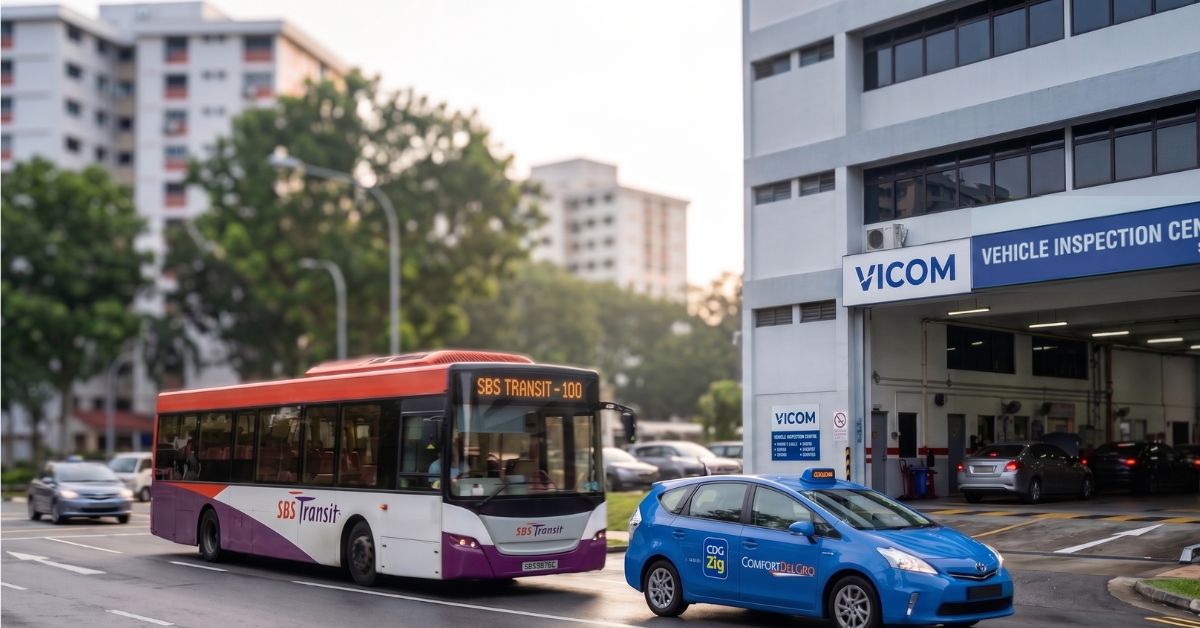
ComfortDelGro Corporation, the diversified land transport giant that operates taxis, buses, and trains across Singapore, Australia, and the UK, finds itself in an unusual bind: its share price has treaded water for the past 12 months, even as two of its key subsidiaries—SBS Transit and Vicom—have seen their stocks climb more than 30%. The disconnect stems from a fundamental perception gap. To most Singaporeans, ComfortDelGro remains the operator of the island’s familiar blue-and-yellow taxis, a legacy business under relentless pressure from ride-hailing rivals like Grab. Yet the company has quietly transformed. Over 55% of its revenue now comes from overseas operations spanning 13 countries, including public bus networks in London, Greater Manchester, and major Australian cities, the premium point-to-point brand Addison Lee in the UK, and international rail contracts in Stockholm and Paris. Group CFO Christopher White, who assumed his role in 2026, acknowledges the challenge: “Most people still see us as the Singapore taxi company—but when you look across our global operations, the picture is very different.”
The Numbers Behind the Stagnation
The financial metrics tell a story of growth without commensurate profit. In FY2019, revenues of S$3.9 billion and an operating profit of S$415 million. By the latest fiscal year, revenues had swelled to S$5.1 billion, yet operating profit fell to S$373 million. Earnings per share now stand at 10.63 cents, well below the pre-COVID range of 12 to 14 cents, and dividends have been cut from roughly 10 cents to 8.5 cents. The company’s balance sheet has also weakened. From a net cash position of approximately S$60 million in FY2019, ComfortDelGro has swung to a net debt position of S$729 million, largely due to major acquisitions such as A2B Australia and Addison Lee. These deals added heft but not significant profits, according to analysts. The public transport segment, for instance, saw revenue rise from S$2.9 billion to S$3.3 billion, but profit slid from S$224 million to S$178 million. The taxi segment’s revenue climbed from S$669 million to S$1.03 billion, yet profit barely inched up from S$104 million to S$121 million.
Singapore: A Stable Anchor Under Pressure
Singapore remains ComfortDelGro’s largest single geography by operating profit, contributing more than half of group earnings. But as a mature market leader, organic growth opportunities are limited. The public transport business has operated under the Bus Contracting Model (BCM) since 2016, which shifted operators from owners to service providers, removing fleet ownership and passenger revenue risk. Operators earn a service fee per kilometre, with major costs like fuel and wages indexed. Although ComfortDelGro has handed over two bus packages—Jurong West and, from July 2026, Tampines—it still runs just over half of Singapore’s public bus network under stable contracts. The rail business operates under the New Rail Financing Framework (NRFF), a profit- and risk-sharing arrangement with the Land Transport Authority designed to reduce commercial volatility. If profits fall short, the LTA shares in the shortfall; if they outperform, the operator pays an increased licence charge. The result is a structure that aims to deliver predictable, sustainable returns over the long term. However, the point-to-point (P2P) segment—taxis and private-hire vehicles—faces a structural driver shortage, which White identifies as a bigger constraint than competition from ride-hailing platforms.
Overseas Growth: The UK and Europe Lead the Charge
In FY2025, ComfortDelGro’s UK & Europe operating profit surged 75% year-on-year, driven by the full-year contribution from the 2024 Addison Lee acquisition, the successful launch of Metroline’s Manchester bus operations (approximately 450 buses), and improved contract margins as weaker operators exited the market post-COVID. The Addison Lee acquisition has been particularly transformative: a significant majority of its revenue comes from high-value B2B corporate clients. This premium expertise is now being rolled out across the group’s P2P operations in Singapore and Australia, with technology platforms and dispatch systems being harmonised. White argues that the market has yet to fully appreciate this transformation. “When I joined ComfortDelGro, I was somewhat overwhelmed by the scale and diversity of the business,” he said. The group is also actively scaling autonomous vehicle (AV) deployments in China and Singapore, viewing autonomous mobility as a key strategic focus to address the driver shortage. Internationally, it holds significant rail contracts, including operations in Stockholm and an upcoming role on Paris Metro Line 15, while actively bidding for the Copenhagen Metro.
The Dividend Dilemma and Investor Skepticism
Despite the global expansion, ComfortDelGro’s dividend yield—currently around 8.5 cents per share, down from pre-COVID levels of about 10 cents—remains a key attraction for income-focused investors. White emphasises disciplined capital allocation and a commitment to delivering a sustainable ~6% dividend yield. However, the lagging share price suggests that many investors remain unconvinced, viewing the company’s complex global risk profile—including forex volatility in Australia and the UK, labour shortages, and high inflationary costs—as a drag compared to the stable, “cash cow” nature of its Singapore-centric subsidiaries, SBS Transit and Vicom. SBS Transit, 75%-owned by ComfortDelGro, is the leading public transport operator in Singapore, managing over 200 bus routes, the Downtown and North East MRT lines, and the Sengkang/Punggol LRT lines. Its primary competitor is SMRT, a wholly government-owned entity. Vicom, 67%-owned, holds a majority share of the vehicle inspection market in Singapore, with six out of eight authorised inspection centres. Both have seen their share prices rise over 30% in the past year, outperforming their parent.
Outlook: Can the New Narrative Take Hold?
The central question for ComfortDelGo is whether it can convince investors to look beyond the fading taxi legacy and embrace its identity as a diversified global transport operator. White is betting that improving UK margins, the full integration of Addison Lee, and the eventual payoff from autonomous vehicle investments will shift perceptions. The group’s net debt position, however, remains a concern, and the taxi segment’s structural decline continues to pressure earnings. With a presence in 13 countries, a growing rail portfolio, and a strategic pivot toward autonomous mobility, ComfortDelGro is no longer just Singapore’s taxi company. But as the share price stagnation shows, changing a deeply ingrained image takes more than a balance sheet—it takes a story that the market is ready to believe.
The bottom line
- ComfortDelGro’s share price has been flat for a year despite a 75% surge in UK operating profit and over 55% of revenue from overseas.
- The company’s net debt of S$729 million and declining profitability (EPS 10.63 cents, down from 12-14 cents pre-COVID) weigh on investor sentiment.
- Singapore remains the largest profit contributor, but growth is limited; the taxi segment faces structural driver shortages and competition from Grab.
- International expansion, especially the Addison Lee acquisition and Manchester bus launch, is driving revenue but has not yet translated into proportional profit gains.
- CFO Christopher White argues the market undervalues the group’s transformation, but the stock continues to trade as if it were solely a domestic taxi operator.
- Autonomous vehicle deployments in China and Singapore are a key strategic focus to address driver shortages and future-proof the business.



China reclaim Thomas Cup as South Korea stun Uber Cup favourites
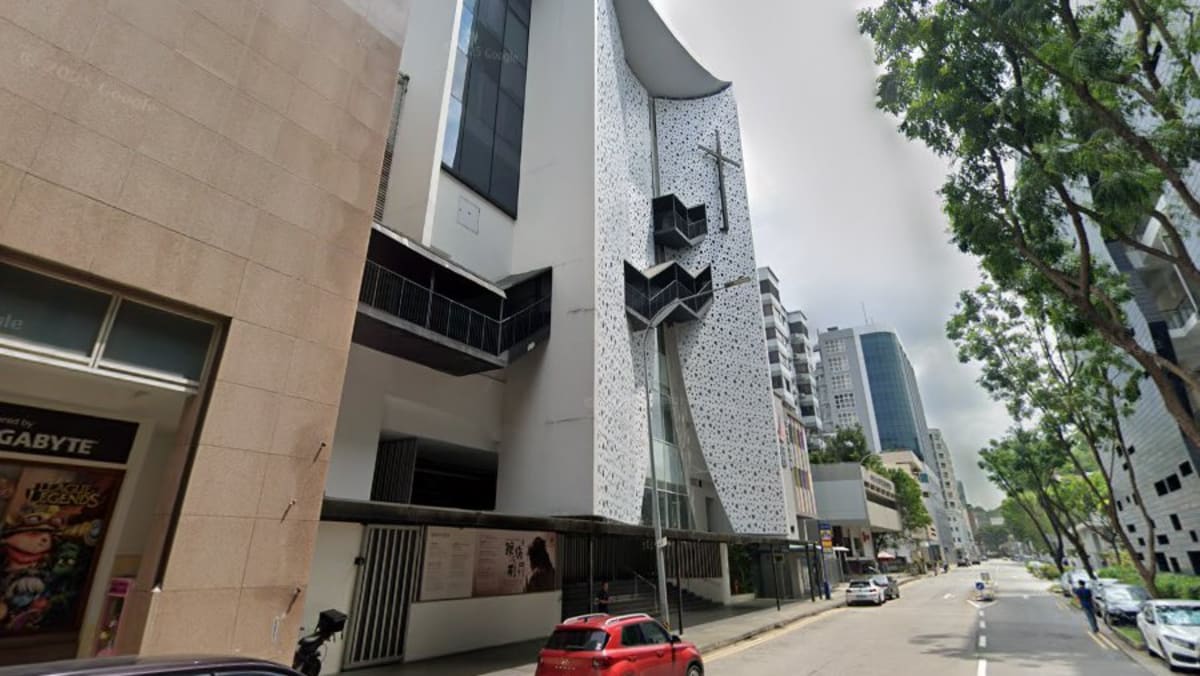
Man Arrested After Slapping Several People at Singapore Life Church, Injuring 66-Year-Old Woman

Singapore's Young Investors Flock to Private Property, Banks Warn of Risks