Attenborough Celebrates Centenary Amidst Global Tributes and Scientific Honors
The legendary broadcaster marks 100 years with a Royal Albert Hall concert, a new scientific genus, and reflections on a groundbreaking career.
SINGAPORE —
Key facts
- Sir David Attenborough turns 100 on Friday, May 8.
- A special concert celebrating his life will be held at the Royal Albert Hall.
- A new genus of parasitic wasp, Attenboroughnculus tau, has been named in his honor.
- The specimen for the new wasp genus was collected in Chile in 1983.
- Attenborough has won BAFTA awards for shows in black and white, colour, high-definition, 3D, and 4K.
- He joined the BBC in 1952 and began his career with the show Zoo Quest.
- A critically endangered echidna, Zaglossus attenboroughi, was named after him in 1998.
A Centenary Marked by Overwhelming Gratitude
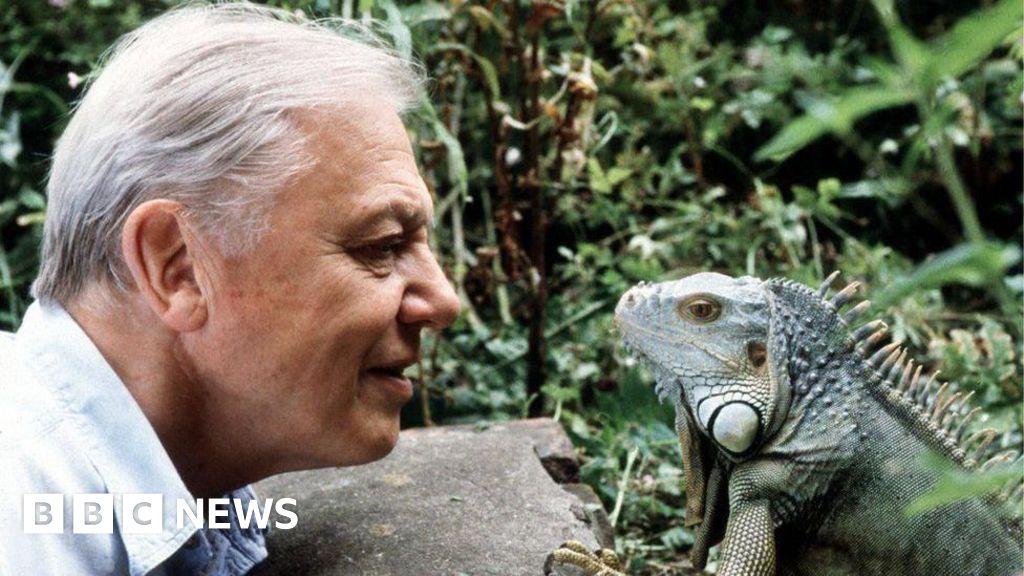
Sir David Attenborough has expressed being "completely overwhelmed" by the deluge of birthday messages as he approaches his 100th birthday. The veteran broadcaster and environmentalist, who officially marks his centenary on Friday, had anticipated a quiet personal celebration. However, messages have poured in from across the globe, encompassing pre-school groups, care home residents, and countless individuals and families. In an audio message released on Thursday, Sir David conveyed his sincere thanks, acknowledging the impossibility of replying to each greeting individually. He extended well wishes to those organizing local events in his honor, encouraging them to "Have a very happy day." This milestone is being celebrated with a week of special events and programming culminating in a concert at London's Royal Albert Hall. The event is set to be a grand tribute to a life dedicated to revealing the wonders of the natural world.
Royal Albert Hall Concert to Honor a Lifetime of Discovery
The evening of Sir David's 100th birthday will feature a special 90-minute concert at the Royal Albert Hall, hosted by Kirsty Young. The program, scheduled to air on BBC One and iPlayer from 20:30 BST, will celebrate the broadcaster's extensive life and legacy. Esteemed guests, including Sir Michael Palin, Steve Backshall, Liz Bonnin, and Chris Packham, are slated to appear, offering reflections on Attenborough's impact. Young described his gift to the world as a "life spent exquisitely revealing Earth's wonders," deeming a "big 100th birthday bash" at the iconic venue as the very least he deserves. The concert will revisit some of the most memorable wildlife moments from Attenborough's career and the BBC's natural history archive. Musical performances will include pieces associated with his renowned series, such as the iconic snakes and iguanas chase from Planet Earth II and the orcas sequence from Frozen Planet II.
New Genus of Parasitic Wasp Discovered and Named
In a unique tribute for his 100th birthday, scientists from the Natural History Museum in London have identified and named a new genus of parasitic wasp in Sir David Attenborough's honor. This discovery adds to the growing list of species bearing his name, which already includes lizards, bats, frogs, and spiders. The newly described genus is named Attenboroughnculus, with the type species designated as Attenboroughnculus tau. This enigmatic wasp measures just 3.5 millimeters long and is distinguished by a striking T-shaped marking on its abdomen. The specimen itself was collected in Chile's Valdivia province in 1983 but remained unexamined in museum collections until recently. Augustijn De Ketelaere, a volunteer at the Natural History Museum, spotted the specimen's unusual characteristics during a detailed review of the ichneumonid collections. Dr. Gavin Broad, principal curator for insects at the museum, led the study, noting that the wasp is so distinct it could not be classified within any existing genus.
A Career Mirroring Television's Evolution
Sir David Attenborough's seven-decade career has not only defined natural history broadcasting but has also paralleled the very evolution of television itself. Beginning his journey on British screens in the 1950s as the host of the wildlife show Zoo Quest, he embarked on a path that would establish him as a preeminent television producer worldwide. His enduring presence has allowed him to uniquely document the passage of time and the escalating impact of global warming on natural habitats and species across the globe. Attenborough is recognized as the only individual to have received BAFTA awards for productions spanning black and white, color, high-definition, 3D, and 4K resolution. "He is, without a shadow of a doubt, the most consequential broadcaster of our times," stated Rhodri Talfan Davies, interim director-general of the BBC. His programs continue to draw substantial audiences, offering a benchmark of quality broadcasting that remains relevant even amidst the rise of streaming services.
Innovation and Influence Beyond the Camera
Beyond his on-screen persona, Sir David Attenborough has been a significant innovator behind the scenes. As a former controller of BBC Two, he was instrumental in conceptualizing landmark series and championed the transition to color television. His influence extended to commissioning groundbreaking content such as Kenneth Clark's Civilisation and Monty Python's Flying Circus. Mike Gunton, creative director of the BBC's Natural History Unit, highlighted Attenborough's role during television's formative years, citing his decisions that shaped broadcast standards. For instance, Gunton explained that Attenborough's decision to air snooker on television was driven by the visibility of colored balls, a perfect fit for the nascent color broadcasting. Similarly, the adoption of yellow tennis balls by the LTA was influenced by their superior visibility on television at the time, demonstrating Attenborough's pivotal role in the medium's development.
Legacy and Future of Scientific Discovery
The naming of the new wasp genus, Attenboroughnculus tau, highlights the ongoing exploration within scientific collections. Dr. Gavin Broad expressed his hope that Attenborough would appreciate the honor, particularly the designation of an entire genus, though he humorously suggested it might not match the excitement of the echidna named in his honor. Zaglossus attenboroughi, a critically endangered echidna, was named after Attenborough in 1998, following the collection of a single specimen in Indonesian Papua in 1961. Sightings of this long-beaked echidna were absent until 2023, when the first video footage of a living individual was captured. Scientists anticipate that the discovery of this new subfamily of parasitic wasps will inspire further examination of historical collections. They hope such efforts will lead to the identification of more unique species awaiting scientific description and naming, underscoring the vast, unexplored biodiversity that still exists.
The bottom line
- Sir David Attenborough is celebrating his 100th birthday with global tributes and a special concert at the Royal Albert Hall.
- A new genus of parasitic wasp, Attenboroughnculus tau, has been scientifically named in his honor.
- His career, spanning over seven decades, has mirrored the evolution of television, from black and white to 4K.
- Attenborough's influence extended to broadcasting decisions that shaped the visual standards of television.
- He is recognized for his pioneering work in natural history filmmaking and his advocacy for environmental awareness.
- The discovery of new species named after him underscores his enduring legacy in both media and science.





Actor Zong Zijie Fined S$800, Banned from Driving for Speeding

Durian Seller Accused of Aggressive Tactics in Singapore
LeBron James, at 41, Leads Lakers into Thunder Gauntlet Without Dončić