Singapore's ERP 2.0 System May Soon Enforce Speeding Fines
The new satellite-based road pricing system could be enhanced to monitor and penalize traffic violations, officials suggest.

SINGAPORE —
Key facts
- The ERP 2.0 system may be used to detect speeding offences.
- Acting Transport Minister Jeffrey Siow stated further enhancements are needed for this function.
- MP Edward Chia inquired about enforcement of Silver Zone & School Zone speed limits.
- Singapore aims for full ERP 2.0 transition by early 2027.
- Approximately 93% of vehicles had the new On-Board Unit (OBU) installed by January 31.
- Owners without OBUs after reminders face installation fees of $35 for motorcycles and $70 for other vehicles.
Potential for Expanded Enforcement
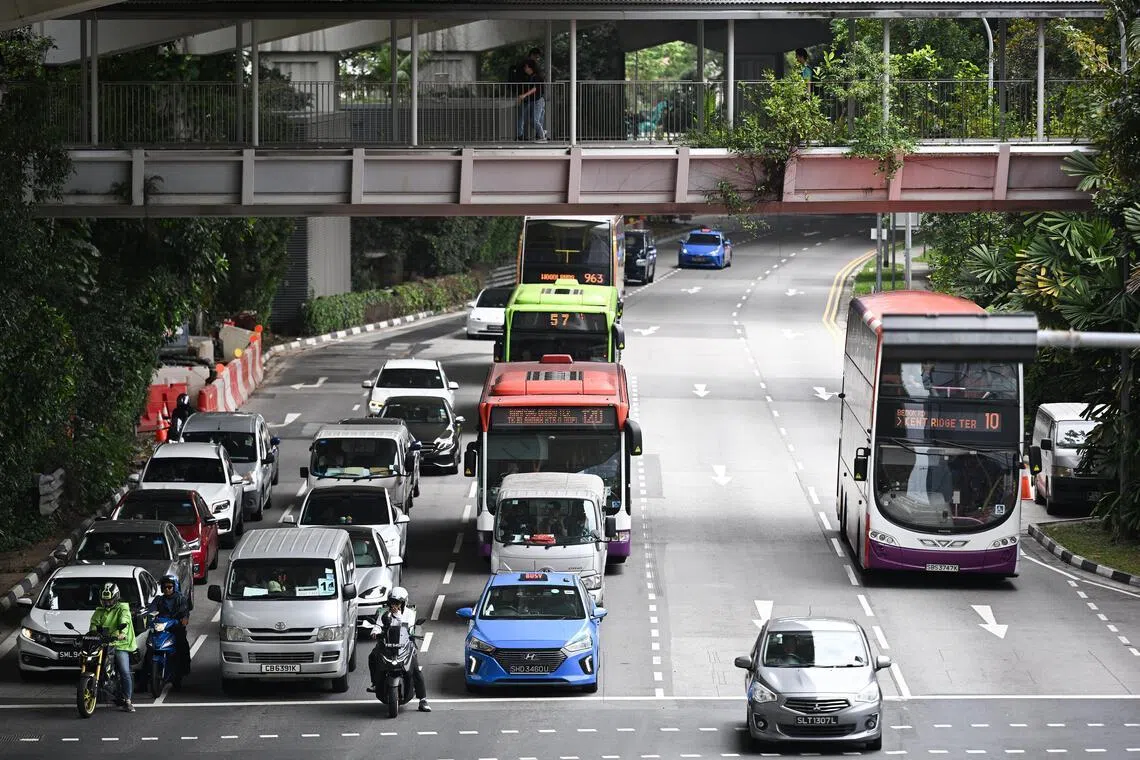
Singapore's new Electronic Road Pricing (ERP) 2.0 system, designed primarily for toll collection, may soon be repurposed to enforce traffic violations, including speeding. Acting Transport Minister Jeffrey Siow indicated this possibility in a parliamentary response. The system's on-board unit (OBU) already provides real-time traffic updates and safety alerts, but its enforcement capabilities could extend beyond mere payment processing. This potential expansion was highlighted when Holland-Bukit Timah GRC MP Edward Chia questioned whether the satellite-based ERP 2.0 could monitor and enforce speed limits in sensitive areas like Silver Zones and School Zones. Mr. Siow confirmed that while the system is not yet configured for such widespread enforcement, it possesses the underlying capability. "ERP 2.0 can also be used for enforcement, including for traffic offences like speeding, but further enhancements will be needed," Mr. Siow stated. The Ministry of Transport and the Ministry of Home Affairs are reportedly studying the necessary implementation details for such a move.
The ERP 2.0 Transition Underway
Singapore is well on its way to a full adoption of the ERP 2.0 system, with a target completion date set for the start of 2027. This transition involves the installation of a new On-Board Unit (OBU) in all registered vehicles. As of January 31, a significant majority of vehicles, approximately 93 percent, had already been equipped with the new OBU. The government had issued reminders for vehicle owners to install the device, with a final call to action on February 15. Owners who fail to install the OBU within three months of their final reminder will incur installation fees. These fees are set at $35 for motorcycles and $70 for all other vehicle types. The Land Transport Authority has previously assured the public that vehicle-specific data collected by the system would be used strictly for payment, charges, and enforcement against non-payment of ERP fees. This clarification aimed to address potential privacy concerns surrounding the new technology.
Technological Capabilities and Future Scope
The ERP 2.0 system represents a significant upgrade from the previous generation of gantries. Its satellite-based technology allows for more granular tracking and dynamic pricing, adapting to real-time traffic conditions. The OBU itself is a sophisticated piece of hardware, designed to facilitate not only toll payments but also to offer drivers crucial information about their surroundings. Mr. Siow's remarks suggest that the data processing and communication capabilities of the OBU and the central system could be leveraged for a broader range of enforcement actions. This would move the system beyond its initial mandate of managing traffic flow and revenue collection. However, the minister was clear that significant development work is required. The existing infrastructure, while advanced, is not presently configured to automatically detect and flag speeding violations. This implies the need for new software algorithms, potentially enhanced GPS accuracy, and integration with other law enforcement databases.
Implications for Road Safety and Driver Behaviour
Should ERP 2.0 be enhanced for speeding enforcement, it could fundamentally alter driver behaviour across Singapore. The prospect of automatic detection and ticketing for exceeding speed limits, particularly in designated zones, may encourage greater adherence to traffic laws. This could lead to a tangible improvement in road safety, especially in areas frequented by vulnerable road users such as children and the elderly. The move also signals a broader trend in transportation technology, where integrated systems are increasingly used for multiple purposes. The convergence of payment, navigation, and enforcement functions within a single device highlights the potential for smart city infrastructure to manage urban mobility more comprehensively. For drivers, the implications are clear: the transition to ERP 2.0 is not just about paying tolls but also about potentially facing stricter surveillance and enforcement of driving standards. The exact parameters of any future speeding enforcement, including the tolerance levels and penalties, remain to be determined by ongoing studies.
The bottom line
- Singapore's ERP 2.0 system is being considered for speeding enforcement.
- Further technological enhancements are necessary before speeding can be ticketed via ERP 2.0.
- The government is studying the implementation details for expanded enforcement capabilities.
- The full transition to ERP 2.0 is scheduled for early 2027.
- Nearly all registered vehicles in Singapore have installed the new On-Board Unit (OBU).
- The OBU installation is mandatory, with fees for late adopters.


Louis Vuitton Wins S$510,000 in Singapore Counterfeit Case
Singapore COE premiums hit new highs as Category A crosses S$124,790
London Police Launch New Unit to Counter Antisemitic Threats