Magnitude 5.7 Earthquake Strikes Western Japan, No Tsunami Warning Issued
The quake, centered in Nara Prefecture, shook parts of the of damage or casualties.

SINGAPORE —
Key facts
- Preliminary magnitude of 5.7.
- Struck at 6:28 p.m. local time on May 2, 2026.
- Epicenter in Nara Prefecture at a depth of 70 kilometers.
- Registered 4 on the Japanese seismic intensity scale of 7 in Mie, Nara, and Wakayama prefectures.
- No tsunami warning was issued.
- the quake.
A Moderate Quake Rattles the Kansai Region
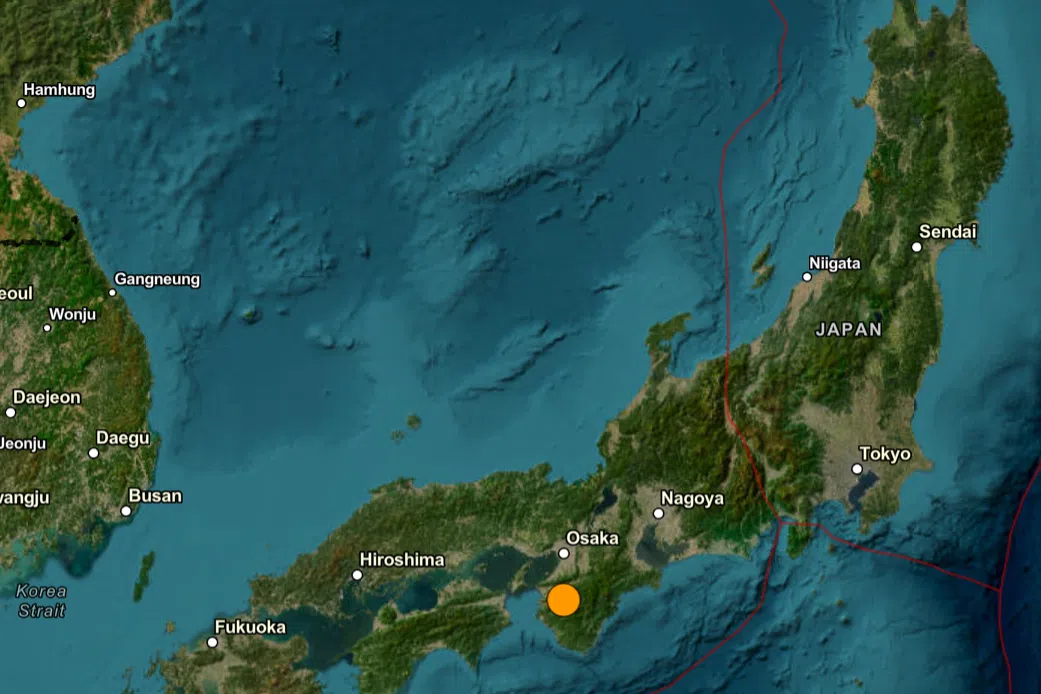
An earthquake with a preliminary magnitude of 5.7 jolted western Japan on Saturday evening, shaking parts of the Kansai region but prompting no tsunami warning, the Japan Meteorological Agency said. The tremor struck at 6:28 p.m. local time, with its epicenter in Nara Prefecture at a depth of 70 kilometers. The quake registered 4 on the Japanese seismic intensity scale of 7 in the prefectures of Mie, Nara, and Wakayama, meaning it was felt strongly by most people and could cause slight damage to vulnerable structures. of injuries or major damage emerged, though authorities urged residents to remain cautious for aftershocks.
Seismic Details and Intensity Patterns
The Japan Meteorological Agency recorded the earthquake at a preliminary magnitude of 5.7, with a focus 70 kilometers beneath Nara Prefecture. The intensity of 4 on Japan’s 7-point scale indicates moderate shaking that can rattle dishes and windows and cause unstable objects to fall. The affected prefectures—Mie, Nara, and Wakayama—lie in the Kansai region, a densely populated area that includes cities such as Osaka, Kyoto, and Kobe. The depth of the quake likely helped dissipate energy, reducing surface impact.
No Tsunami Risk Despite Coastal Proximity
Despite the earthquake’s magnitude, the Japan Meteorological Agency confirmed that no tsunami warning was issued. The agency’s assessment indicated that the quake’s depth and location did not generate significant displacement of the seafloor. Japan, situated along the Pacific Ring of Fire, experiences frequent seismic activity and maintains one of the world’s most advanced tsunami warning systems. The absence of a tsunami alert in this instance provided some relief to coastal communities still mindful of past disasters.
Regional Preparedness and Public Response
Local authorities in Mie, Nara, and Wakayama activated standard post-earthquake protocols, checking infrastructure and public safety. No disruptions to rail services or power supplies were immediately reported. The quake serves as a reminder of Japan’s constant seismic risk, even for moderate events. Public drills and building codes have strengthened resilience, but the unpredictability of earthquakes keeps the nation on alert.
Broader Context of Japan’s Seismic Activity
Japan records thousands of earthquakes each year, the vast majority of which are minor. The country’s strict building standards and early warning systems have significantly reduced casualties from moderate tremors. However, the memory of the 2011 Tōhoku earthquake and tsunami, which killed nearly 20,000 people, underscores the potential for catastrophic events. Saturday’s quake, while relatively mild, highlights the ongoing need for vigilance.
What Comes Next: Aftershocks and Monitoring
The Japan Meteorological Agency warned that aftershocks of similar intensity could occur in the coming days, though the likelihood of a larger event remains low. Residents in the affected prefectures were advised to secure furniture and avoid landslide-prone areas. Seismologists will continue to analyze the quake’s data to refine understanding of the region’s fault lines. For now, the event appears to have passed without significant consequences, a testament to Japan’s preparedness.
The bottom line
- A magnitude 5.7 earthquake struck western Japan on May 2, 2026, centered in Nara at a depth of 70 km.
- The quake registered intensity 4 on Japan’s scale in Mie, Nara, and Wakayama prefectures.
- No tsunami warning was issued, and no major damage or injuries were reported.
- The event underscores Japan’s high seismic activity and effective early warning systems.
- Authorities continue to monitor for aftershocks and advise public caution.


Single Ticket Wins S$12.8 Million Toto Jackpot in Singapore Cascade Draw

Trump Warns Iran Will Be 'Blown Off the Face of the Earth' as Strait of Hormuz Crisis Escalates

Sheng Siong Raises Profit 12.6% as Analysts Lift Targets on Store Expansion Runway