Mamata Banerjee Loses Bhabanipur Stronghold as BJP Seals 206 Seats in Bengal
The Trinamool Congress chief's defeat to Suvendu Adhikari marks a historic shift in West Bengal politics, while actor Vijay's party wins Tamil Nadu, breaking a 49-year jinx.

SINGAPORE —
Key facts
- Mamata Banerjee lost her Bhabanipur seat to BJP's Suvendu Adhikari.
- BJP won 206 seats in West Bengal assembly elections.
- Actor Vijay's party won 107 seats in Tamil Nadu.
- MK Stalin suffered a shock defeat in Tamil Nadu.
- PM Modi declared 'Bengal has seen poriborton'.
- Amit Shah and five others credited for BJP's Bengal win.
- Vijay's party is set to break a 49-year electoral jinx in Tamil Nadu.
Banerjee's Bhabanipur Defeat and BJP's Landslide
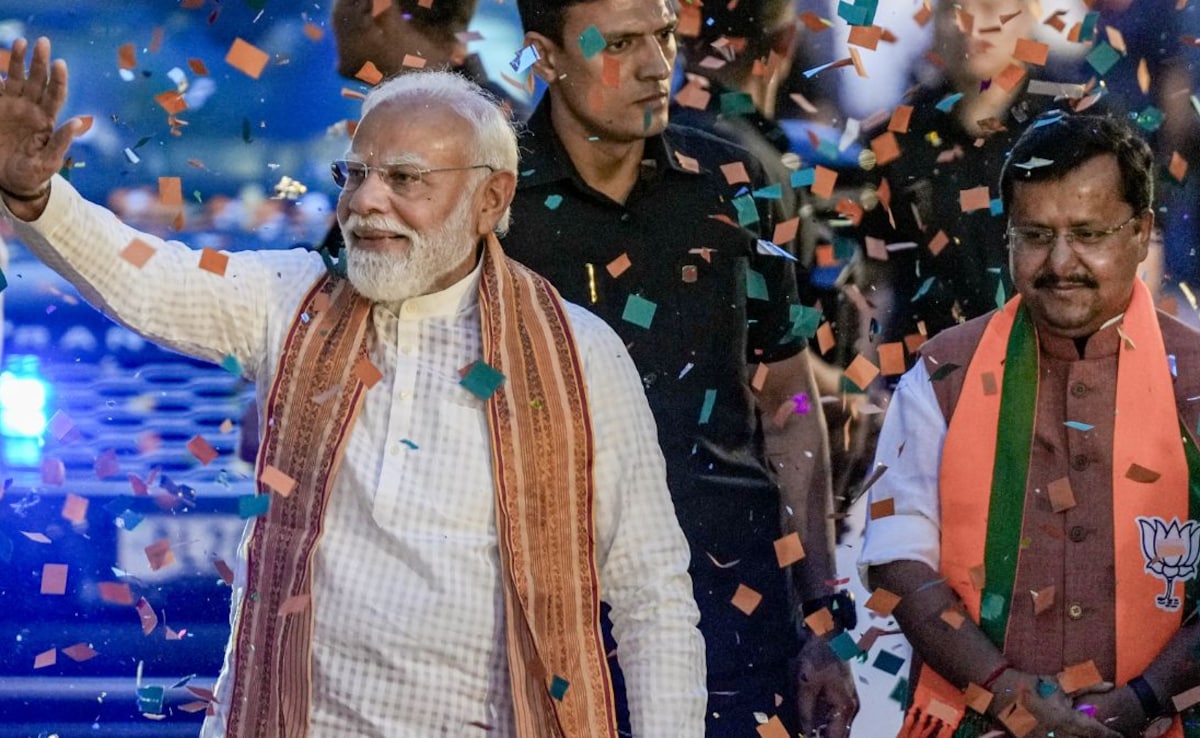
Mamata Banerjee, the chief minister of West Bengal and leader of the Trinamool Congress, has lost her own constituency of Bhabanipur to Suvendu Adhikari of the Bharatiya Janata Party. The defeat, part of a broader rout, saw the BJP capture 206 seats in the 294-member state assembly, a historic victory that reshapes the political landscape of eastern India. Prime Minister Narendra Modi declared, 'Bengal has seen poriborton' — the Bengali word for change — as the scale of the BJP's win became clear. The party's performance completes what strategists call the 'Anga-Banga-Kalinga' arc, linking BJP dominance across eastern states. Banerjee, in a defiant response, said, 'Loot, loot, loot. We'll bounce back,' acknowledging the scale of the loss but vowing a return.
The Architects of a Historic Win
Home Minister Amit Shah and five other party strategists have been identified as the architects of the BJP's unprecedented victory in Bengal. Their campaign focused on grassroots mobilization, caste coalitions, and a sharp critique of the Trinamool's governance record. Suvendu Adhikari, a former Trinamool leader who joined the BJP ahead of the elections, emerged as the face of the challenge, unseating Banerjee in her own stronghold. The victory in Bhabanipur, a seat she had held since 2011, symbolizes the complete reversal of fortunes. BJP spokesperson Amit Malviya told NDTV that the Trinamool's failure was 'so colossal they couldn't hide it.' The party's internal post-mortem is expected to focus on anti-incumbency and corruption allegations.
Vijay's Tamil Nadu Triumph Breaks 49-Year Jinx
In Tamil Nadu, actor-turned-politician Joseph Vijay's party won 107 seats, a stunning performance that breaks a 49-year pattern of alternating Dravidian party rule. Vijay, popularly known as 'Thalapathy,' has emerged as a kingmaker, with alliance talks now underway. Vijay's victory includes the election of his driver's son, underscoring the party's grassroots appeal. The result has been described as a 'hack' of Tamil Nadu politics, achieved through a six-move strategy that mobilized young voters and leveraged Vijay's cinematic stardom. Karti Chidambaram, a Congress MP, commented that Vijay must now articulate his vision, while also taking a dig at the actor's political inexperience. The DMK's MK Stalin suffered a shock defeat, putting what analysts call 'a nail in the DMK's coffin.'
Stalin's Fall and the DMK's Collapse
MK Stalin, the DMK president and former chief minister, lost his own seat in a result that stunned observers. His defeat is seen as harder than that of his father, M. Karunanidhi, who never lost an election. The DMK's rout has been attributed to anti-incumbency, corruption charges, and the rise of Vijay's alternative. Stalin's son, who also contested, lost as well, leading to headlines about 'the son also falls.' The DMK's vote share collapsed in urban and rural areas alike, with the BJP's allies making inroads. The defeat has triggered introspection within the DMK, with senior leaders calling for a generational overhaul. However, no immediate resignation has been announced.
Eastern India Arc Complete: BJP's Regional Strategy
The BJP's victory in Bengal completes what party insiders call the 'Anga-Banga-Kalinga' arc, linking its dominance in Bihar, West Bengal, and Odisha. This strategic corridor gives the BJP a strong foothold in eastern India, a region where it had historically struggled. Amit Shah and the five other architects focused on building a coalition of backward castes, Dalits, and tribal communities, while also leveraging the popularity of Prime Minister Modi. The party's organizational machinery, including its booth-level management, proved decisive. the BJP's win in Bengal also isolates the Trinamool Congress nationally, reducing Banerjee's ability to act as a opposition fulcrum. The results are expected to boost the BJP's confidence ahead of the 2029 general elections.
What Comes Next: Alliance Talks and Governance Challenges
In Tamil Nadu, Vijay's party now faces the challenge of forming a government or supporting a coalition. Alliance talks are expected to intensify, with the BJP and Congress both vying for his support. Vijay's political inexperience and the need to articulate a clear policy agenda are immediate hurdles. In Bengal, the BJP will need to form a government and deliver on its promises of development and corruption-free governance. The party has named a chief ministerial candidate, but internal factions may complicate the transition. Banerjee's Trinamool, meanwhile, will regroup in opposition, with the former chief minister vowing to 'bounce back.' The party faces the risk of further defections to the BJP, as seen in the run-up to the elections.
A New Political Landscape in India
The 2026 assembly elections in West Bengal and Tamil Nadu have reshaped India's political map, with the BJP expanding its footprint and new players like Vijay's party challenging established dynasties. The results underscore the volatility of Indian electoral politics, where incumbency is increasingly punished and new alignments emerge rapidly. For the BJP, the Bengal victory validates its strategy of aggressive expansion and coalition-building. For the opposition, the defeats in both states raise questions about leadership and messaging. As the dust settles, the focus shifts to governance and the ability of these new governments to address issues of unemployment, inflation, and infrastructure. The 2026 elections will be remembered as a turning point, but their long-term implications depend on what happens next.
The bottom line
- Mamata Banerjee lost her Bhabanipur seat to BJP's Suvendu Adhikari, as the BJP won 206 seats in West Bengal.
- Actor Vijay's party won 107 seats in Tamil Nadu, breaking a 49-year Dravidian party dominance.
- MK Stalin's defeat in Tamil Nadu signals a crisis for the DMK, with his son also losing.
- The BJP's 'Anga-Banga-Kalinga' strategy has given it a strong eastern India corridor.
- Alliance talks in Tamil Nadu will determine the next government, with Vijay as kingmaker.
- The elections highlight the decline of traditional regional parties and the rise of new political forces.





Singapore Toto Jackpot Snowballs to $10M After Three Winless Draws

Pistons Rally from 24-Point Deficit to Force Game 7 Against Magic

Smaran Ravichandran Makes IPL Debut for Sunrisers Hyderabad as Nitish Reddy Sits Out with Illness