Global May Day Rallies Draw Millions as Workers Protest Iran War, Rising Costs
From Manila to Montreal, demonstrators demand higher wages, peace, and an end to austerity as energy prices surge.
SINGAPORE —
Key facts
- Activists in over 30 countries held May Day rallies on Friday, May 1, 2026.
- Police detained at least 15 protesters in Istanbul trying to reach Taksim Square.
- In the U.S., over 100,000 students joined school strikes organized by the Sunrise Movement.
- Democratic congressional candidate Chuck Park was arrested at a New York Stock Exchange protest.
- Quebec's minimum wage rose to $16.60 an hour on May 1, 2026.
- San Francisco Supervisor Connie Chan was arrested blocking traffic at SFO during an ICE protest.
- The Haymarket affair of 1886, which killed multiple police and civilians, is the historical origin of May Day.
A Day of Global Protest Amid Economic Strain
Workers and activists across the world took to the streets on Friday, May 1, 2026, for International Workers’ Day, with demonstrations spanning from Manila to Montreal, Paris to Johannesburg. The rallies, many of them the largest in years, were fueled by rising energy costs and shrinking purchasing power linked to the ongoing Iran war, as well as long-standing demands for higher wages, better working conditions, and peace. In the Philippines, workers clashed with police near the U.S. Embassy in Manila, while in Turkey, authorities detained at least 15 protesters attempting to reach Istanbul’s Taksim Square, the symbolic heart of the 2013 Gezi Park protests, in defiance of a government ban. The day’s events underscored a global wave of discontent that has been building for months.
U.S. ‘May Day Strong’ Actions and Arrests
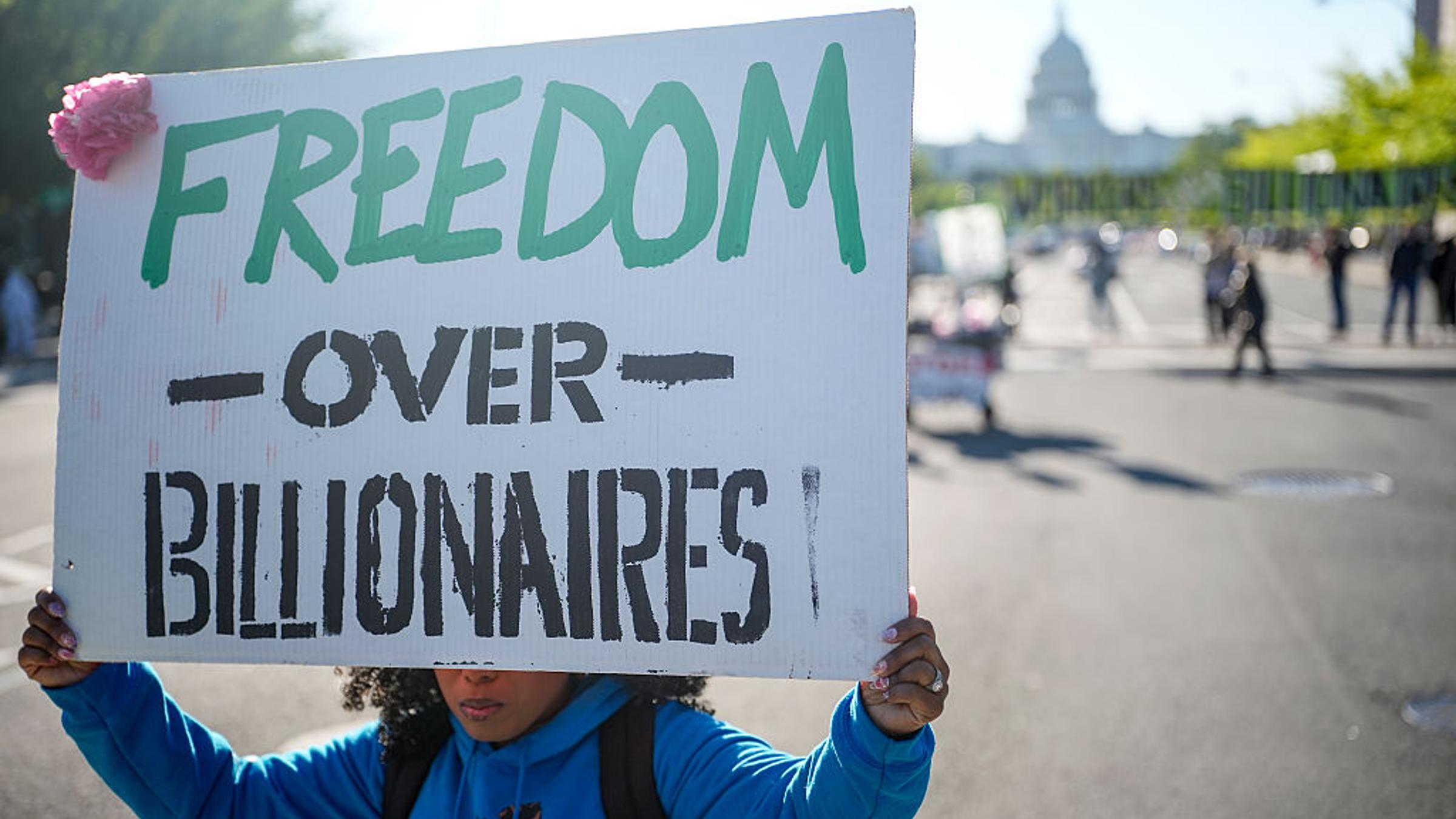
In the United States, a coalition of hundreds of organizations called for a day of economic blackout under the banner “May Day Strong,” urging “no school, no work, no shopping.” Walkouts, marches, and rallies took place in cities across the country, with New York City seeing the largest turnout. Protesters gathered in all five boroughs, including a march from Bryant Park to the Manhattan penthouse of Amazon founder Jeff Bezos, and a demonstration outside the New York Stock Exchange. Multiple people were arrested at the Stock Exchange protest, among them Democratic congressional candidate Chuck Park. His campaign confirmed in a statement that Park was arrested by the NYPD Strategic Response Group while “peacefully protesting with Sunrise Movement during a May Day civil rally for action near Wall Street.” More than 100 New Yorkers participated in that demonstration. In San Francisco, Supervisor Connie Chan was arrested as she stood with demonstrators blocking a road in front of the international terminal at San Francisco International Airport during an “ICE Out of San Francisco” protest.
Youth-Led Strikes and the Sunrise Movement
The Sunrise Movement, a youth-led climate activist group, announced that over 100,000 students would be striking from school on Friday. The organization posted on X that “over a dozen schools have cancelled classes because so many students and teachers are expected to miss class.” The student strikes were part of a broader day of action that also included economic blackouts and protests against the Trump administration’s policies. Organizers outlined demands that included taxing the rich, ending Immigration and Customs Enforcement (ICE) operations, stopping wars, and expanding democracy. The actions followed multiple days of protest by the “No Kings” movement in recent months, as well as earlier economic blackouts in Minnesota and across the U.S. triggered by outrage over the Trump administration’s immigration crackdown after federal officers fatally shot two U.S. citizens in Minneapolis.
Quebec’s Two-Day Rally and Minimum Wage Hike
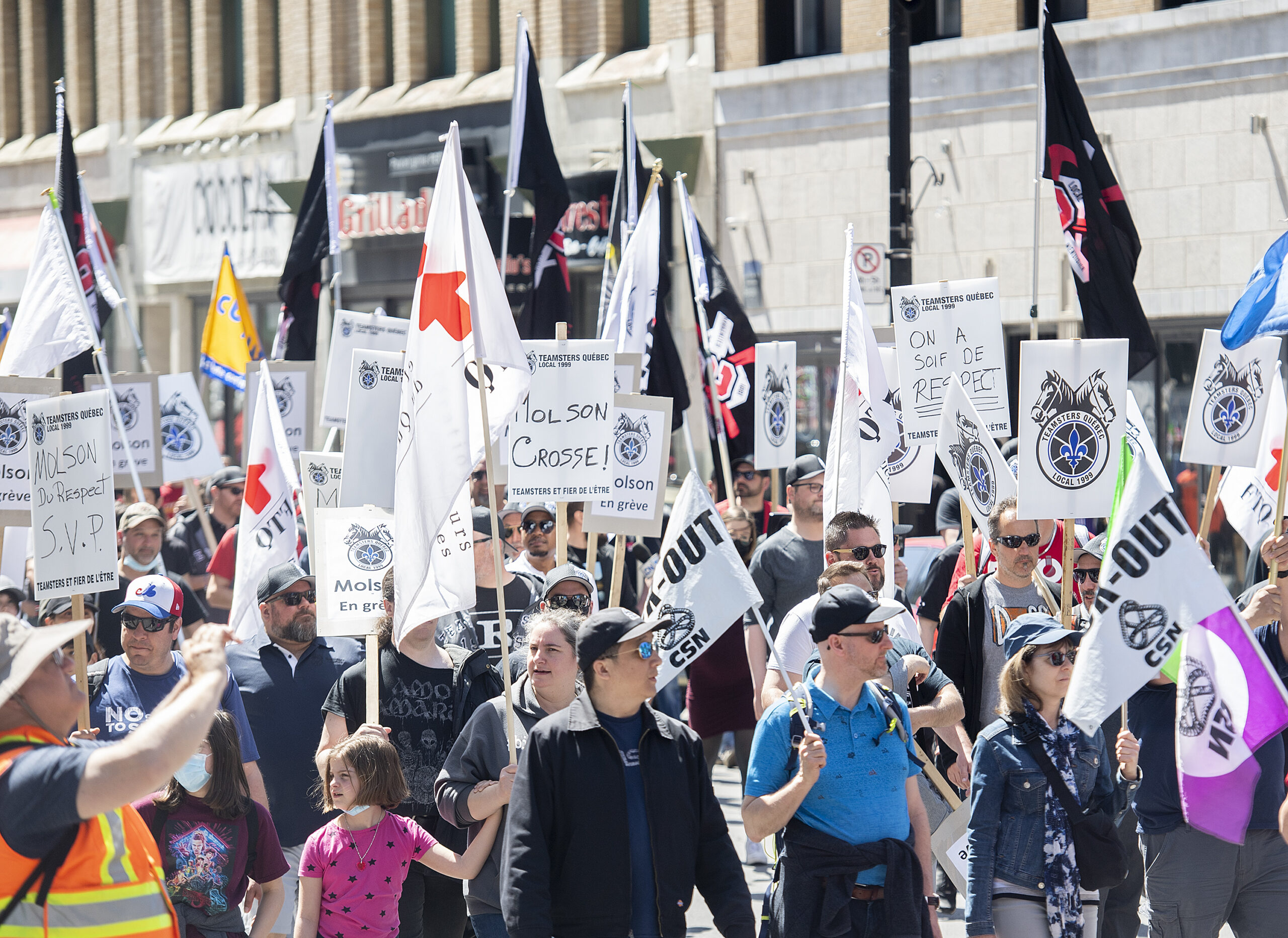
In Canada, events marking International Workers’ Day in Quebec were scheduled over two days, Friday and Saturday, under the theme “Rights trampled; we must resist” (droits piétinés; faut résister). Trade unions, community groups, and student organizations planned to participate. Regional events took place on Friday, with the national rally set for Saturday in Montreal at 1 p.m., gathering at the foot of Mount Royal on Avenue du Parc. Quebec’s minimum wage increased to $16.60 an hour on May 1, a move that unions said was insufficient. Luc Vachon, president of the Centrale des syndicats démocratiques (CSD), highlighted remaining struggles including health and safety at work, wealth redistribution, pay equity, and a living wage, even as some argue that major union battles have already been won.
Latin American and European Demonstrations
Demonstrators turned out in Venezuela, Cuba, Ecuador, and Argentina. In Mexico City, sex workers held a protest demanding dignity and protections. In Chile’s capital, Santiago, some clashes broke out between protesters and police. In Europe, large marches took place in Rennes, western France, and in Paris, where activists gathered to voice demands for peace and higher wages. In the United Kingdom, Australia, South Korea, and Indonesia, workers also held rallies. The global nature of the protests reflected the widespread impact of the Iran war on energy prices and living standards, as well as a broader pushback against inequality and austerity.
Historical Roots and Contemporary Significance
International Workers’ Day traces its origins to a workers’ demonstration in Chicago in 1886 that escalated into a clash with police. On May 4 of that year, a bomb detonated at a rally in Haymarket Square, and police opened fire, resulting in the deaths of multiple law enforcement officers and civilians. Four labor activists were later executed. The Haymarket affair became a rallying cry for the labor movement worldwide. Today, May 1 is a public holiday in many countries, though not in the United States. The White House, in a statement, defended the Trump administration’s record on workers, saying it has “never wavered from standing up for American workers.” Spokesperson Kush Desai cited renegotiated trade deals, trillions in manufacturing investments, tax cuts on overtime, and border security as evidence of the administration’s support.
Outlook: A Movement Gaining Momentum
The scale of this year’s May Day protests suggests a deepening of labor and social activism globally, driven by economic pressures from the Iran war and domestic political tensions. In the U.S., the involvement of groups like the Sunrise Movement and the “No Kings” coalition indicates a merging of labor, climate, and anti-authoritarian movements. The arrest of a congressional candidate and a city supervisor signals that elected officials are increasingly willing to join direct actions. With energy costs expected to remain high and the Iran war showing no signs of resolution, the conditions that fueled these rallies are likely to persist. The coming months may see further coordinated actions, as organizers have already demonstrated an ability to mobilize large numbers across borders. The question now is whether governments will respond with concessions or confrontation.
The bottom line
- May Day 2026 saw global protests linking labor rights, anti-war sentiment, and opposition to the Iran war’s economic fallout.
- Over 100,000 U.S. students participated in school strikes organized by the Sunrise Movement.
- Democratic candidate Chuck Park and San Francisco Supervisor Connie Chan were among those arrested during U.S. protests.
- Quebec’s minimum wage rose to $16.60/hour, but unions say more is needed on pay equity and living wages.
- The White House defended its worker record, citing trade deals and tax cuts, while protesters demanded taxing the rich and ending ICE.
- The protests drew on the historical legacy of the 1886 Haymarket affair, which remains a touchstone for labor movements.

Mandatory TB Screening Ordered for Bedok Central Workers After 13 Genetically Linked Cases Emerge
Nkosi Tafari's Stoppage-Time Header Gives LAFC 2-1 Win Over Toluca in Champions Cup Semifinal First Leg

China’s Hidden Front: The Sacrifice of National Security Police on Labour Day
