Mortal Kombat II Fights for Box Office Crown Amidst Grisly Spectacle
Warner Bros. sequel aims for a $40 million debut, facing a close race with "The Devil Wears Prada 2" at the weekend box office.
SINGAPORE —
Key facts
- Mortal Kombat II is projected to debut with $40 million to $45 million in North America.
- The film's studio estimate for its opening weekend is $35 million.
- It faces competition from "The Devil Wears Prada 2," which is expected to earn $38 million to $42 million in its second weekend.
- The sequel was produced with a budget of $80 million, up from the first film's $55 million.
- The original "Mortal Kombat" grossed $42 million domestically and $84 million worldwide.
- Mortal Kombat II is anticipated to generate at least $30 million internationally, targeting a global opening of $70 million to $80 million.
- Director Simon McQuoid returns for the sequel, with a third film already in development.
A Spectacle of 'Cool Kills' and Muddled Lore
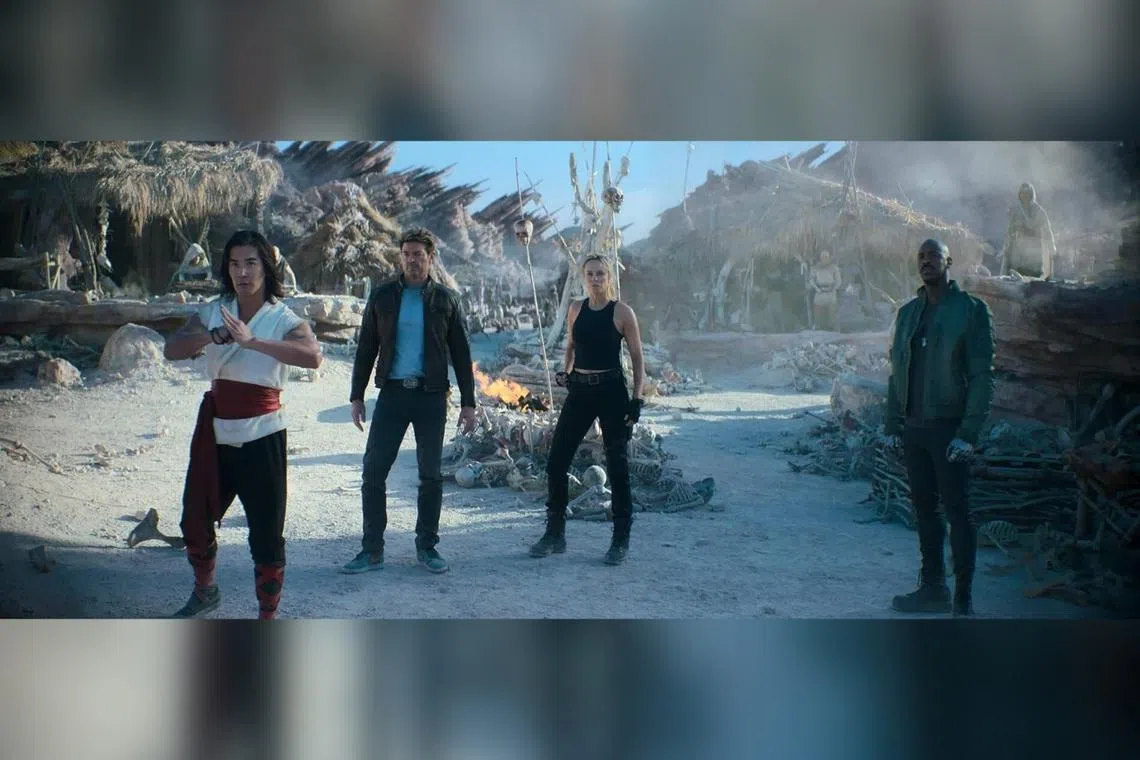
The Earthrealm faces annihilation in "Mortal Kombat II," a sequel that plunges back into the brutal tournaments central to its video game origins. Following the events of the 2021 film, new fighters must join the fray to defend humanity from the tyrannical Shao Kahn, emperor of Outworld. The stakes are stark: defeat means subjugation under Kahn's cruel rule. Returning characters Sonya Blade and Lord Raiden must rally reluctant heroes, including the washed-up actor Johnny Cage, into a desperate defense. Director Simon McQuoid, returning from the first installment, has seemingly prioritized visceral action over narrative coherence. The film is described as a series of ultra-violent vignettes, an approach that, while delivering on its M18-rated promise of "cool kills," leaves the plot feeling laboured and messy. For those unfamiliar with the deep lore of the Mortal Kombat universe, the story's incoherence is palpable, with references and character motivations often lost in the barrage of action. Despite the narrative shortcomings, the film delivers on its promise of grisly spectacle, designed to shock and elicit visceral reactions. This focus on "cool kills" functions much like horror movie jump scares, providing a rush of adrenaline, though some critics question the budget required for such effects compared to simpler, more impactful scares. Fans of the game, however, may find more substance in the gore and violence than the average moviegoer.
Characters Lost in the Chaos of Combat
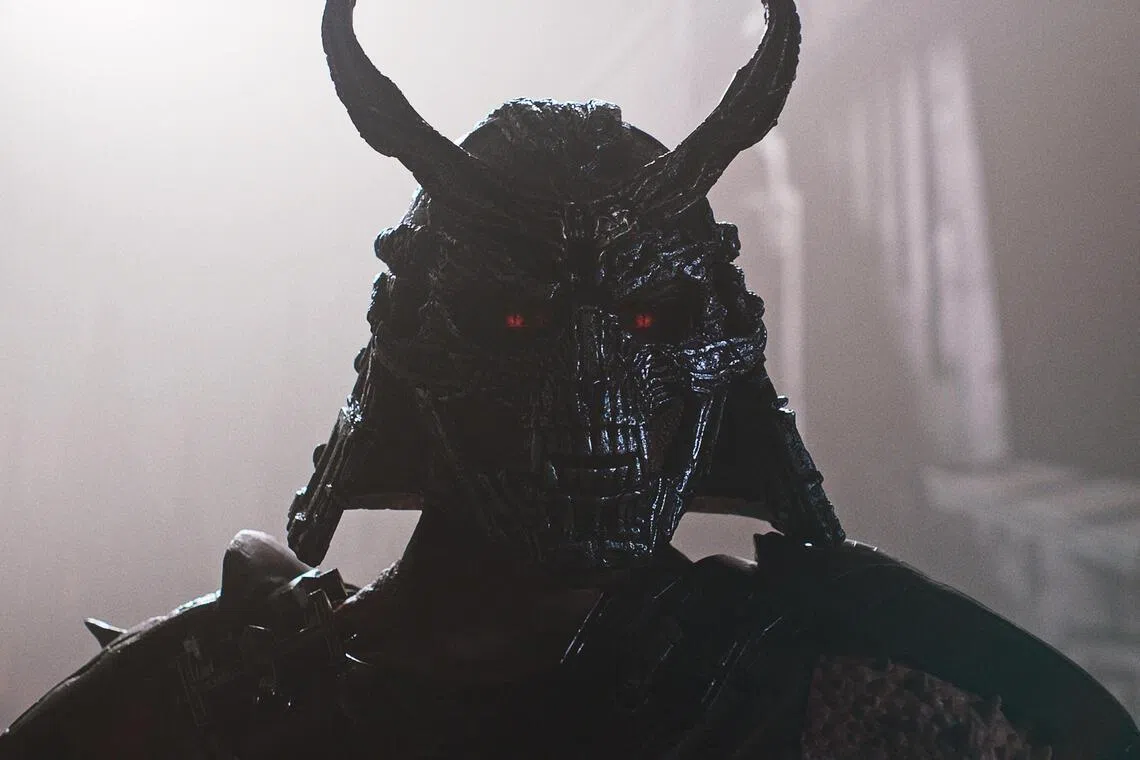
The film's character development is widely criticized as inept, whether by design or oversight. Johnny Cage, a central figure in the marketing and a former action star now reduced to selling merchandise at conventions, is presented with potential for both comedy and a redemption arc. However, this potential is largely squandered due to bizarre plot contrivances and character decisions that undermine his journey. Kitana, Shao Kahn's adopted daughter, is intended to be the emotional core of the film, yet she is afforded little opportunity to develop an inner life. Her narrative arc is rushed, a casualty of the film's need to cycle through its extensive cast of over a dozen characters and numerous battles before the credits roll. The film's structure allows for dead characters to be resurrected and for warriors' allegiances to shift rapidly, contributing to a sense of narrative instability. Even the main antagonist, Shao Kahn, portrayed by the imposing 2.03m-tall Martyn Ford, is depicted as an intimidating but ultimately slow and uninteresting figure. His lack of dynamic action sequences fails to capitalize on his physical presence, leaving him as a mere plot device rather than a compelling villain. The fight choreography itself is praised when characters are not obscured by prosthetics, with a standout sequence involving Ludi Lin's Liu Kang demonstrating impressive speed and agility.
A Box Office Battle of Sequels
Warner Bros.' "Mortal Kombat II" enters a competitive weekend box office landscape, projected to earn between $40 million and $45 million from approximately 3,400 North American theaters. The studio's own estimate is slightly more conservative, at $35 million. This places it in a tight race with Disney's "The Devil Wears Prada 2," which is anticipated to bring in $38 million to $42 million in its second weekend. Rivals and exhibitors suggest that the final figures for both films could climb closer to $50 million, contingent on word-of-mouth for "Mortal Kombat II" and Mother's Day turnout for its competitor. The performance of these two major sequels will be closely watched to gauge audience appetite for established franchises. Behind these tentpoles, other newcomers like Amazon MGM's "Sheep Detectives" and Paramount's concert film "Billie Eilish – Hit Me Hard and Soft: The Tour (Live in 3D)" are expected to land further down the charts. "Michael," the Lionsgate biopic about Michael Jackson, is projected to add a significant $35 million to $40 million in its third weekend, demonstrating strong audience engagement.
Financial Stakes and Franchise Ambitions
The international box office is also a key battleground, with "Mortal Kombat II" expected to generate at least $30 million globally. This would position the film for a worldwide opening between $70 million and $80 million. The production budget for the sequel stands at $80 million, a notable increase from the $55 million spent on its predecessor. The first "Mortal Kombat" film, released in 2021, debuted with $23 million domestically while simultaneously premiering on HBO Max as part of the platform's "Project Popcorn" initiative. Despite the challenging release environment, it achieved modest success with $42 million in North America and $84 million worldwide. Its performance on HBO Max, where it was reportedly among the most-watched films, was sufficient to greenlight a sequel. Warner Bros. clearly harbors significant ambitions for the franchise, with a third "Mortal Kombat" film already in development. This forward-looking strategy underscores the studio's belief in the property's long-term potential, contingent on the success of the current installment.
A Dated Formula, Yet a Familiar Appeal
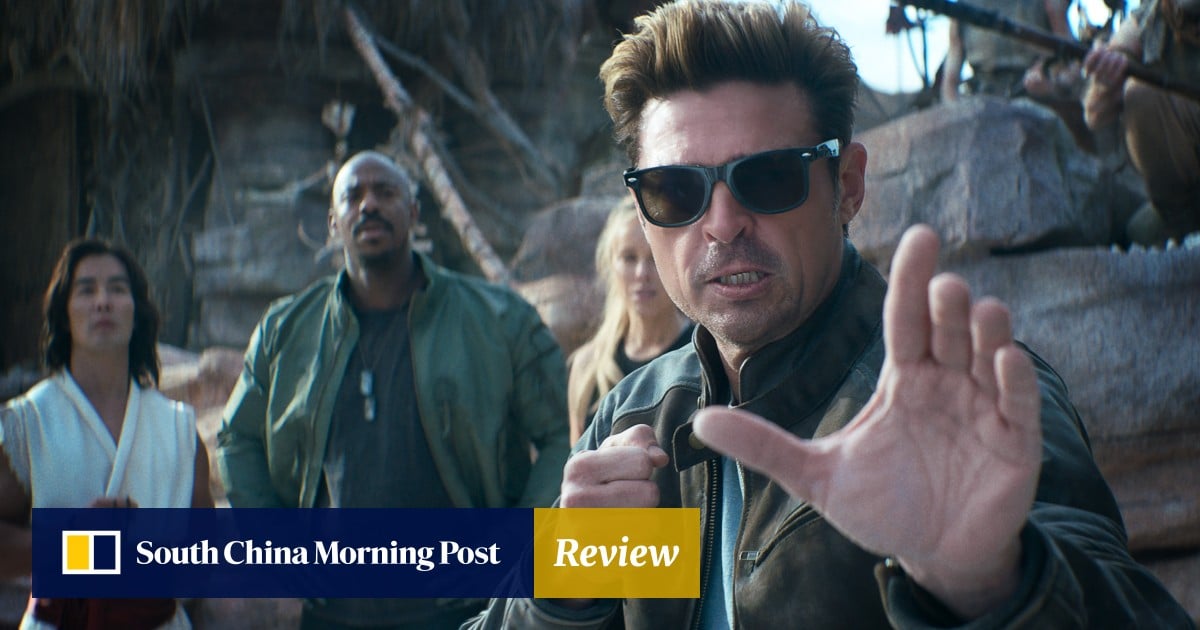
Despite its narrative flaws and dated approach, "Mortal Kombat II" taps into a familiar appeal for its dedicated fanbase. The film's reliance on ultra-violent set pieces and its connection to a well-established video game lore provide a foundation that resonates with those invested in the franchise. Johnny Cage's self-aware observation that karate poses "went out in the 90s" serves as a meta-commentary on the film's own aesthetic, suggesting a certain self-awareness of its potentially antiquated elements. Yet, the visual effects, while better than those of earlier iterations, are ultimately employed to mask a plot that feels like little more than a framework for its violent duels. The film's success will ultimately hinge on its ability to draw audiences into theaters for its spectacle, despite criticisms of its character development and storytelling. The close competition at the box office, coupled with the studio's commitment to a third film, highlights the ongoing gamble on the enduring appeal of the Mortal Kombat universe.
The bottom line
- Mortal Kombat II prioritizes visceral action and "cool kills" over narrative coherence, a strategy that may alienate some viewers but appeal to game fans.
- Character development is a significant weak point, with key figures like Johnny Cage and Kitana failing to achieve meaningful arcs.
- The film is in a tight box office race, projected to earn $40 million to $45 million domestically against "The Devil Wears Prada 2."
- With an $80 million budget, the sequel's financial success is crucial for the franchise, especially as a third film is already planned.
- The film's visual effects are improved, but the plot is widely seen as a mere vehicle for its violent combat sequences.
- Despite criticisms, the sequel aims to capitalize on the established lore and the appeal of its tournament-based premise for a global audience.




Singapore COE premiums hit new highs as Category A crosses S$124,790

Metal Beam Crashes Through HDB Roof in Yishun During Dismantling Works

Micron Surpasses $700 Billion Market Cap as AI-Driven Memory Shortage Fuels Rally