UOB Profit Dips 4% in Q1 Amid Market Headwinds
net profit of S$1.44 billion, beating analyst expectations despite challenges.
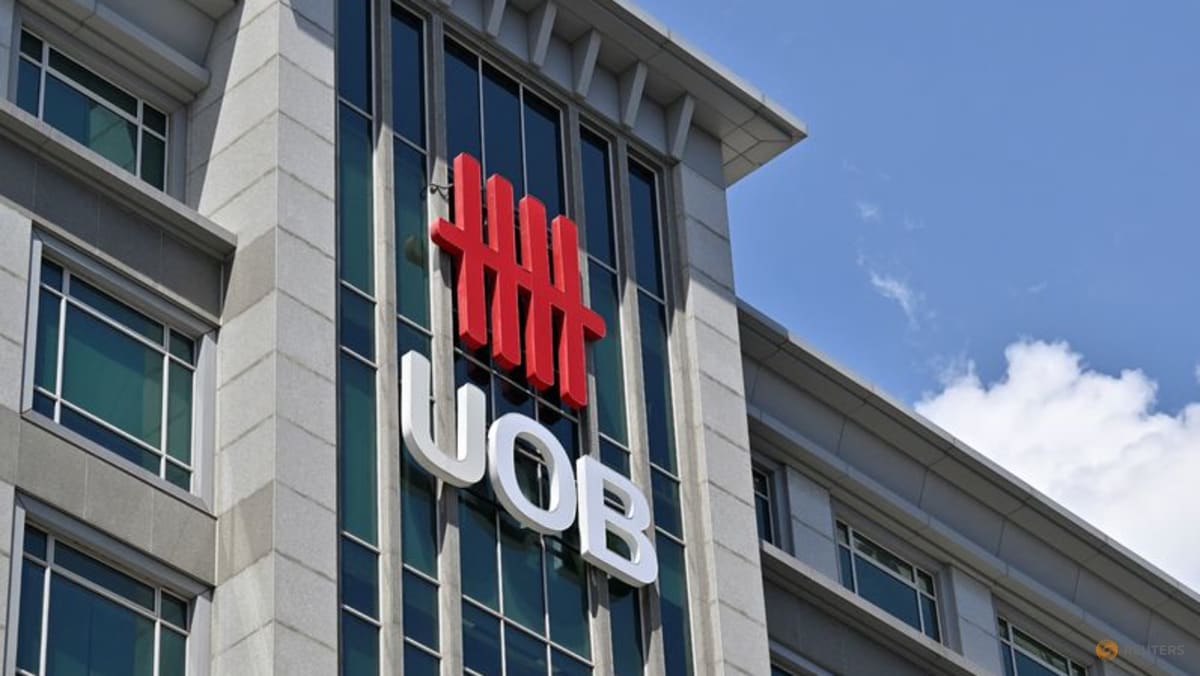
SINGAPORE —
Key facts
- a 4% annual fall in first-quarter net profit to S$1.44 billion.
- Net interest income declined 4% year-on-year due to lower benchmark rates.
- Net fee income eased 8% from the previous year's record high.
- Other non-interest income dropped 17% annually.
- Net interest margin fell to 1.82% from 2.00% a year prior.
- Wealth income rose 6% year-on-year, with assets under management at S$198 billion.
- UOB aims to double wealth management income by 2030.
- The bank completed the S$4.9 billion acquisition of Citigroup's retail banking assets in four ASEAN markets in 2025.
Profit Declines Amid Precarious Market Conditions
United Overseas Bank (UOB) disclosed on Thursday, May 7, a 4 per cent year-on-year decrease in its first-quarter net profit. The S$1.44 billion result, while surpassing analyst forecasts, underscored the impact of a challenging market environment and prevailing interest rate headwinds on the Singaporean lender. The bank's performance reflects a broader trend of cautious sentiment influencing financial markets. Across all income segments for the January-March period, Southeast Asia's third-largest bank by assets registered declines. Despite these pressures, UOB maintained its previously issued guidance for the full year 2026. This resilience in outlook suggests an underlying confidence in the bank's strategic positioning. The bank's net profit for the quarter stood at S$1.44 billion, a reduction from S$1.49 billion in the same period a year ago. This figure, however, exceeded the mean estimate of nearly S$1.38 billion compiled from three analysts surveyed by LSEG, indicating a degree of operational outperformance relative to market expectations.
Income Streams Under Pressure
The bank's net interest income experienced a 4 per cent contraction compared to the previous year, a direct consequence of declining benchmark interest rates. This segment is crucial for traditional banking profitability, and its dip signals a shift in the interest rate landscape. Net fee income also saw a reduction, easing by 8 per cent from the prior year's record high. UOB attributed this moderation to a slowdown in investment banking and loan-related activities, a trend exacerbated by prevailing cautious and risk-off market sentiment among investors and businesses. Further impacting the bank's top line, other non-interest income, which includes trading and investment gains, fell by a significant 17 per cent on an annual basis. This multifaceted decline across key income streams paints a picture of a financial institution navigating a complex economic backdrop.
Profitability Metrics and Wealth Management Growth
A key indicator of banking profitability, the net interest margin, decreased to 1.82 per cent in the first quarter from 2.00 per cent recorded in the corresponding period of the preceding year. This compression in margin directly affects the bank's core lending profitability. In contrast to the broader income declines, UOB's wealth management segment demonstrated robust growth. Wealth income climbed 6 per cent year-on-year, with assets under management rising by 5 per cent to S$198 billion. This segment's performance offers a bright spot amidst broader challenges. "While global uncertainty remains elevated, business activity held up across our key segments, with ongoing momentum in CASA, wealth, cards and loans," stated UOB CEO Wee Ee Cheong. His remarks highlight areas of sustained strength within the bank's operations.
Ambitious Wealth Targets Post-Citi Acquisition
Looking beyond the immediate quarterly results, UOB has set an ambitious target to double its wealth management income by the year 2030. This strategic objective is designed to capitalize on the growing affluent segment across the ASEAN region, a market the bank views as significantly underpenetrated. This goal is benchmarked against the bank's financial year 2025 performance, during which wealth management income reached S$1.28 billion. The target implies a minimum income of S$2.5 billion by 2030, a substantial increase reflecting a strategic pivot towards higher-margin services. The bank's capacity to pursue this target has been significantly bolstered by its S$4.9 billion acquisition of Citigroup's retail banking assets in Indonesia, Malaysia, Thailand, and Vietnam. This deal, finalized in 2025 after being announced in 2022, effectively doubled UOB's customer base in these four markets to 8.5 million, providing a substantial platform for wealth services expansion.
Integration Challenges and Future Outlook
The integration of the acquired Citigroup portfolio, while largely completed, presented considerable operational hurdles. CEO Wee Ee Cheong acknowledged that the process was "not as straightforward" as initially anticipated, involving the concurrent operation of existing Citi platforms and the development of new UOB systems, a complex and costly undertaking. Despite these integration challenges and the associated expenses, which have already been accounted for in previous quarters, the bank perceives "significant opportunities" in the wealth management sector. This optimism is fueled by a large and increasingly affluent customer base that remains underserved. "This gives us a long runway for sustainable, organic growth," Wee remarked, emphasizing the potential for sustained expansion. The bank plans to increase hiring for wealth-related roles, such as relationship managers, to support its growth ambitions, while maintaining overall headcount stability. Inorganic growth opportunities are not being ruled out, though the CEO noted that current valuations are likely to remain "very high."
Full-Year Guidance and Market Comparisons
For the full year 2026, UOB continues to project low single-digit loan growth. The bank anticipates its net interest margin to fall within the range of 1.75% to 1.8%, and expects high single-digit growth in its fee income. These results emerge in a period of mixed performance among major global banks. UOB's larger rival, DBS Group, recently reported stronger first-quarter earnings, largely driven by its wealth management division. Standard Chartered also surpassed expectations with a 17 per cent profit increase. However, the global banking landscape has also seen significant setbacks, exemplified by HSBC's unexpected US$400 million loss linked to the collapse of British mortgage lender Market Financial Solutions. This contrast highlights the varied fortunes within the sector.
The bottom line
- UOB's first-quarter net profit fell 4% to S$1.44 billion, exceeding analyst expectations despite market headwinds.
- Declines were seen across net interest income, net fee income, and other non-interest income due to lower rates and cautious market sentiment.
- The bank's net interest margin narrowed to 1.82% from 2.00% year-on-year.
- Wealth income and assets under management continued to grow, signaling a key area of focus for the bank.
- UOB aims to double its wealth management income by 2030, leveraging its expanded customer base post-Citigroup acquisition.
- The bank maintained its full-year 2026 guidance for loan growth, net interest margin, and fee income.





Singapore Toto Jackpot Snowballs to $10M After Three Winless Draws

Crypto.com Launches Hybrid IRAs, Merging Stocks and Digital Assets in Tax-Advantaged Retirement Accounts

Knicks and 76ers Renew Rivalry in East Semifinals as Embiid Seeks Redemption
