Jennifer Rauchet's $42 Shein Dress Sparks Partisan Fury Over Fast Fashion Hypocrisy
The U.S. defense secretary's wife wore a budget gown to the White House Correspondents' Dinner, igniting a debate on nationalism, ethics, and the cost of clothing.

SINGAPORE —
Key facts
- Jennifer Rauchet, wife of Defense Secretary Pete Hegseth, wore a gown resembling a Shein dress priced at $42.23 (£33.50) to the White House Correspondents' Dinner.
- The dress has a customer rating of 4.88 out of 5 on Shein.
- Influencer Ella Devi, an 18-year-old 'socialist socialite,' posted a comparison on X that garnered over 6 million views.
- Fashion watchdog Diet Prada, with 3.4 million followers, criticized the choice as inconsistent with nationalist ideologies.
- Far-right activist Laura Loomer defended Rauchet, arguing the left should not criticize affordable fashion.
- Sustainable fashion expert Aja Barber called the outrage political point-scoring, but stressed that clothing should cost more than $40 to avoid exploitation.
- Rauchet, a former Fox News executive producer, has been seen wearing Shein at other public events.
- The White House Correspondents' Dinner is an annual event in Washington for journalists, politicians, and public figures.
A $42 Gown Ignites a Political Firestorm
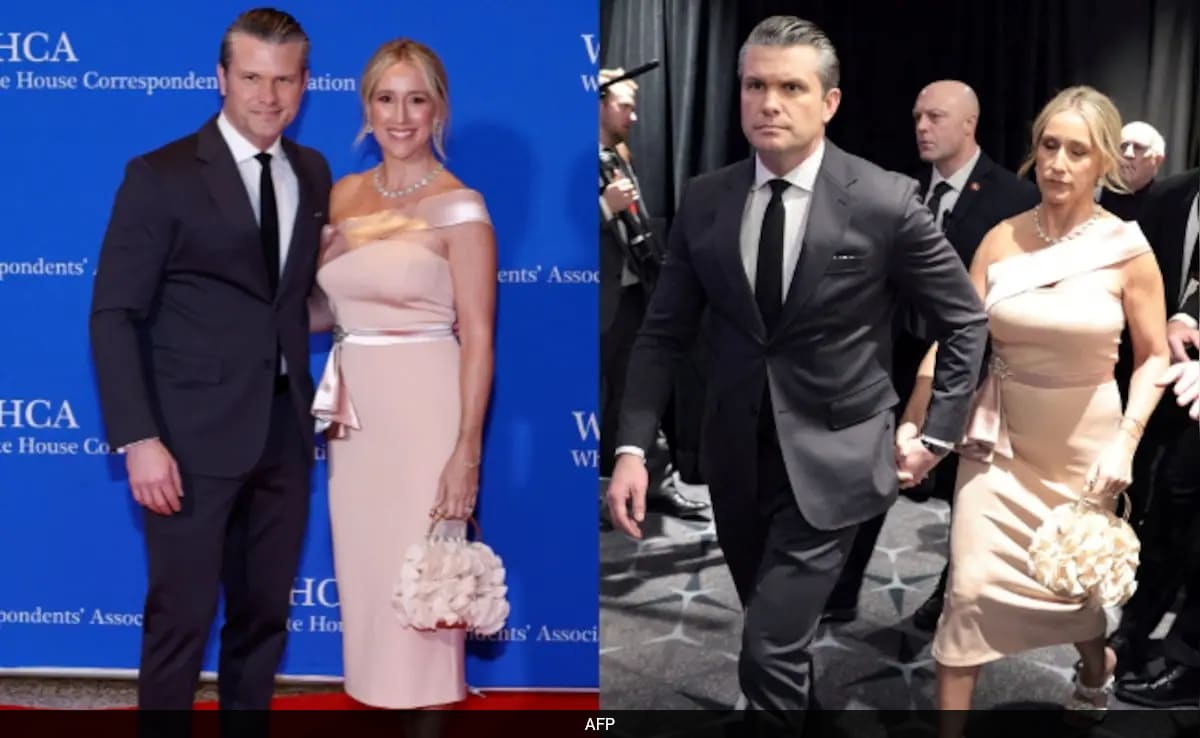
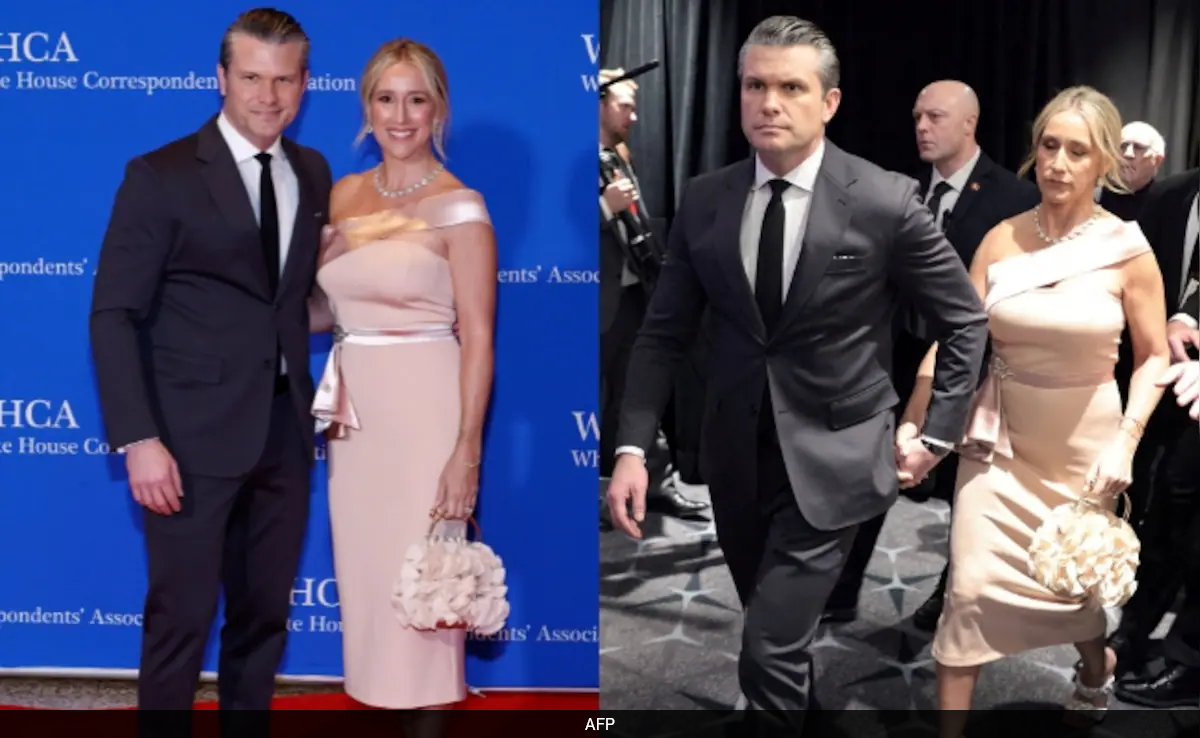
At the White House Correspondents' Dinner in Washington over the weekend, Jennifer Rauchet, wife of U.S. Defense Secretary Pete Hegseth, wore a dusty pink one-shouldered gown adorned with rhinestone appliqué. Within hours, social media erupted after users identified the dress as a near-match for a garment listed on the Chinese fast-fashion platform Shein for $42.23 (£33.50), with a similar version on Temu for half that price. The revelation struck a nerve because Hegseth has championed an 'America First' agenda and taken a hard line against China, including ongoing trade war measures. Critics saw the choice as a glaring contradiction, especially given the administration's nationalist rhetoric. The dress's low price tag—and the ethical baggage of fast fashion—quickly turned a personal style decision into a partisan flashpoint.
The Viral Post and Its Fallout
The controversy began when Ella Devi, an 18-year-old influencer who calls herself a 'socialist socialite,' posted a side-by-side comparison on X with the blunt caption: 'peter hegeseth's [sic] wife wore a dress from temu to the white house correspondents dinner (I’m not joking).' The tweet has since been viewed more than 6 million times. Fashion industry watchdog Diet Prada amplified the criticism to its 3.4 million followers, writing: 'Pete Hegseth’s wife wore fast fashion from overseas … despite her party’s nationalist ideologies.' But the backlash quickly generated its own counter-backlash. Far-right activist Laura Loomer came to Rauchet's defense, posting: 'She looks amazing. I thought the left was about “eating the rich?” Now you want to dunk on someone who didn’t waste $10,000 on a dress they will only ever wear once.' Others accused Devi of hypocrisy, noting that she has posted photos of herself wearing expensive designer items like Chanel bags. Devi's supporters countered that her post was merely an observation about fast fashion, not a personal attack.
The Deeper Debate on Fast Fashion and Exploitation
Sustainable fashion expert and writer Aja Barber weighed in, calling the collective outrage 'political point-scoring.' She said of the Trump administration: 'Their crimes are many, and wearing a dress from a sweatshop is among them. But, generally, our society should actually just take it seriously, even when it’s not someone who is serving in a fascist dictatorship administration.' Barber argued that the real issue is not the price tag but the exploitation embedded in the fast-fashion system. 'Clothing should cost a lot more than what we are seeing on the high street,' she said, noting that prices remain artificially low because of poor labour conditions and environmental damage. Barber also dismissed the notion that fast fashion is a necessity for the poor. 'The entire system would fall apart overnight if it were just poor people buying it,' she said. 'There would not be the profit margins that allowed these companies to get away with exploiting garment workers if it were just people within poverty purchasing.' She pointed out that Rauchet, as a former Fox News executive producer and wife of a cabinet member, likely has the means to buy ethically made clothing.
A History of Weaponized Fashion
This is not the first time a public figure's clothing has been used for political point-scoring. When Representative Alexandria Ocasio-Cortez wore an expensive dress to the Met Gala emblazoned with 'Tax the rich,' she faced criticism for hypocrisy. Similarly, New York City's first lady, Rama Duwaji, was attacked for wearing expensive European boots to her husband's swearing-in. Melania Trump sparked outrage when she wore a $39 Zara jacket with the phrase 'I really don’t care, do u?' while visiting a migrant child detention center—but the criticism focused on the slogan, not the price. On the other hand, figures like Kate Middleton are praised for wearing affordable brands like Hobbs or LK Bennett, earning her the 'people's princess' label. Barber noted that such narratives often erase the garment workers in the global south who produce these clothes under exploitative conditions. 'A win for humility isn’t necessarily a win full stop,' she said.
Rauchet's Background and Previous Fast Fashion Choices
Jennifer Rauchet, born January 30, 1985, is an American television producer who worked at Fox News on programs including 'Fox & Friends' and 'Watters' World' before stepping away from day-to-day production. She married Pete Hegseth, now U.S. Defense Secretary, and has been seen wearing Shein clothing at other public events, including political appearances. This pattern suggests that her choice of the $42 gown was not an anomaly but part of a broader preference for affordable, fast-fashion items. Despite the controversy, the dress itself has a high customer rating of 4.88 out of 5 on Shein, indicating that many consumers find it appealing. The episode underscores how a personal fashion choice can become a political Rorschach test, reflecting deeper divisions over nationalism, consumerism, and global trade.
The Stakes of the Fast Fashion Debate
The Rauchet dress controversy has opened a wider conversation about the ethics of fast fashion, with experts like Barber calling for a systemic shift. 'Our society could be massively improved if people stop being so cheap,' she said, clarifying that this is 'not to be confused with being poor.' The episode highlights the tension between affordability and responsibility, especially when public figures who preach nationalist or anti-China policies are seen wearing cheap imports. As the trade war with China continues and the Trump administration pushes its 'America First' agenda, the question of where clothes are made and at what cost remains a potent political symbol. The debate shows no signs of abating, with both sides using the dress as a proxy for larger ideological battles.
A Mirror to Divided Times
The uproar over Jennifer Rauchet's dress is, at its core, a reflection of America's polarized political landscape. in another era has become a litmus test for loyalty, consistency, and values. The left sees hypocrisy in a nationalist administration wearing Chinese fast fashion; the right sees an attack on frugality and common sense. Meanwhile, the deeper issues of labor exploitation and environmental harm risk being overshadowed by partisan sniping. Barber's call to 'take it seriously' even when the wearer is from a despised administration may be the most challenging takeaway. The dress itself—a $42 piece of polyester and rhinestones—has become a symbol of how consumer choices are never just personal, but political, economic, and moral.
The bottom line
- Jennifer Rauchet wore a $42.23 Shein dress to the White House Correspondents' Dinner, sparking accusations of hypocrisy given her husband's nationalist and anti-China stance.
- Influencer Ella Devi's post criticizing the dress went viral with over 6 million views, but she faced backlash for her own luxury consumption.
- Sustainable fashion expert Aja Barber argues the real issue is the exploitation inherent in fast fashion, not the price tag or political affiliation.
- The controversy is part of a pattern where public figures' clothing is weaponized for political point-scoring, often ignoring the ethical dimensions of production.
- Rauchet has worn Shein at other events, indicating a consistent preference for cheap fast fashion despite her family's wealth.



Workers' Party Reprimands Pritam Singh for Lying to Parliament, Analysts Say Punishment Falls Short

Singapore PM Vows to Protect Workers, Not Jobs, as AI Reshapes Economy
Iranian President and Speaker Seek Removal of Foreign Minister Araghchi Over Nuclear Talks Rift
