French Unions Rally on May Day, Defending Paid Holiday Amid Cost-of-Living Crisis
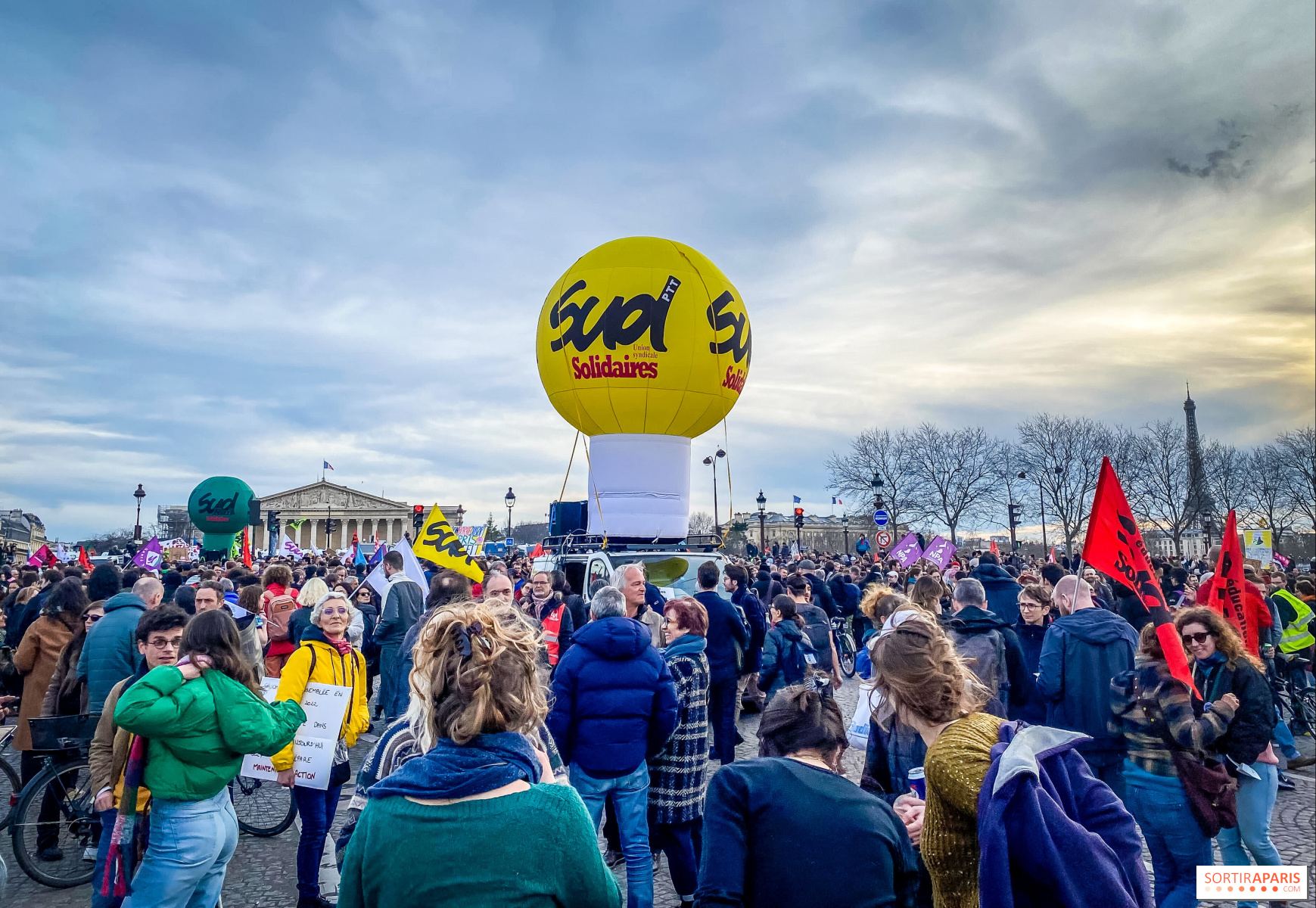
Thousands are expected to march in Paris on Friday under the banners of peace and solidarity, as unions celebrate a hard-won victory against a government push to force 1.4 million workers to work on the holiday.
THAILAND —
Key facts
- The march begins at 2:00 PM on Friday, May 1, 2026, from Place de la République in Paris.
- The route runs through Boulevard Voltaire, Place Léon Blum, and ends at Place de la Nation.
- Unions CGT, FSU, Solidaires, Union étudiante, and Unef are jointly organizing the demonstration.
- Last year, the interior ministry counted 157,000 participants nationwide, while 300,000.
- In Paris, official figures were 32,000; CGT claimed 100,000 marchers.
- The Paris police prefecture has issued an order for temporary parking restrictions in the 10th, 11th, and 12th arrondissements.
- Several metro stations will close from 12:00 PM on Friday.
- Unions are protesting rising living costs and demanding adequate wage compensation.
A Day of Celebration and Defiance
On Friday, May 1, 2026, thousands of workers will gather at Place de la République in Paris at 2:00 PM to march for International Workers' Day. The annual demonstration, organized by a coalition of five major unions — CGT, FSU, Solidaires, Union étudiante, and Unef — is this year framed by twin themes of peace and freedom. The march will follow a route through Boulevard Voltaire, past Place Léon Blum, and culminate at Place de la Nation. The Paris police prefecture has imposed temporary parking bans in the 10th, 11th, and 12th arrondissements, and several metro stations will shut down from noon to ensure the procession proceeds without disruption. For the unions, this year's May Day is not merely a ritual. It is a victory lap and a warning.
A Victory Against a Government Push to Abolish the Holiday
In a joint statement released on April 23, the unions declared that the march would celebrate the preservation of the paid May 1 holiday. They accused President Emmanuel Macron, in alliance with right-wing and far-right opposition parties, of attempting to force 1.4 million workers to work on the holiday through a legislative bill. “May Day is our day, the international day of struggle for workers' rights, a paid holiday that we won more than 100 years ago and that we defended just days ago,” the statement read. “Our rally this year will be an opportunity to celebrate this victory and solemnly remind politicians and employers: we will not touch the May 1 holiday.” The unions framed the successful defense of the holiday as a collective achievement, underscoring the enduring power of labor solidarity.
Protesting the Rising Cost of Living
Beyond the defense of the holiday, the unions are using the march to demand action on the soaring cost of living. The statement called for “adequate wage compensation” for workers, reflecting widespread frustration with inflation that has eroded purchasing power across France. The unions also linked the domestic struggle to global solidarity, calling for peace and expressing unity with “millions of workers under bombs.” This reference, while not specifying a conflict, signals the movement's internationalist stance. France's national statistics office has not yet released official data for 2026, but the unions' emphasis on living costs suggests that economic pressures remain a central grievance.
Divergent Turnout Figures Highlight Political Stakes
Last year's May Day demonstrations drew starkly different counts from official and union sources. 157,000 participants nationwide, with 32,000 in Paris. The CGT, by contrast, claimed 300,000 nationwide and 100,000 in the capital. The discrepancy — a factor of nearly two — reflects the enduring contest over the size and legitimacy of labor protests. For the unions, higher numbers bolster their claim to represent a broad base of working people; for the government, lower figures minimize the political threat. This year's turnout will be closely watched as a barometer of public sentiment ahead of any further labor reforms.
Historical Roots of a National Holiday
May 1 has been a paid public holiday in France for over a century, rooted in the international labor movement's fight for an eight-hour workday. The date commemorates the 1886 Haymarket affair in Chicago and has been observed in France since the late 19th century. The holiday is now enshrined in French law, but its status has periodically come under threat. The unions' statement referenced a recent legislative push by Macron's government, in coalition with right-wing and far-right parties, to compel 1.4 million workers to work on May 1. That effort failed, but the unions view the march as a necessary reaffirmation of the holiday's inviolability.
A Show of Strength for the Future
The May 1 march is also a rehearsal for future battles. The unions have signaled that they will continue to resist any erosion of labor rights, whether through legislative changes or economic pressures. By linking domestic wage demands to international peace, the coalition is broadening its appeal beyond traditional labor constituencies. The inclusion of student unions — Union étudiante and Unef — suggests an intergenerational alliance that could sustain momentum. As the march sets off from Place de la République, the message is clear: the fight for workers' rights is not confined to a single day, but the day itself remains a non-negotiable symbol of that struggle.
The bottom line
- Five major French unions are jointly organizing the May 1 march in Paris, starting at 2:00 PM from Place de la République.
- The march celebrates the successful defense of the paid May 1 holiday after a government attempt to force 1.4 million workers to work.
- Unions are also protesting rising living costs and demanding wage increases, linking domestic issues to global peace.
- Last year's turnout figures varied widely: interior ministry counted 157,000 nationwide; 300,000.
- Temporary parking restrictions and metro closures will be in effect in central Paris from noon on Friday.
- The demonstration reflects broader labor solidarity and sets the stage for future resistance to labor reforms.







หวยลาวงดออกรางวัล 1 พฤษภาคม 2569 เนื่องในวันแรงงานสากล

‘พัฒนา’ เปิดนโยบาย MOPH PLUS+ รับมือระบบสุขภาพไทย 5 ปีข้างหน้า

Thailand's Labour Day Shifts Lottery Draw as Civil Servants Miss Out on Holiday
