May 2026 Brings Two Full Moons: Flower Moon and Rare Blue Moon
The Flower Moon on May 1 will be followed by a calendrical blue moon on May 31, a phenomenon that occurs only seven times every 19 years.
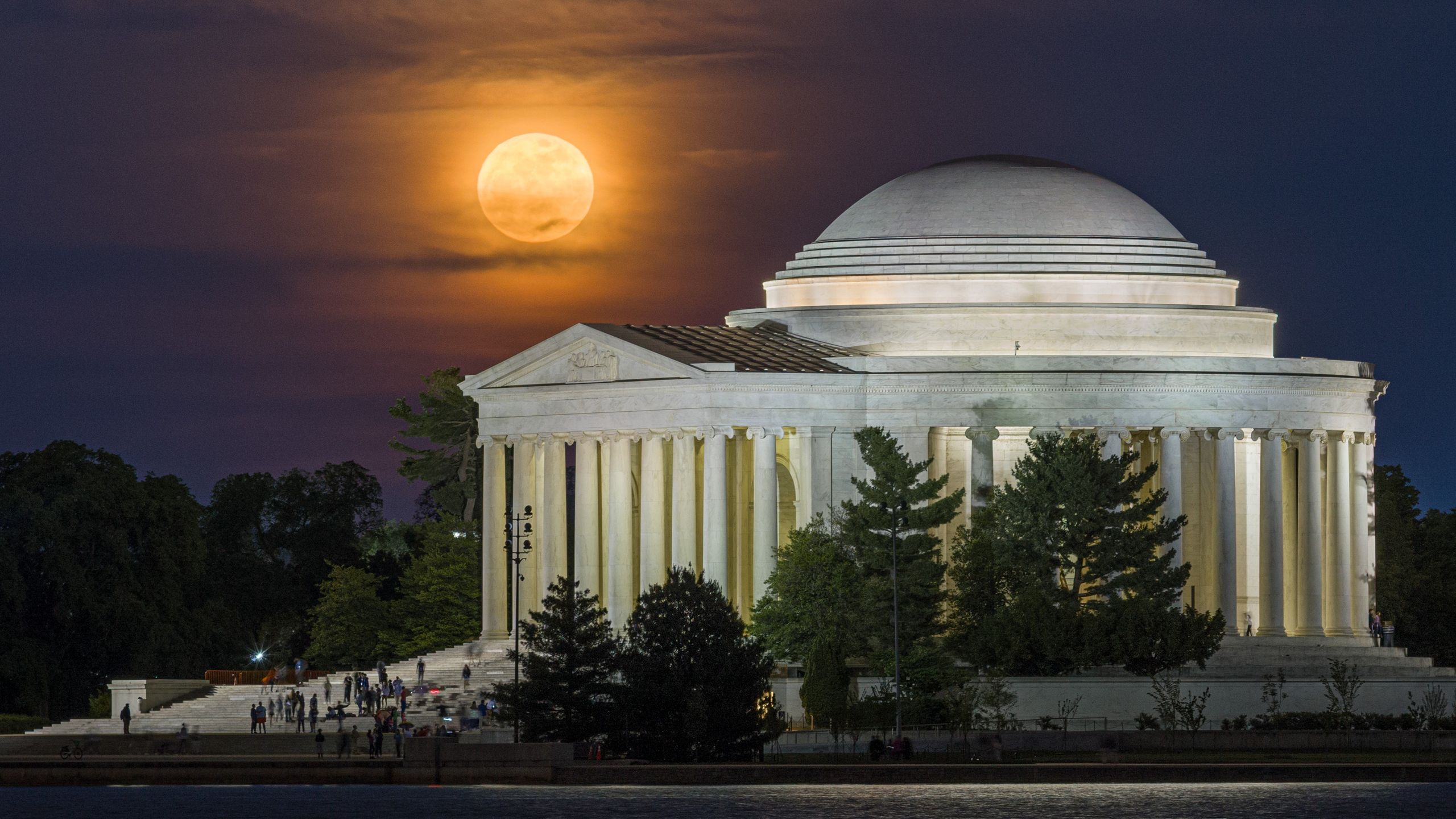
THAILAND —
Key facts
- The Flower Moon peaked at 1:23 p.m. ET on May 1, 2026.
- The Blue Moon will peak at 4:45 a.m. ET on May 31, 2026.
- Both full moons are micromoons, with the moon at apogee 249,180 miles from Earth.
- The Flower Moon appears full for three consecutive nights: April 30, May 1, and May 2.
- The Blue Moon is the second full moon in May, a calendrical blue moon.
- The Flower Moon name originates from the Comanche tribe and Algonquin peoples.
- Indigenous tribes have various names: Strawberry Moon (Potawatomi), Mulberry Moon (Choctaw), and Planting Moon (Dakota).
- The Blue Moon will appear 6-7% smaller than an average full moon and 12-14% smaller than a supermoon.
A Month of Two Full Moons
Skywatchers in May 2026 are being treated to a rare celestial double feature: two full moons in a single calendar month. The first, known as the Flower Moon, reached its peak illumination at 1:23 p.m. Eastern Time on May 1, while the second, a calendrical blue moon, will peak at 4:45 a.m. ET on May 31. The Flower Moon appeared full to the naked eye for three consecutive nights—April 30, May 1, and May 2—rising low in the east at sunset, reaching its zenith around midnight, and setting low in the west before sunrise. The blue moon, by contrast, will be best viewed late on May 30 and in the early hours of May 31.
The Flower Moon: Origins and Cultural Significance
The term "Flower Moon" derives from the Comanche tribe, reflecting the time when wildflowers begin to bloom across North America, particularly in the Great Plains. The Old Farmer's Almanac attributes the name to the Algonquin peoples as well. Indigenous tribes have a rich tapestry of names for this full moon: the Potawatomi and Shawnee call it the Strawberry Moon, aligning with strawberry ripening; the Choctaw and Creek refer to it as the Mulberry Moon; the Tlingit people call it the "moon before pregnancy," with the following June moon named the birth moon. Other names include Budding Moon (Cree), Frog Moon (Cree), Egg Laying Moon (Cree), Moon of Shedding Ponies (Oglala), and Planting Moon (Dakota, Lakota). The first full moon of May also falls on May Day, the halfway point between the March equinox and the June solstice, marking the transition from spring to summer in the Northern Hemisphere.
Photographers Capture the Flower Moon Worldwide
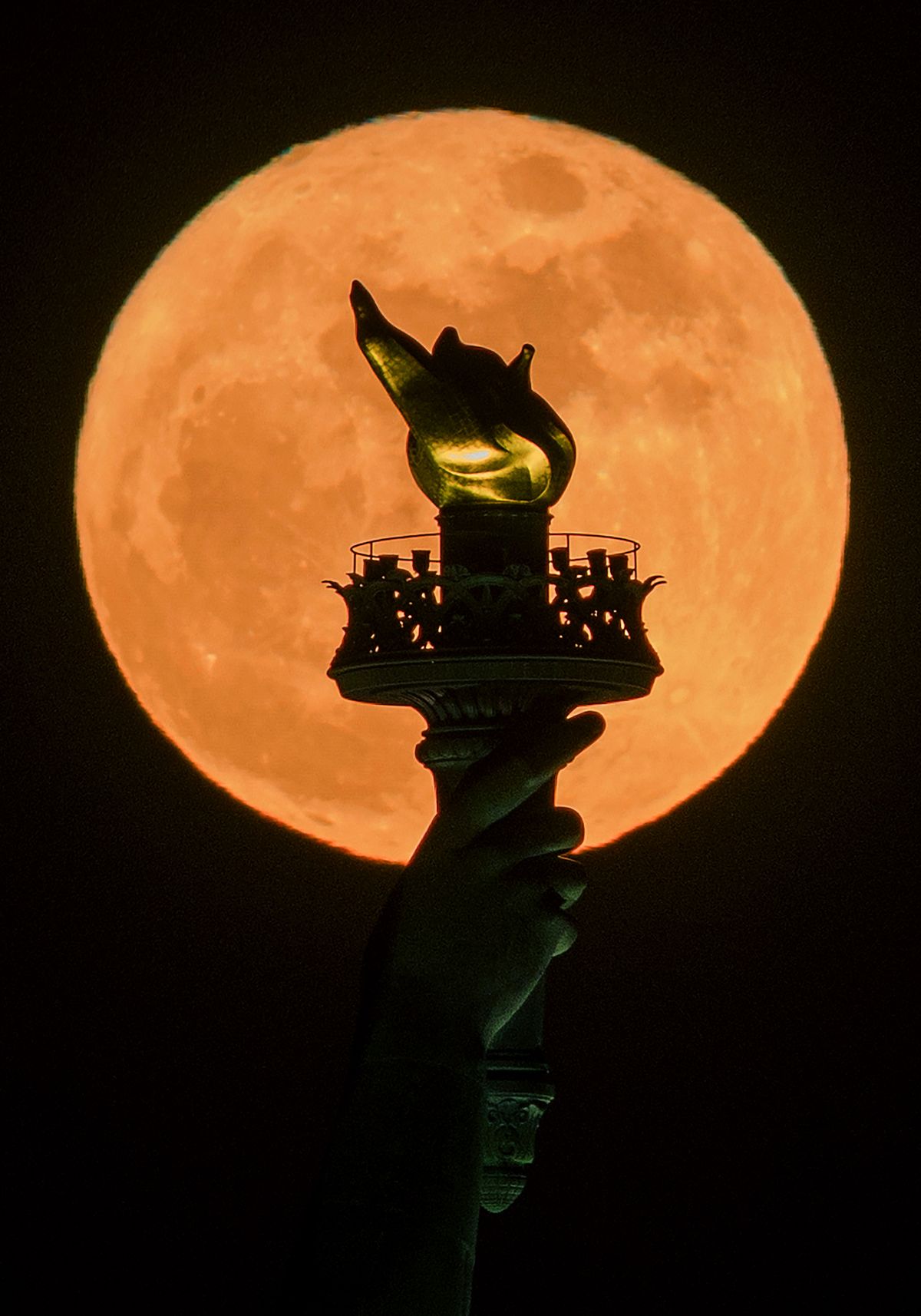
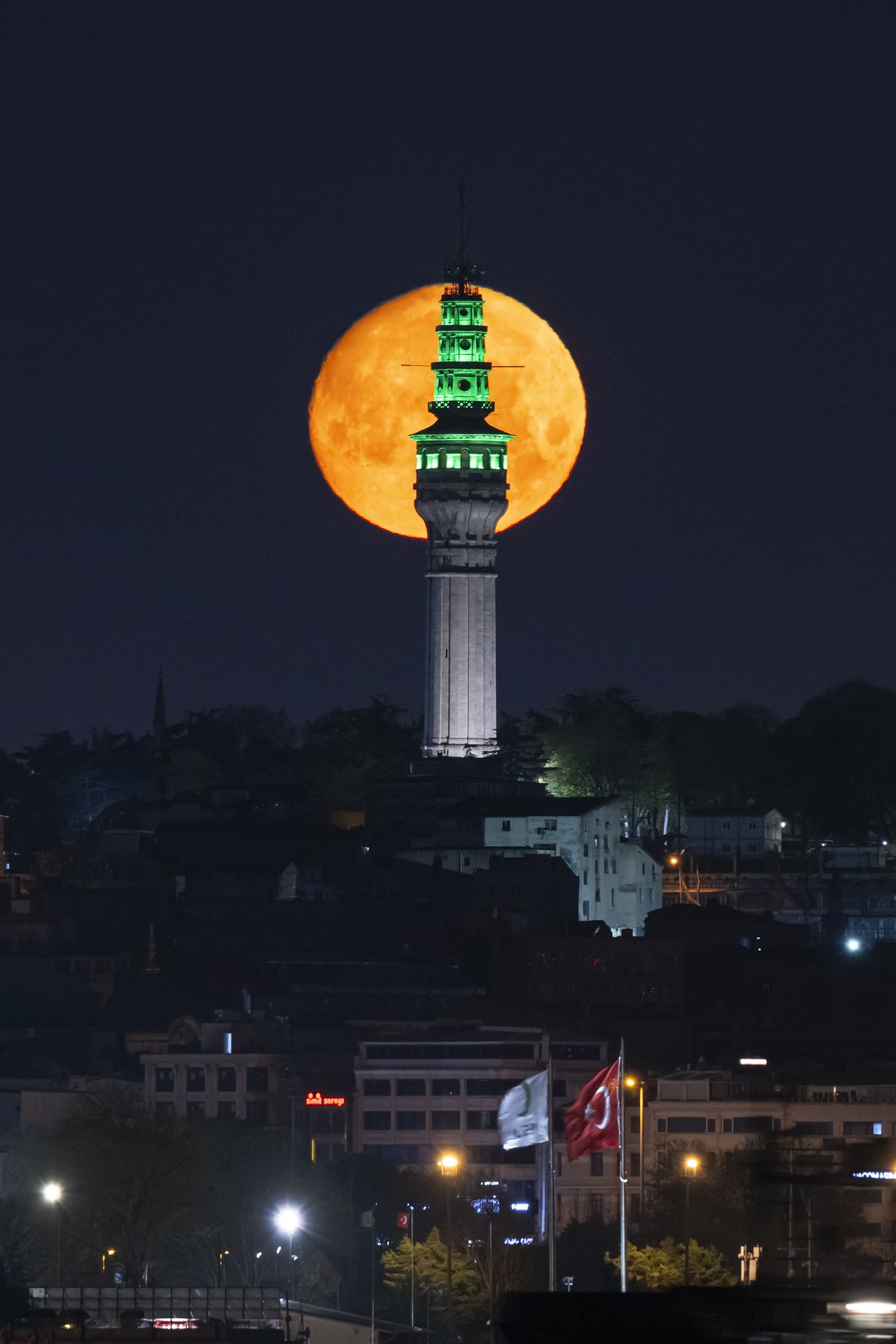
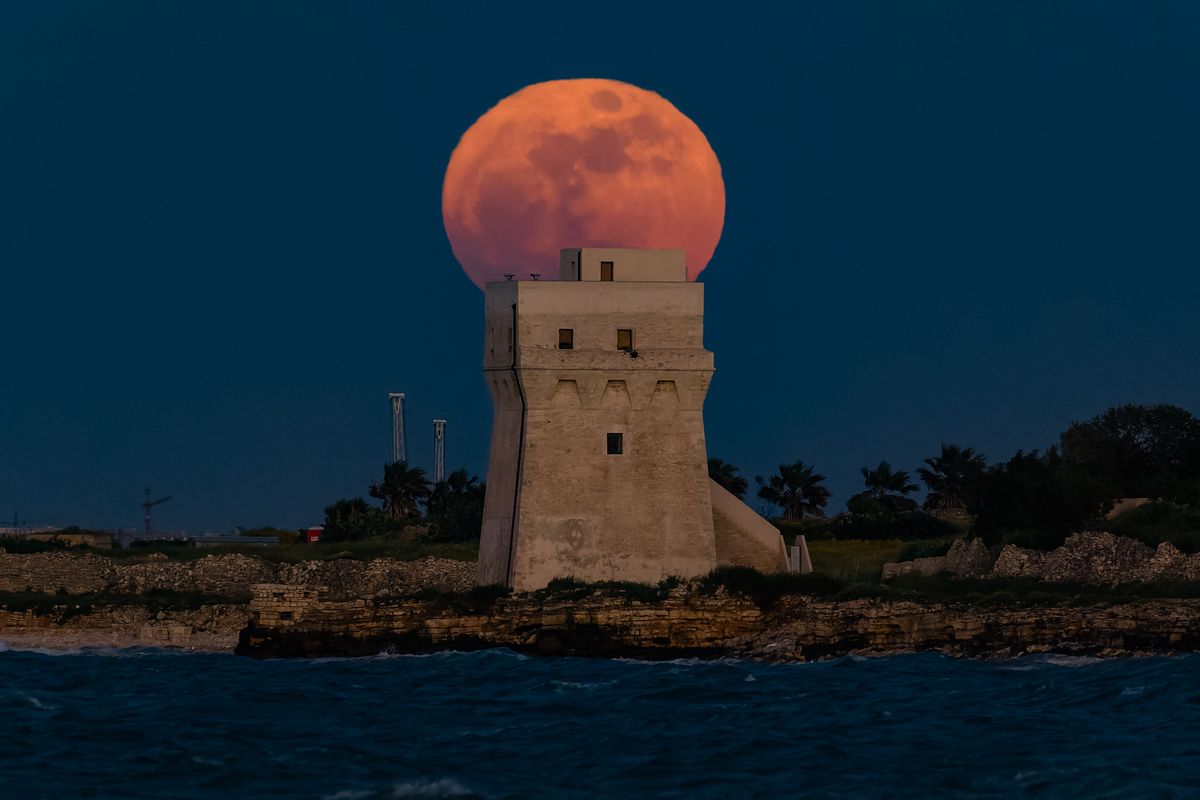
The Flower Moon inspired stunning photographs from around the globe. In New York, photographer Lokman Vural captured the moon rising through the skyscraper-lined avenue of 42nd Street, a location that will also frame the setting sun during Manhattanhenge on May 29 and July 11, 2026, according to the American Museum of Natural History. Gary Hershorn photographed the moon appearing to halo the Statue of Liberty, with Mare Crisium—the Sea of Crises—peaking above the monument's crown. From Jersey City, he used a telephoto lens to make the moon loom large behind the statue's golden torch. In Istanbul, Isa Terli snapped the moon glowing behind the Beyazit Fire Tower, a historic fire lookout. Ahsan Mohammed Ahmed captured a crimson-hued moon over the mountains near Erbil, Iraq, its color resulting from atmospheric scattering of blue wavelengths. Davide Pischettola imaged the moon above Torre Calderina, a coastal defense tower near Molfetta, Italy. Deepak Gupta photographed the moon above a Buddha statue in Lucknow, India, on Buddha Purnima, a day commemorating the birth, enlightenment, and death of Gautama Buddha. Sergei Gapon captured the moon nestled between skyscrapers in Warsaw, Poland, its outline warped by atmospheric refraction. Fabrice Coffrini photographed the near-full moon beside a silhouetted tree in Lucens, Switzerland, on April 30. Kirill Kudryavtsev captured a passenger aircraft crossing the lunar disk over Berlin, Germany, on the same night.
The Blue Moon: A Rare Calendrical Event
The blue moon on May 31 is a calendrical blue moon—the second full moon in a single month. Such events occur only seven times every 19 years.so a micromoon, meaning the moon will be at apogee, its farthest point from Earth, at a distance of 249,180 miles (401,017 kilometers), compared with its average distance of 238,855 miles (384,399 kilometers). Astronomer Catherine Pilachowski noted that the blue moon will appear about 6% to 7% smaller than an average full moon and 12% to 14% smaller than a supermoon. The phrase "once in a blue moon" reflects the rarity of such events, occurring every two to three years.
Expert Advice for Viewing
Noah Petro, project scientist for the Artemis III mission—which aims to land humans on the moon for the first time since 1972—recommends avoiding bright streetlights, tall buildings, and trees for the best view. "It's going to rise right around sunset," Petro said, "so just have a little bit of patience and you'll be treated to the spectacular view." For the blue moon, Pilachowski advises that any time late on May 30 and in the early hours of May 31 should provide a great view, weather permitting. Cloud coverage and local conditions may affect visibility.
What Comes Next
The Flower Moon and blue moon are the first two of three micromoons in a series.n June. While no supermoons are expected in May, the contrast between the micromoon's smaller apparent size and a supermoon's larger appearance is notable—up to 14% difference in diameter. The Artemis III mission, which aims to return humans to the lunar surface, underscores the enduring scientific and cultural fascination with Earth's natural satellite. As Petro noted, the full moon offers a moment of connection to the cosmos, visible to anyone who takes the time to look up.
The bottom line
- May 2026 features two full moons: the Flower Moon on May 1 and a blue moon on May 31.
- Both full moons are micromoons, occurring when the moon is at its farthest point from Earth.
- The Flower Moon is named after spring blooms and has various indigenous names across North America.
- The blue moon is a calendrical blue moon, the second full moon in a month, happening seven times every 19 years.
- Photographers worldwide captured striking images of the Flower Moon against iconic landmarks.
- The next micromoon will occur in June 2026, continuing the series.


Rockets Force Game 6, Push Lakers to Brink of Historic Collapse
Rockets Force Game 6 After 99-93 Win; Lakers Face Historic Collapse

Anime Apocalypse on Roblox: New Codes Offer Free Spins, Coins, and Raid Tickets as Game Launches