GoPro's Patent Attack on Insta360 Backfires as Chinese Rival Wins ITC Ruling and Expands into Drones
A U.S. trade judge found that Insta360 infringed only one of six GoPro patents, with a redesigned product already cleared, while the Shenzhen-based company is now counter-suing GoPro in China and preparing to enter the drone market.
TAIWAN —
Key facts
- On July 11, 2025, an ITC administrative law judge ruled that Insta360 infringed only one of six GoPro patents, and its redesigned products do not violate that patent.
- GoPro's 2025 Q2 net loss narrowed to $16 million (GAAP) from $48 million a year earlier, with gross margin improving to 35.8%.
- Insta360's revenue grew from 20.41 billion yuan in 2022 to 55.74 billion yuan in 2024, a compound annual growth rate of 65.25%.
- Insta360 has filed two patent infringement lawsuits against GoPro in Chinese courts, seeking total damages of 150.4 million yuan.
- Insta360 registered a subsidiary, Shenzhen Yingling Technology Co., Ltd., focused on drone manufacturing, signaling entry into the drone market.
- GoPro completed a $50 million second-lien credit facility and issued 11.1 million warrants at $1.25 per share.
- Insta360's global market share in panoramic cameras reached 67.2% in 2024, projected to hit 81.7% in 2025, per Frost & Sullivan.
A Patent Battle That Reshaped the Action-Camera Landscape
In March 2024, GoPro, the once-dominant American action-camera pioneer, filed a complaint with the U.S. International Trade Commission (ITC) accusing Chinese rival Insta360 of infringing six U.S. patents covering video stabilization, aspect ratio conversion, horizontal correction, distortion correction, and the iconic design of its HERO cameras. The move was widely seen as an attempt to block Insta360's growing presence in the U.S. market. On July 11, 2025, an ITC administrative law judge issued an initial determination that largely rejected GoPro's claims. The judge found that Insta360's products infringed only one design patent, and that Insta360's new design alternatives, already submitted to the ITC, did not violate that patent. The remaining five patents—including those for core technologies like HyperSmooth stabilization—were either not infringed or invalid. The ruling represents a significant setback for GoPro, which had hoped to use the ITC's Section 337 authority to block imports of Insta360's cameras. A final decision is expected by November 10, 2025.
Insta360 Countersues in China and Prepares for Drone Market Entry
While defending itself in the U.S., Insta360 launched a legal counteroffensive in China. On July 16, 2024, the company and its subsidiary Shenzhen Qianhai Insta360 Technology Co., Ltd. filed a patent infringement lawsuit in the Jiangsu Higher People's Court against GoPro and its Chinese affiliates, seeking 110.2 million yuan in damages. A second lawsuit was filed on November 20, 2024, in the Shenzhen Intermediate People's Court, demanding an additional 40.2 million yuan. Beyond the courtroom, Insta360 has signaled a strategic expansion into drones. On July 21, 2025, media reported that the company had registered a Weibo account under the name "Yingling Antigravity," affiliated with a newly established subsidiary, Shenzhen Yingling Technology Co., Ltd. The subsidiary's business scope includes manufacturing and sales of intelligent unmanned aerial vehicles, wearable smart devices, and related products. Its parent company is Zhuhai Yingling Technology Co., Ltd., which is wholly owned by Insta360. Industry observers interpret this as a direct challenge to DJI, the Chinese drone giant, and a sign that Insta360 intends to compete beyond the action-camera segment.
GoPro's Financial Struggles and Restructuring Efforts
GoPro's financial results for the second quarter of 2025, released in late July, show a company still in the midst of a painful turnaround. Revenue from retail channels fell 19% year over year to $111 million, while GoPro.com revenue (including subscriptions and services) dropped 16% to $41 million. Subscription and service revenue remained flat at $26 million, with 2.45 million subscribers, down 3% from a year earlier. On a positive note, GoPro's cost-cutting measures are beginning to yield results. Non-GAAP gross margin improved to 36.0% from 30.7% a year earlier, operating expenses fell 32%, and adjusted EBITDA loss narrowed 83% to $6 million. GAAP net loss was $16 million, or $0.10 per share, compared with a loss of $48 million, or $0.31 per share, in the same quarter of 2024. Chief Financial Officer and Chief Operating Officer Brian McGee attributed the improvement to actions taken in 2024 to reduce operating expenses and increase gross margins. The company also completed a $50 million second-lien credit facility, issuing 11.1 million warrants exercisable at $1.25 per share.
A Decade of Decline: From Market Monopoly to 50% Staff Reduction
GoPro's current predicament is the result of a long erosion of its once-unassailable market position. Founded in 2002, the company introduced the first Digital Hero camera in 2006, which could record only 10 seconds of 240p video but nonetheless became a cult favorite among outdoor enthusiasts. It took GoPro more than five years to sell its first million units, but only three more years to reach five million. At its peak, GoPro commanded nearly 100% of the action-camera market. But competition from Insta360 and DJI has steadily eaten away at that dominance. The three companies now collectively hold about 90% of the global market, with Insta360 alone capturing 67.2% of the panoramic-camera segment in 2024.& Sullivan. To cope with mounting losses, GoPro has resorted to repeated rounds of layoffs. Since 2016, the company has cut its workforce by nearly 50%. In March 2024, it announced a further 4% reduction, affecting about 30 to 40 employees out of a total of 930. The company set aside $2 million in severance costs for that round.
Insta360's Rise: From Startup to Global Challenger
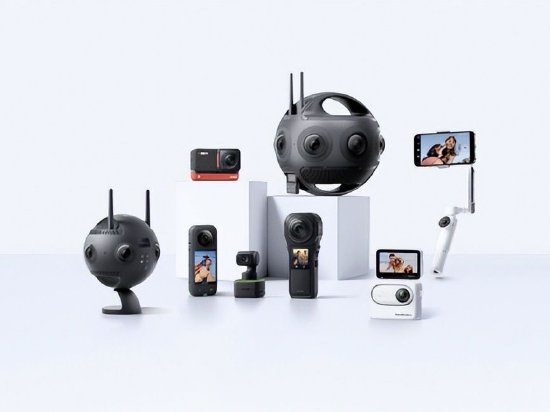
Insta360, founded in 2015 in Shenzhen, has grown rapidly by focusing on innovation in panoramic and action cameras. Its revenue surged from 20.41 billion yuan in 2022 to 55.74 billion yuan in 2024, a compound annual growth rate of 65.25%. Overseas markets now account for 68% of its revenue, with Europe and the United States contributing 52%, giving the company a unique "encircle the world from abroad" strategy. The company's success is built on a portfolio of advanced technologies, including proprietary video stabilization algorithms, distortion correction, and 360-degree capture. It has raised 1.938 billion yuan through a planned IPO on the STAR Market in Shanghai to expand production capacity and research and development. Analysts at Frost & Sullivan project that Insta360's global market share in panoramic cameras will reach 81.7% in 2025, cementing its position as the dominant player in that niche.
What Comes Next: Final ITC Ruling, New Products, and AI Ambitions
The ITC's final ruling on the patent case is due by November 10, 2025. If the initial determination stands, GoPro will be barred from using the ITC to block Insta360 imports, though it could still pursue damages in federal court. Meanwhile, GoPro is pushing ahead with new product launches, including the HERO13 Black ultra-wide-angle edition, which features a pre-installed ultra-wide lens module capable of capturing 177-degree footage with low distortion. GoPro has also introduced two new 360-degree editing tools in its mobile app—MotionFrame and POV first-person view—and a limited-edition forest green color for the HERO13 Black aimed at outdoor enthusiasts. The company is betting on a broader hardware and software portfolio in the second half of 2025 to restore revenue growth and profitability from the fourth quarter onward. In a novel move, GoPro launched a voluntary AI training program that allows U.S. subscribers to license their user-generated content to the company, which can then sell access to AI developers. GoPro's cloud storage holds over 450 petabytes of video, equivalent to more than 130,000 hours of footage, providing a rich dataset for training AI models.
A New Competitive Order in Action Cameras
The ITC ruling and Insta360's counteroffensive mark a turning point in the action-camera industry. GoPro, once the undisputed king, now faces a well-funded Chinese rival that is not only matching its technological prowess but also expanding into adjacent markets like drones. The legal battles in both the U.S. and China underscore the high stakes of intellectual property in a globalized tech economy. For consumers, the intensifying competition has driven rapid innovation in camera stabilization, image quality, and form factors. The outcome of the ITC case will determine whether GoPro can maintain its foothold in the U.S. market or whether Insta360 will continue its ascent unimpeded. Either way, the era of a single dominant player in action cameras is over.
The bottom line
- GoPro's ITC complaint against Insta360 largely failed, with only one design patent found infringed and a redesigned product already cleared.
- Insta360 has counter-sued GoPro in Chinese courts for a total of 150.4 million yuan and is preparing to enter the drone market, challenging DJI.
- GoPro's financial turnaround is underway but fragile: Q2 2025 gross margin improved to 36%, but revenue continued to decline and subscriber numbers fell.
- Insta360's revenue grew at a 65.25% CAGR from 2022 to 2024, and its global panoramic camera market share is projected to exceed 80% in 2025.
- GoPro has launched an AI training program leveraging its 450 PB of user-generated video content, opening a new revenue stream.
- The action-camera market has shifted from a GoPro monopoly to a three-way contest, with Insta360 emerging as the primary challenger.



2026年全球七大悬念:从委内瑞拉到加沙,和平与动荡交织

Gulf Coast Braces for Severe Storms as Weekend Weather Turns Treacherous

SpaceX IPO to Grant Elon Musk Unprecedented Control: Only He Can Fire Himself