Mother's Day: A Global Celebration of Maternal Love and Its Origins
From ancient tributes to modern traditions, the festival honors mothers worldwide with unique customs and enduring symbolism.
TAIWAN —
Key facts
- Mother's Day is celebrated on the second Sunday of May in the United States.
- The modern holiday originated in Philadelphia, initiated by Anna Jarvis in 1906.
- President Woodrow Wilson officially declared the second Sunday of May as Mother's Day in 1914.
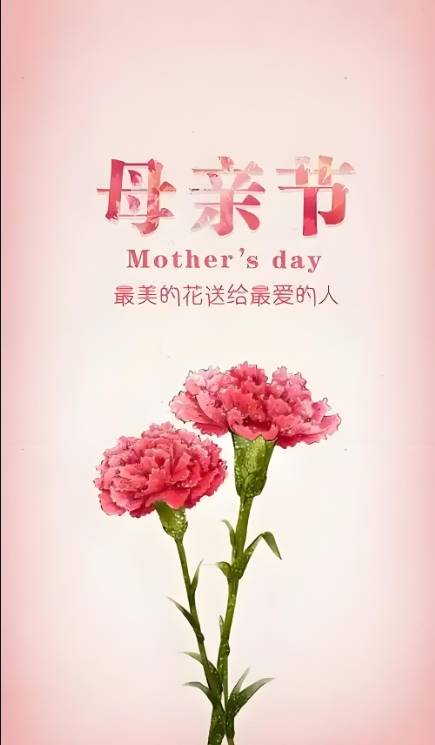
- Carnations became a symbol of Mother's Day, representing the tears of the Virgin Mary.
- China's traditional Mother's Day flower is the萱草 (xuān cǎo), or daylily.
- Different countries observe Mother's Day on various dates, such as Argentina (second Sunday in October) and Spain (December 8th).
A Day Dedicated to Maternal Gratitude
Mother's Day, a global festival dedicated to honoring mothers, is observed annually on the second Sunday of May in many countries, including the United States. This day serves as a poignant reminder of the profound influence mothers have, offering unwavering love, boundless tolerance, and the strength to face the world. While the specific date may vary across cultures, the underlying sentiment of gratitude and appreciation remains a universal constant. The celebration is rooted in a long-standing tradition of filial piety, a cornerstone of many societies. It acknowledges the sacrifices, guidance, and unconditional love that mothers provide throughout their children's lives. The day is marked by gestures of affection, gifts, and expressions of thanks, reinforcing the unique bond between mother and child.
Tracing the Roots of a Modern Tradition
The origins of Mother's Day can be traced back to ancient Greece, where people paid homage to Rhea, the mother of the gods, on January 8th. Later, in 17th-century England, the fourth Sunday of Lent evolved into a day to honor mothers, known as 'Mothering Sunday.' The modern iteration of Mother's Day, however, largely stems from the efforts of Anna Jarvis in the United States. Following the death of her mother on May 9, 1906, Jarvis was deeply moved and organized a memorial service the following year to celebrate her mother and encourage others to express gratitude. Her persistent advocacy led to widespread support for a dedicated day to honor mothers.
Official Recognition and Enduring Symbols
Anna Jarvis's campaign gained significant traction, culminating in a resolution passed by the U.S. House and Senate on May 10, 1913. President Woodrow Wilson then signed a proclamation, officially designating the second Sunday of May as Mother's Day. The U.S. government further stipulated that the national flag should be displayed at homes on this day as a sign of respect. Anna Jarvis's mother had a fondness for carnations, which subsequently became the flower most associated with Mother's Day. The bloom is often interpreted as symbolizing the tears shed by the Virgin Mary. In China, however, the daylily, known as 'xuan cao' or 'forget worry grass,' holds significance as the traditional flower honoring mothers.
A Tapestry of Global Observances
While the second Sunday in May is widely observed, Mother's Day traditions manifest differently across the globe. In Argentina, the celebration occurs on the second Sunday of October, and in Lebanon, it coincides with the first day of spring. South Africa marks the occasion on the first Sunday of May. Some nations link their Mother's Day to religious observances. In Serbia, it is celebrated two weeks before Christmas. Spain and Portugal observe the festival on December 8th, a day honoring the Virgin Mary, which also serves as an occasion for children to express love for their mothers. Egypt's Mother's Day falls on the last Friday of March, featuring musical performances and gift-giving by young people.
Cultural Echoes and Enduring Values
The concept of honoring mothers is deeply ingrained in Chinese culture, predating the adoption of the Western Mother's Day. Historical narratives, such as the tale of Yue Fei, whose mother famously had 'Serve the Country Loyally' tattooed on his back, exemplify the profound respect for maternal influence and patriotism. Figures like Emperor Wen of Han, who personally tasted his mother's medicine, further underscore the historical emphasis on filial piety. These ancient traditions highlight that while Mother's Day may be a Western import, the values of respecting and caring for one's mother are timeless and have always been integral to Chinese heritage. The modern festival provides a structured, globally recognized platform to express these deeply held sentiments.
A Day of Reflection and Expression
The sentiment behind Mother's Day transcends mere gift-giving; it is a day for heartfelt reflection and expression of love. Literary figures like Dante and Kahlil Gibran have eloquently captured the beauty of a mother's voice and the sweetness of the word 'mother.' Leaders such as George Washington attributed his achievements to his mother's education, while Winston Churchill and Dwight D. Eisenhower acknowledged the profound impact of maternal guidance and forgiveness. Even in the face of sacrifice, as exemplified by the patriotic heroine Zhao Yiman, the maternal bond and the lessons imparted by mothers continue to inspire. The day serves as a powerful reminder of these enduring influences, encouraging a renewed appreciation for the sacrifices and love mothers bestow.
The bottom line
- Mother's Day originated in the United States, championed by Anna Jarvis, and was officially recognized in 1914.
- The carnation is the traditional flower symbolizing Mother's Day, though other cultures have their own emblems like the Chinese daylily.
- Celebrations vary globally, with different countries observing the holiday on diverse dates and incorporating unique customs.
- Ancient civilizations, including Greece and England, had earlier forms of maternal veneration that predate the modern holiday.
- The festival reflects a universal value of gratitude towards mothers, deeply embedded in many cultural traditions, including China's historical emphasis on filial piety.
- Beyond material gifts, Mother's Day is an occasion to acknowledge the profound emotional, moral, and educational impact of mothers.
Karina Makes Stunning Met Gala Debut in Modern Hanbok

SanDisk股價四天飆25%:AI記憶體超級週期來臨,420億美元合約鎖定長期營收

Knicks Edge 76ers in Tight Game 2, Extend Series Lead