TSMC Secures 30-Year Wind Power Deal Amid Record Demand
The chip manufacturing giant is investing heavily in renewable energy to meet its escalating power needs.
TAIWAN —
Key facts
- TSMC signed a 30-year power purchase agreement for the Hai Long offshore wind project.
- The deal covers more than 1 gigawatt of power capacity.
- The Hai Long project is scheduled to be fully operational by 2027.
- TSMC aims for renewable energy to meet 60% of its global operations by 2030.
- Chip manufacturing's energy needs accounted for nearly 10% of Taiwan's electricity consumption in 2023.
- The Hai Long initiative has a total gross generation capacity of 1,022 megawatts.
- TSMC commands approximately 70% of the worldwide advanced foundry sector as of 2025.
Chip Giant Bets on Offshore Wind for Energy Future
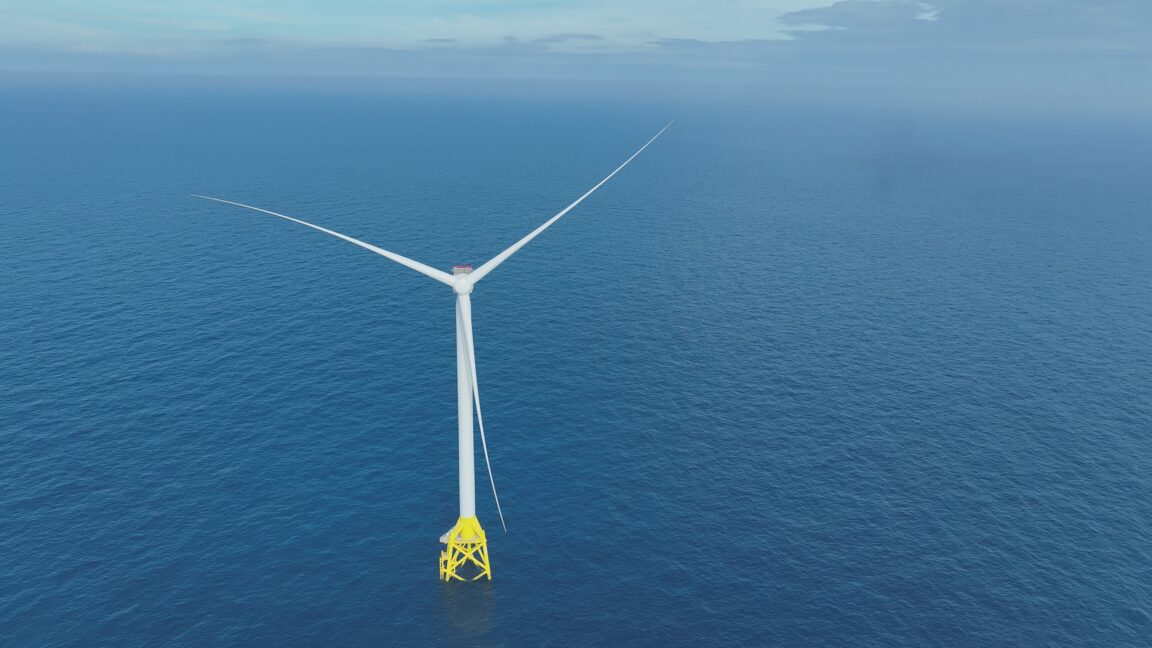
Taiwan Semiconductor Manufacturing Company (TSMC) is forging a significant path toward renewable energy, entering into a 30-year corporate power purchase agreement for the entirety of the electricity produced by the Hai Long offshore wind project. This landmark deal underscores the chipmaker's commitment to securing sustainable power sources as it navigates a period of unprecedented demand, particularly driven by the artificial intelligence boom. The agreement, announced on April 30, solidifies a partnership with Northland Power, a global energy producer based in Canada. It encompasses more than 1 gigawatt of power capacity across three offshore wind sites situated in the Taiwan Strait, west of central Taiwan. This strategic move positions TSMC as a key player in Taiwan's transition to cleaner energy, even as it grapples with global energy market volatility. This initiative is not merely an environmental pledge; it is a critical component of TSMC's operational strategy. The sheer energy requirements of its advanced semiconductor fabrication plants, which accounted for nearly 10 percent of Taiwan's total electricity consumption in 2023, necessitate a stable and increasingly green power supply. The company's ambitious targets—60 percent renewable energy for global operations by 2030 and 100 percent by 2040—highlight the scale of this undertaking.
A Deal to Power a Million Homes
The Hai Long offshore wind project, once fully operational, is projected to generate enough electricity to power the equivalent of over 1 million Taiwanese households. Construction began with initial power supply to Taiwan's grid in 2025, with full operational status anticipated by 2027. This specific agreement focuses on the Hai Long 2A facility, a 294-megawatt component of the larger initiative. It represents a deepening of the relationship between TSMC and Northland Power, building on an initial partnership established in 2022. The broader Hai Long complex boasts a total gross generation capacity of 1,022 megawatts, a testament to the scale of renewable energy development underway. Development responsibilities for the expansive project are shared among Northland Power, which holds a 30.6 percent stake, Mitsui & Co. with 40 percent, and Gentari International Renewables holding the remaining 29.4 percent. The contract's activation is contingent upon the conclusion of administrative procedures, expected in late 2026.
Navigating Global Energy Shocks
TSMC's proactive energy procurement strategy gains critical context against the backdrop of a volatile global energy landscape. The ongoing conflict in the Middle East has significantly disrupted regional energy production and shipping routes, impacting global supply chains. A stark illustration of this vulnerability occurred in March 2026, when Iranian drone strikes damaged Qatar's natural gas facilities, leading to a substantial reduction in Taiwan's liquefied natural gas (LNG) supply. Taiwan's power grid lost one-third of its typical LNG intake. This incident triggered an energy crunch countdown for Taiwan, a nation heavily reliant on natural gas plants for approximately half of its electricity generation. With only about two weeks of fuel reserves typically on hand, the island's energy security is a constant concern. While Taiwan has managed to secure alternative LNG suppliers from countries like Australia and the United States, the episodes underscore the precariousness of its energy situation.
Taiwan's Push for Energy Independence
The global energy crisis is accelerating Taiwan's efforts to diversify its energy sources away from imported fossil fuels, which meet nearly 97 percent of its overall energy needs. The administration of President Lai Ching-te is actively pursuing a multi-pronged approach, including exploring the restart of shuttered nuclear power plants and aggressively expanding renewable energy projects. Offshore wind power is a central pillar of this strategy, with a government plan aiming to make 15 gigawatts of capacity available to developers by 2035. TSMC's substantial commitment to the Hai Long project aligns directly with these national objectives, demonstrating how major industrial players can drive the transition. This push for energy diversification is vital for Taiwan's economic stability and national security. The island's dependence on imported fuels makes it susceptible to geopolitical events and price fluctuations, highlighting the long-term imperative to build a more resilient and self-sufficient energy infrastructure.
Market Valuation and Production Constraints
While TSMC solidifies its energy future, its market valuation and production capabilities remain subjects of intense scrutiny. Shares have traded near 52-week lows, reflecting ongoing debates about its valuation and persistent supply chain challenges. A TrendForce market analysis from April 30 highlighted significant constraints in semiconductor production infrastructure, particularly in CoWoS packaging capabilities, which are essential for advanced AI chips. Industry experts do not foresee relief from this bottleneck until 2027 at the earliest, despite TSMC's expansion efforts. Key clients, including Apple, NVIDIA, and AMD, are locked in a fierce competition for limited manufacturing capacity. The relentless surge in AI computing demands raises questions about TSMC's ability to scale production sufficiently to meet future needs. GuruFocus calculates the company's GF Value at $273.09, suggesting shares currently trade at a 44.2% premium. Its trailing twelve-month price-to-earnings ratio stands at 32.72x, considerably higher than its five-year median of 22.78x, leading to a modest Valuation ranking of 5 out of 10.
Operational Strengths Amidst Challenges
Despite valuation concerns and production bottlenecks, TSMC demonstrates exceptional performance in other critical areas. The company achieves perfect 10/10 scores in both Profitability and Growth categories, alongside a strong 9/10 rating for Financial Strength. TSMC maintains exclusive control over 3nm fabrication processes and is a pivotal developer of 2nm technology, positioning it at the forefront of semiconductor innovation. The company commands approximately 70 percent of the worldwide advanced foundry sector as of 2025. Northland Power's CEO, Christine Healy, noted that the agreement with TSMC "strengthens the project’s long-term financial viability" and enhances value for stakeholders. This sentiment reflects the mutually beneficial nature of the partnership, where TSMC secures vital energy, and Northland Power gains a stable, long-term customer for its renewable energy output.
The bottom line
- TSMC has signed a 30-year agreement to purchase all power from the Hai Long offshore wind project, securing over 1 gigawatt of capacity.
- The deal is part of TSMC's strategy to meet ambitious renewable energy targets, aiming for 60% renewables by 2030 and 100% by 2040.
- The Hai Long project, a joint venture involving Northland Power, Mitsui & Co., and Gentari, is expected to be fully operational by 2027.
- This investment comes as Taiwan faces energy security challenges due to global disruptions and its heavy reliance on imported fossil fuels.
- TSMC's extensive energy needs, representing nearly 10% of Taiwan's electricity consumption in 2023, make its energy choices highly impactful.
- Despite strong operational performance and growth, TSMC faces market concerns regarding its valuation and production capacity constraints, particularly in advanced chip packaging.





2026年全球七大悬念:从委内瑞拉到加沙,和平与动荡交织
Micron Surges 90% in 2024 as AI Demand Drives Memory Boom, but Analysts Split on Sustainability
AMD財報前夕遭匯豐降評至「持有」,股價重挫逾5%反映供應鏈瓶頸