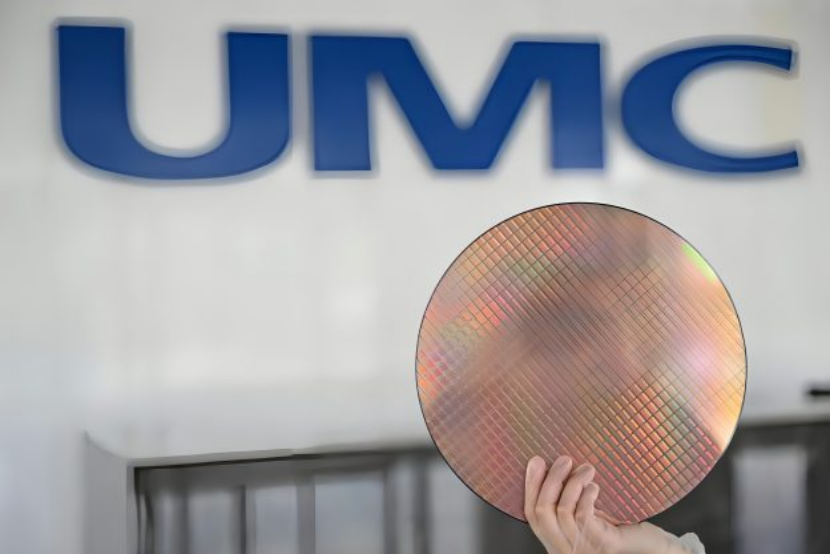
UMC Demands 15% Price Cut From Suppliers Amid Foundry Market Shift
Taiwan's second-largest chipmaker seeks to reduce costs as demand weakens and Chinese foundries expand capacity.

TAIWAN —
Key facts
- UMC is demanding a minimum 15% price reduction from its suppliers starting January 1, 2026.
- This marks the first large-scale move by a foundry in recent years to request price cuts from its supply chain.
- 22/28nm processes accounted for 40% of UMC's wafer revenue in Q2 2025.
- UMC's gross margin fell to 27.72% in H1 2025, significantly lower than TSMC's nearly 60%.
- Chinese foundries like SMIC and Hua Hong are expanding mature process capacities.
- The mature process segment is expected to enter a 'volume up, prices down' phase in 2026.
- UMC is also investing in silicon photonics, signing a licensing agreement for iSiPP300 technology.
Foundry Giant Seeks Cost Relief
Taiwan's second-largest semiconductor foundry, UMC, has informed its suppliers that all contracts must include at least a 15% price reduction, effective January 1, 2026. This directive represents a significant shift in the industry, being the first substantial effort by a major foundry in recent years to compel its supply chain to absorb cost decreases. The move comes as the global semiconductor landscape faces evolving challenges, including aggressive capacity expansion by Chinese competitors and a softening demand for certain electronics. The foundry's decision signals a potential new era of structural adjustment for the mature node segment of the chip manufacturing industry. Analysts suggest this could be a precursor to broader pricing pressures across the sector. UMC's announcement underscores the intense competition and margin pressures faced by foundries operating in an increasingly complex market. UMC itself has acknowledged that volatile global conditions, coupled with rising energy, material, and logistics costs, are placing considerable strain on its operations and profitability. The company declined to comment directly on the price-cut notice but pointed to these external factors as significant headwinds.
Shifting Market Dynamics and Mature Node Focus
The demand for products such as automotive electronics has weakened, contributing to the pressure on foundries like UMC. In the second quarter of 2025, its 22/28nm processes generated 40% of its wafer revenue, an increase from 37% in the preceding quarter. The 40nm node contributed an additional 15% of total sales. Notably, UMC has not yet generated revenue from 14nm or more advanced processes, with its 12nm collaboration with Intel slated for mass production no earlier than 2027. Meanwhile, Chinese foundries, spearheaded by SMIC and Hua Hong, are actively increasing their capacity for 28nm to 90nm processes. This expansion is poised to outstrip end-market demand, potentially leading to an oversupply situation. UMC's proactive stance on supplier pricing appears to be a strategic maneuver to preemptively address the anticipated price competition. Even Chinese foundries are experiencing margin erosion. a gross margin of 20.4% in Q2 2025, down from 22.5% in Q1. This downward trend is expected to intensify as the mature process segment enters what is anticipated to be a 'volume up, prices down' phase in 2026, with foundries like UMC, Vanguard, PSMC, and Hua Hong likely to cut prices to maintain competitiveness.
Profitability Under Pressure
UMC's financial performance reflects the growing challenges. The company's gross margin has seen a steep decline, falling from 45.12% in 2022 to 27.72% in the first half of 2025. This figure stands in stark contrast to TSMC's nearly 60% gross margin during the same period. Further financial pressure is anticipated with the commissioning of UMC's new fab in Singapore in 2026, which will introduce additional depreciation costs. These price adjustments are expected to significantly influence UMC's future decisions regarding capacity allocation and strategic partnerships. The scope of these reductions is anticipated to encompass a wide range of supplies, including silicon wafers, chemicals, gases, and equipment, potentially extending to services such as testing, logistics, and maintenance. The broader market context includes a sharp reduction in wafer foundry orders for mature nodes by Taiwan's leading IC design firms in the latter half of the year. Orders in the third quarter alone reportedly decreased by 20% to 30% compared to the second quarter. Consequently, utilization rates at mature-node foundries could drop from approximately 70% in the first half to 60% or lower in the second half.
Investing in Future Technologies
Beyond managing costs in its established operations, UMC is also making strategic investments in next-generation technologies. The company is pursuing silicon photonics, a field crucial for advanced data communication. In a significant move, UMC announced in late 2025 a licensing agreement with imec to acquire its iSiPP300 silicon photonics process. This acquired technology is designed to accelerate UMC's silicon photonics roadmap and will enable the company to bring a 12-inch silicon photonics platform to market, facilitating next-generation connectivity solutions. This strategic licensing is expected to position UMC to capitalize on future growth areas. UMC is also forging partnerships to advance other cutting-edge technologies. A collaboration with HyperLight and its wholly-owned subsidiary Wavetek aims to mass-produce HyperLight's Thin-Film Lithium Niobate (TFLN) chipset platform on 6-inch and 8-inch wafers. UMC views TFLN as a promising material for meeting the bandwidth demands of next-generation data centers, particularly for achieving 1.6T and higher bandwidths.
TFLN Chipsets for Next-Gen Connectivity
The partnership with HyperLight and Wavetek is described as a major milestone in the commercialization of TFLN photonics. UMC's Senior Vice President, Hong Yuan-Chih, highlighted TFLN's potential for satisfying the bandwidth requirements of next-generation data centers, especially for achieving speeds of 1.6T and beyond. UMC explained that the TFLN chipset platform is engineered for AI infrastructure production. It unifies the requirements for short-reach pluggable data center modules using IMDD, long-reach coherent data communications and telecom modules, and co-packaged optics (CPO) within a single, high-yield manufacturable architecture. This integrated approach aims to streamline production and enhance performance. The TFLN chipset platform offers substantial performance improvements, including extremely high modulation bandwidth, CMOS-level drive voltage, and ultra-low optical loss. For AI networks across all interconnect distances, TFLN promises reduced laser consumption and support for CMOS direct drive voltage, thereby lowering power consumption as lane speeds increase. The platform also demonstrates the extreme performance required for emerging applications like quantum computing and sensing.
The bottom line
- UMC is implementing aggressive cost-reduction measures by demanding significant price cuts from its suppliers starting in 2026.
- The foundry's move reflects broader industry pressures from weakening demand and increased competition, particularly from Chinese foundries expanding mature node capacity.
- UMC's profitability has been significantly impacted, with its gross margin falling sharply, necessitating strategic responses.
- The company is investing in future growth areas, including silicon photonics and advanced TFLN chipsets, to diversify its technology portfolio.
- The TFLN chipset platform is positioned to address the high-bandwidth needs of AI infrastructure and next-generation data centers.
- The semiconductor industry's mature node segment is bracing for a period of increased volume but decreased prices in the coming years.