US State Department Approves $373.6 Million Sale of JDAM-ER Kits to Ukraine
The deal includes over 1,500 tail kits for GPS-guided bombs, extending Ukraine's strike range beyond 75 kilometers and keeping pilots out of reach of Russian air defenses.

UKRAINE —
Key facts
- The US State Department approved the sale on May 5.
- Total value: $373.6 million.
- Includes 1,200 KMU-572 and 332 KMU-556 JDAM tail kits.
- Primary contractor: Boeing, based in St. Louis, Missouri.
- JDAM-ER range: over 75 km (46 miles).
- Bomb weight: 230 to 960 kg depending on variant.
- Guidance: GPS/INS, all-weather capable.
- Ukraine requested the purchase to enhance self-defense and regional security.
A Precision Strike Boost for Ukraine’s Air Force
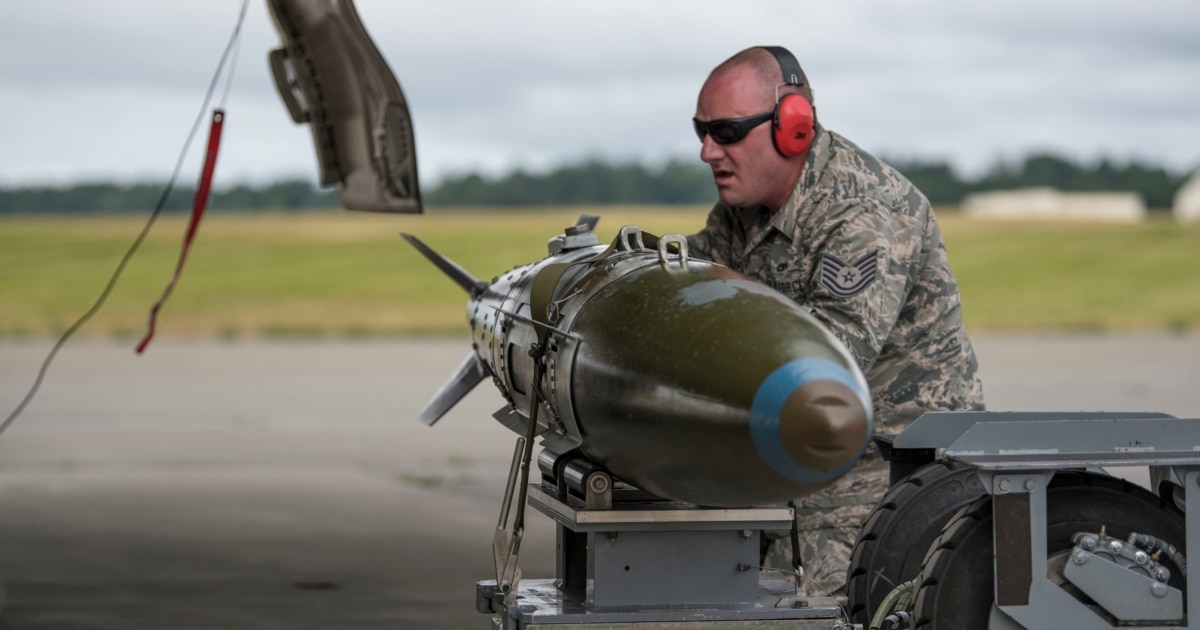
The Biden administration has cleared the way for Ukraine to acquire a significant arsenal of precision-guided bombs, approving a $373.6 million sale of Joint Direct Attack Munition-Extended Range (JDAM-ER) kits and associated equipment. The decision, announced by the State Department on May 5, marks another step in the gradual expansion of Western weaponry provided to Kyiv as it battles Russian forces. The sale covers 1,200 KMU-572 tail kits and 332 KMU-556 tail kits, which convert unguided bombs into all-weather, GPS-guided munitions. The extended-range variant, equipped with folding wings, can glide to targets more than 75 kilometers away, allowing Ukrainian pilots to release weapons while staying beyond the reach of most Russian short- and medium-range air defense systems.
Boeing to Lead Production of the JDAM-ER Kits
The primary contractor for the sale is Boeing, the American aerospace giant that developed the JDAM system. The kits will be produced at Boeing’s facility in St. Louis, Missouri. The State Department noted that the sale also includes spare and repair parts, consumables, software, engineering and logistical support, and technical assistance from both the US government and contractors. In a statement, the department said the proposed sale “will support the foreign policy and national security objectives of the United States by improving the security of a partner country that is a force for political stability and economic progress in Europe.” It added that the deal would strengthen Ukraine’s ability to defend itself and meet regional security commitments.
Over 1,500 Tail Kits and a Range of Support Equipment
The approved package comprises 1,200 KMU-572 tail kits for JDAM and 332 KMU-556 tail kits for JDAM, along with fuzes, software, and maintenance support. The bombs themselves, which can weigh between 230 and 960 kilograms depending on the variant, are standard unguided munitions that become precision weapons when fitted with the JDAM kit. The JDAM-ER version extends the range of the basic JDAM, which typically has a range of about 28 kilometers, to over 75 kilometers by adding a wing kit that provides lift during the glide phase. The guidance system combines an inertial navigation system (INS) with a GPS receiver, ensuring accuracy even in adverse weather, fog, smoke, or when facing electronic jamming.
Ukraine’s Request and the Strategic Rationale
Ukraine formally requested the purchase from the US government, according to the State Department. The sale is intended to bolster Ukraine’s ability to conduct precision strikes against Russian forces while reducing the risk to its own aircraft. By enabling launches from greater distances, the JDAM-ER helps Ukrainian pilots avoid the most dangerous layers of Russian air defense. The munitions are significantly cheaper than dedicated cruise missiles like the Storm Shadow or SCALP-EG, making them a cost-effective option for striking fixed or slow-moving targets near the front line. Experts have noted that the bombs can be used to hit enemy forward positions, logistics hubs, and command posts with high accuracy.
Timeline and Previous Discussions on JDAM Transfers
Discussions about providing JDAM kits to Ukraine first emerged in the winter of 2022–2023, when Ukrainian officials and analysts highlighted the need for stand-off precision weapons. The current approval follows a pattern of incremental Western support, including the recent delivery of ATACMS missiles and F-16 training for Ukrainian pilots. While the sale has been approved, actual delivery will depend on contract negotiations and production schedules. The State Department emphasized that the sale would not alter the basic military balance in the region but would enhance Ukraine’s capacity for self-defense. Separately, Finland recently announced $300 million in defense aid for Ukraine, with a focus on air defense.
Implications for the Battlefield and Regional Security
The addition of JDAM-ER bombs gives Ukraine a more flexible and survivable strike capability. Ukrainian pilots can now engage targets deeper behind Russian lines without entering the lethal engagement zones of Russian S-400 and other long-range air defense systems. The all-weather guidance ensures that operations can continue in poor visibility, a common challenge on the Eastern European battlefield. Analysts point out that the JDAM-ER is not a silver bullet but a valuable complement to existing Western-supplied weapons. Its lower cost compared to cruise missiles allows for larger stockpiles and more sustained use. The sale also signals continued US commitment to Ukraine’s defense at a time when some Western aid packages have faced political delays.
A Calculated Step in an Ongoing Conflict
The State Department’s approval reflects a careful calibration of military necessity and risk. By providing extended-range precision bombs, the US aims to help Ukraine maintain pressure on Russian forces while minimizing the exposure of its own aircraft. of Russian glide bomb attacks on Ukrainian positions, highlighting the importance of stand-off capabilities for both sides. As the war enters its third year, the JDAM-ER sale underscores the evolving nature of the conflict, where precision, range, and survivability increasingly determine the outcome of engagements. For Ukraine, the new bombs offer a tangible improvement in its ability to strike back, but the full impact will depend on how quickly they can be integrated into existing Soviet-era aircraft and how effectively they are employed against a deeply entrenched adversary.
The bottom line
- The US approved a $373.6 million sale of JDAM-ER kits to Ukraine on May 5.
- The order includes 1,532 tail kits (1,200 KMU-572 and 332 KMU-556) from Boeing.
- JDAM-ER extends the range of standard bombs to over 75 km using GPS/INS guidance.
- The bombs weigh 230–960 kg and are all-weather capable, resistant to jamming.
- The sale aims to enhance Ukraine’s self-defense and regional security while reducing pilot risk.
- Delivery timeline depends on contract finalization; the deal complements other Western aid.




Арсенал приймає Атлетіко: після нічиєї в Мадриді (1:1) доля фіналу Ліги чемпіонів вирішиться в Лондоні

Ukraine Delays 1,500 Hryvnia Payment for Some Pensioners Until May

Збірна України з хокею програла Польщі на старті чемпіонату світу в Дивізіоні IA