USS Higgins Loses Power for Hours in Indo-Pacific After Electrical Malfunction
The guided-missile destroyer was left 'helpless, electronically blind and immobile' before restoring propulsion, as the Navy investigates the cause.
UKRAINE —
Key facts
- USS Higgins, an Arleigh Burke-class destroyer, lost power and propulsion for several hours on Tuesday in the Indo-Pacific.
- The incident was described by the Navy as an 'engineering casualty' in the electrical system.
- among the crew of about 300.
- Emergency diesel generators only powered communications and air conditioning, leaving the ship immobile and defenseless.
- The ship is homeported in Yokosuka, Japan, and operates with the US Seventh Fleet.
- Commissioned in 1999, the Higgins is 505 feet long, displaces over 8,200 tons, and carries the Aegis combat system.
- The cause of the malfunction is under investigation, with initial reports suggesting an electrical malfunction that may have produced sparking or smoke.
A Warship Goes Dark in the Indo-Pacific
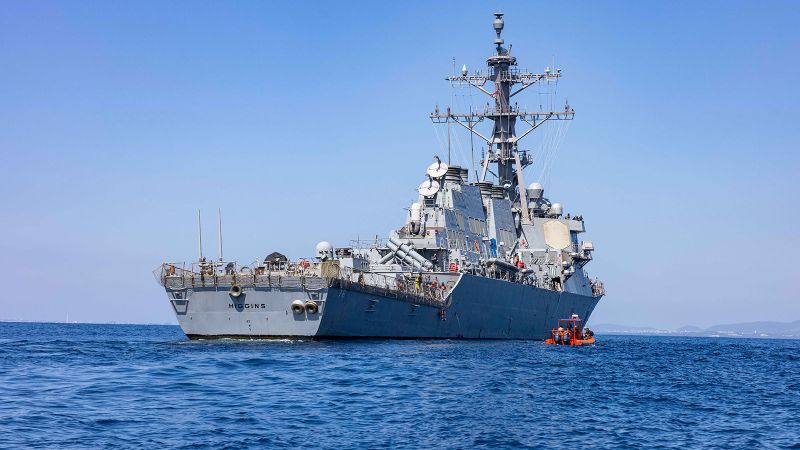
The US Navy guided-missile destroyer USS Higgins suffered a complete loss of power and propulsion for several hours on Tuesday in the Indo-Pacific region, a defense official confirmed. The incident, which the Navy termed an 'engineering casualty' in the electrical system, left the ship and its crew of approximately 300 effectively helpless at sea. a spokesperson for the US 7th Fleet, the Higgins 'experienced a loss of power throughout the ship.' indicate an electrical malfunction that may have produced sparking or smoke, which ceased once power was removed. Power and propulsion have since been restored, but the outage lasted for several hours.
A Ship 'Helpless, Electronically Blind and Immobile'
Naval experts described the severity of the situation, noting that without power, the ship's electrically operated radars and combat defenses were inoperative. Carl Schuster, a former US Navy captain, stated, 'The ship is helpless, electronically blind and immobile.' Emergency diesel generators could only power communications and air conditioning, leaving the destroyer unable to control its movements or defend itself. The Navy did not disclose the exact location within the Indo-Pacific Command's area of responsibility—which spans from the US West Coast to India and from the North Pole to Antarctica—where the incident occurred. The cause of the problem is under investigation.
Speculation Amid Geopolitical Tensions
The fire and power loss have fueled speculation on social media about a possible attack, especially given ongoing Middle East tensions and recent fires on other US Navy vessels, including the USS Dwight D. Eisenhower and USS Gerald R. Ford. However, US officials have not confirmed any hostile involvement, and the Navy has not officially released details beyond the engineering casualty. Some online posts speculated about Chinese involvement, but no evidence has been presented. The Pentagon referred inquiries to INDOPACOM, which has not yet issued a statement. The lack of official details has allowed rumors to proliferate, though the Navy maintains the incident appears to be an internal electrical malfunction.
The USS Higgins: A Workhorse of the Fleet
The USS Higgins is an Arleigh Burke-class guided-missile destroyer, a class that forms the backbone of the US Navy's surface fleet with more than 70 ships in service. Commissioned in 1999 and built by Bath Iron Works, the Higgins is 505 feet long, displaces over 8,200 tons, and carries the Aegis combat system. It is equipped with vertical launch tubes for a range of missiles, including Tomahawk land-attack missiles, and is designed for air defense, missile strikes, anti-submarine warfare, and escort duties. The ship is named after Colonel William R. Higgins, a US Marine killed during a UN mission in Lebanon. It is homeported in Yokosuka, Japan, and operates with the US Seventh Fleet. In February 2026, the Higgins was stationed in Singapore.
Investigation and Next Steps
The Navy has launched an investigation into the cause of the electrical malfunction. While power and propulsion have been restored, the extent of damage to the ship's electrical system and propulsion remains unclear. Officials have not disclosed how long repairs will take or whether the ship will need to return to port for maintenance. The incident raises questions about the reliability of aging Arleigh Burke-class destroyers, many of which have been in service for decades. The Higgins, now 27 years old, is among the older ships in the fleet. The Navy has not indicated whether similar vessels will undergo inspections.
A Reminder of Vulnerability at Sea
The USS Higgins incident serves as a stark reminder that even the most advanced warships are vulnerable to technical failures. For several hours, a multi-mission destroyer armed with Tomahawk missiles was reduced to a drifting hulk, unable to defend itself or communicate effectively. While the crew remained safe and the situation was eventually resolved, the episode underscores the critical importance of redundant systems and rigorous maintenance. As the Navy investigates, the broader implications for fleet readiness and operational security will be closely watched. The Higgins is expected to return to full duty once repairs are completed, but the incident has already sparked debate about the resilience of the US Navy's surface fleet in an era of increasing geopolitical competition.
The bottom line
- The USS Higgins lost all power and propulsion for several hours due to an electrical malfunction, leaving it defenseless and immobile.
- No injuries were reported, and power was restored, but the cause remains under investigation.
- The incident occurred in the Indo-Pacific, a region of strategic importance, amid heightened geopolitical tensions.
- Speculation about an attack has been dismissed by officials, who attribute the failure to an internal engineering casualty.
- The Higgins is an aging Arleigh Burke-class destroyer, highlighting concerns about fleet maintenance and reliability.
- The Navy has not disclosed the full extent of damage or the timeline for repairs.



З 1 травня в Україні змінюються тарифи на світло, субсидії та запускаються динамічні ціни на квитки Укрзалізниці

Фінал серіалу «Підміна» залишає глядачів у напрузі: правда виходить назовні, але продовження не підтверджено
Май 2026 року подарує два мікроповні місяці: Цвітний та Блакитний
