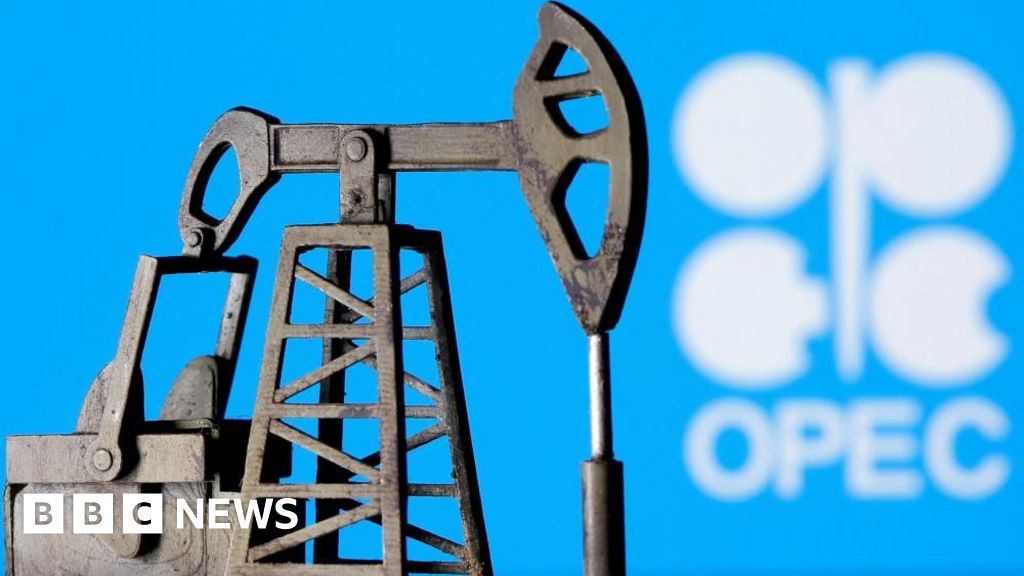
UAE OPEC : ce qu'il faut savoir
Saudi Arabia, Opec's de facto leader, produced over nine million barrels per day.
Before the start of the war, the UAE’s production capacity had grown to 4.8 million bpd, but under its OPEC agreement, it was only allowed to produce 3.2 million bpd. UAE OPEC s'impose comme l'un des sujets qui mobilisent l'attention en Bangladesh ce jeudi.
Les faits
- Before the start of the war, the UAE’s production capacity had grown to 4.8 million bpd, but under its OPEC agreement, it was only allowed to produce 3.2 million bpd.
- “The UAE is preparing for a world after the Iran war where oil demand is in decline, and OPEC’s power to maintain control and discipline will be weaker,” he added, referring to Abu Dhabi’s strategy of maximising its oil production to sell as much of its oil as possible before energy markets move beyond fossil fuels.
- “But this is nonsense because the UAE knows that OPEC adjusts production to maintain an equilibrium and nothing else,” al-Sabban said.
- The UAE was the world's third biggest oil exporter, behind Saudi Arabia and Iraq in 2025, according to the latest Opec data.
- According to the Opec data, the UAE produced 3.1 million barrels of oil a day in 2025.
L'essentiel
Dans le détail, the UAE was the world's third biggest oil exporter, behind Saudi Arabia and Iraq in 2025, according to the latest Opec data.
Sur le fond, According to the Opec data, the UAE produced 3.1 million barrels of oil a day in 2025.
Concrètement, UAE signalling intent to pursue independent economic policies and reshape Gulf oil politics.
Au-delà de ce constat, after decades of membership, the United Arab Emirates has decided to quit the oil producers’ group, OPEC, in order to focus on “national interests” and forge its own path, it has said.
Reste à préciser que despite the UAE’s departure, other members may still see the benefit of sticking to the club. “The ability to act collectively on managing the market and ensure that prices don’t go too high – and not too low – that was the reason to form OPEC+,” said Mills.
Les chiffres
“It’s not a major blow, especially for OPEC+ [which] consists of 23 countries, and one country going out doesn’t mean anything,” Mohammad al-Sabban, Saudi Arabia’s former senior oil adviser, told Al Jazeera.
Plus précisément, list 2 of 3OPEC+ agrees to hike oil output, warns of slow recovery after attacks.
Dans la foulée, Should traffic return to pre-war levels, however, the UAE could potentially flood the market with its 1.6 million bpd of extra production – equivalent to about 1.5 percent of global oil supply – enough to give it a serious edge in the global energy market, experts say.
À ce stade, Today, as other countries – such as the US and Norway – have become big oil producers themselves, OPEC’s share is lower at 33 percent of the global market.

Ce qui se dit
“The UAE is preparing for a world after the Iran war where oil demand is in decline, and OPEC’s power to maintain control and discipline will be weaker,” he added, referring to Abu Dhabi’s strategy of maximising its oil production to sell as much of its oil as possible before energy markets move beyond fossil fuels.
“But this is nonsense because the UAE knows that OPEC adjusts production to maintain an equilibrium and nothing else,” al-Sabban said.
“If Opec countries conduct their policies in an uncoordinated manner (after UAE exit) and produce as much oil as their production capacities allow and as much as they want, prices will go down accordingly,” he added.
Le contexte
Reste à préciser que Ultimately, Abdoun says, the “real loser” from the UAE’s decision to quit OPEC now “is the idea of a collective capacity for Arab fuel-producing states to shape the global energy order”.
À noter par ailleurs : the alliance has also increased its cooperation with 12 other oil producing nations spanning from Latin America to Russia — this larger grouping of OPEC nations and these partners is known as OPEC+.
Plus précisément, the BBC takes a look in charts at what the UAE's departure could mean for the oil cartel and more widely.
Dans la foulée, the United Arab Emirates' plan to ditch the oil producers' group Opec and strike out alone is being viewed as a huge blow for the organisation, with one analyst describing it as "the beginning of the end of Opec".
À ce stade, here, in five charts, we explain how Opec influences oil prices and what the UAE's departure could mean.
Recherches associées
Plusieurs requêtes connexes accompagnent ce sujet : Why the UAE no longer needs OPEC • Départ des Émirats arabes unis de l’accord pétrolier de l’OPEP ; les 5 grandes conséquences économiques • OPEP : Pourquoi le retrait des Émirats arabes unis est un événement majeur • OPEP : le départ des Émirats change l’équilibre • Annonce historique sur le pétrole : les UAE quittent l’OPEP et l’OPEP+, un énorme signal qui va avoir des conséquences sur la production et la géopolitique - Presse • LatAm assets pressured as Iran deal stalls; UAE exits OPEC.
À retenir
- The UAE was the world's third biggest oil exporter, behind Saudi Arabia and Iraq in 2025, according to the latest Opec data.
- After decades of membership, the United Arab Emirates has decided to quit the oil producers’ group, OPEC, in order to focus on “national interests” and forge its own path, it has said.
- Despite the UAE’s departure, other members may still see the benefit of sticking to the club. “The ability to act collectively on managing the market and ensure that prices don’t go too high – and not too low – that was the reason to form OPEC+,” said Mills.
- Recherches qui explosent : Why the UAE no longer needs OPEC, Départ des Émirats arabes unis de l’accord pétrolier de l’OPEP ; les 5 grandes conséquences économiques, OPEP : Pourquoi le retrait des Émirats arabes unis est un événement majeur, OPEP : le départ des Émirats change l’équilibre.