Supreme Court Ruling Nullifies Voting Rights Act Protection Using Polarization Argument
The conservative majority held that partisan polarization can mask racial discrimination, effectively gutting a key provision of the landmark civil rights law.
UGANDA —
Key facts
- The Supreme Court ruled in Louisiana v. Callais that a legislative district polarized along party lines cannot simultaneously be found racially polarized under the Voting Rights Act.
- Over 90% of Black voters vote Democratic and over 60% of White voters vote Republican in the United States.
- The ruling treats race and party as competing explanations, a methodological error akin to controlling for gender in pay discrimination cases.
- Black Americans were pushed into the Democratic Party by Barry Goldwater's opposition to the Civil Rights Act and the Republican Southern Strategy.
- The decision effectively nullifies the Voting Rights Act's protection against racial vote dilution.
- Andrew Young, a civil rights leader and former UN ambassador, said the Supreme Court will 'go to hell' for weakening the Voting Rights Act.
A Legal Doctrine Built on a Flawed Premise
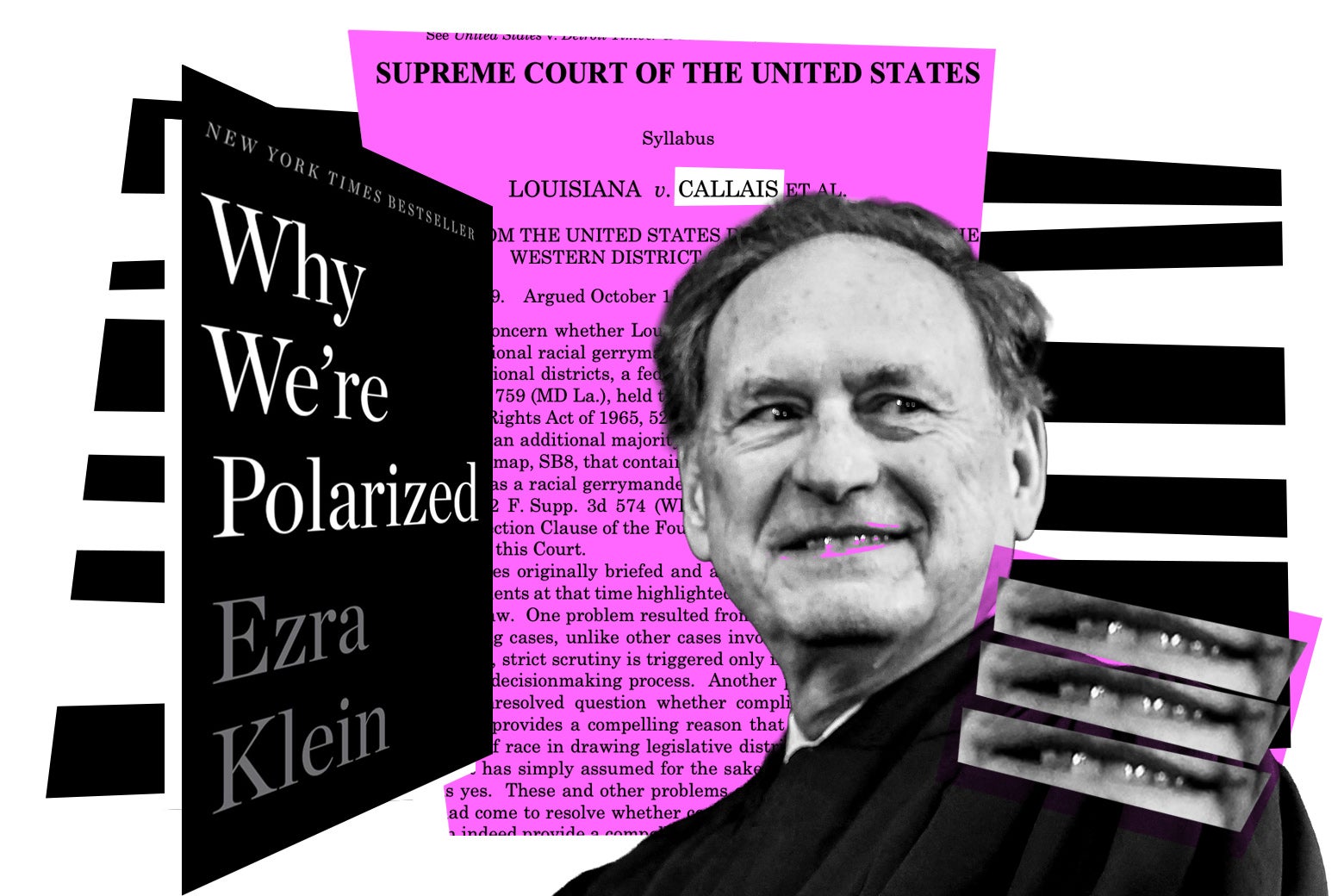
For two decades, a certain strain of American political thought has insisted that the true threat to democracy is not authoritarianism, oligarchy, or racism, but partisan polarization. This diagnosis spawned a cottage industry: the Polarization Lab at Duke, Princeton's Bridging Divides Initiative, the No Labels movement, Braver Angels town halls, and Carnegie fellowships. The Supreme Court has now revealed where that project leads. In Louisiana v. Callais, the conservative majority held that when a legislative district is polarized along party lines, it cannot simultaneously be found to be polarized along racial lines under the Voting Rights Act. The consequence is devastating: in a country where over 90 percent of Black voters vote Democratic and over 60 percent of White voters vote Republican, any racially discriminatory map can now be laundered as merely a partisan one.
The Methodological Error at the Heart of the Ruling
The court's reasoning rests on a statistical fallacy that would earn a failing grade in a graduate course. It treats race and party as competing explanations, as if controlling for one neutralizes the other. But for millions of American voters, race explains party affiliation. The vast majority of Black Americans did not randomly sort into the Democratic Party; they were pushed there by Barry Goldwater's opposition to the Civil Rights Act and the Republican Southern Strategy over subsequent decades. To 'control for partisanship' when assessing racial gerrymandering is to erase the very mechanism through which racism travels. Consider the analogy of a court ruling that a company did not discriminate by gender in pay because, once you control for being a manager or executive—positions from which women were systematically excluded—the gap disappears. Or that if you exclude people with high blood pressure, then a high sodium diet appears to have no effect on your risk of stroke.
How the Polarization Industry Paved the Way
Polarization-obsessed liberals did not directly cause the Callais ruling, but they laid an intellectual foundation. By insisting that partisan division is the master pathology of American life, they delegitimized arguments about racism as divisive. They created a cultural climate in which conflating race and party seems like a sophisticated, noninflammatory intervention rather than an evasion. This intellectual framework handed five Supreme Court justices a respectable cover for a ruling that would otherwise look nakedly like what it is: a nullification of the Voting Rights Act's protection against racial vote dilution. The court absorbed decades of elite discourse that trained us to distrust racial explanations and reach for partisan ones instead, then took that discourse to its logical conclusion.
A Misreading of History
The polarization nostalgists also badly misread the history they claim to be mourning. American politics has almost always been polarized by party. The exceptional era was the mid-20th century New Deal coalition, when staunch segregationists and anti-racist politicians coexisted within the same Democratic Party only by keeping civil rights off the agenda. To conclude that partisan divisions negate racial divisions would be to assume that even the Civil War had nothing to do with race. Polarization is a description of political temperature; it tells you nothing about what is being fought over or who is being harmed. A democracy polarized between those who want to preserve multiracial voting rights and those who want to destroy them is not suffering from the same illness as one polarized over capital gains tax rates.
Reactions and Stakes
Andrew Young, the civil rights leader and former UN ambassador, said the Supreme Court will 'go to hell' for weakening the Voting Rights Act. The ruling has effectively nullified the VRA's protection against racial vote dilution, using a conceptual weapon that liberals and moderates spent years building and lending prestige to. The problem has always been about threats to multiracial democracy and the rule of law. A generation of well-funded thinkers treated them as a symptom, and may have surrendered one of the last legal tools we had to contest it.
The bottom line
- The Supreme Court's ruling in Louisiana v. Callais effectively nullifies the Voting Rights Act's protection against racial vote dilution by allowing partisan polarization to mask racial discrimination.
- The decision relies on a methodological error that treats race and party as independent variables, ignoring that race heavily influences party affiliation in the U.S.
- The ruling is the logical culmination of decades of elite discourse that prioritized polarization over racial justice, providing intellectual cover for the conservative majority.
- Over 90% of Black voters vote Democratic, making it impossible to separate racial and partisan gerrymandering in practice.
- Civil rights leaders like Andrew Young have condemned the decision, warning of its severe consequences for multiracial democracy.

Museveni awards National Independence Medal to PAU director at Labour Day ceremony

Bodø/Glimt Host Start in Eliteserien Round 18 with Dominant H2H Record
US sanctions Joseph Kabila, accusing ex-Congo president of backing M23 rebels
