PSG's Tactical Gambit Secures Champions League Final Berth
An unconventional strategy targeting Michael Olise proved decisive in Paris Saint-Germain's semi-final victory over Bayern Munich.

UGANDA —
Key facts
- Paris Saint-Germain defeated Bayern Munich 6-5 on aggregate to reach the Champions League final.
- The second leg of the semi-final ended in a 1-1 draw at the Allianz Arena.
- Ousmane Dembele scored the crucial goal for PSG in the second leg.
- Michael Olise, who had 21 goals and 30 assists in 49 appearances, was largely contained.
- Nuno Mendes was tasked with limiting Olise's influence, despite receiving an early yellow card.
- PSG goalkeeper Matvei Safonov repeatedly kicked goal kicks towards Olise's flank.
- This tactic aimed to force Olise into crowded areas and disrupt Bayern's attack.
Paris Saint-Germain Advances on Aggregate
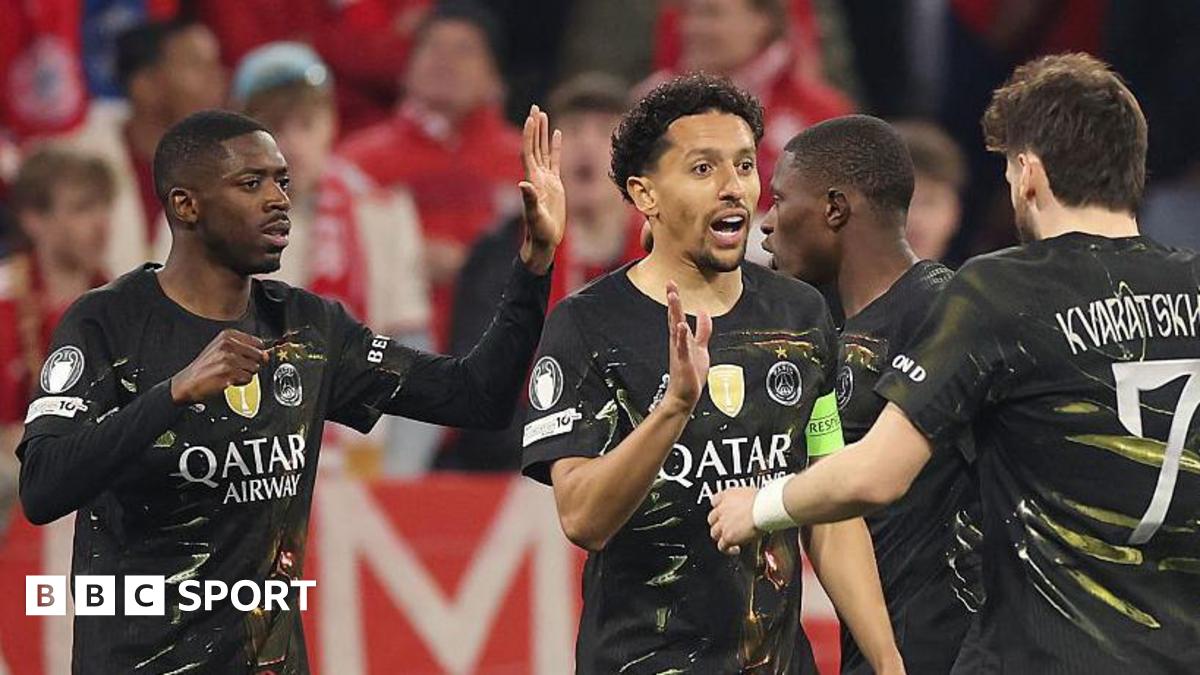
Paris Saint-Germain has secured its place in the Champions League final, overcoming Bayern Munich by a narrow 6-5 aggregate scoreline. The decisive second leg, played at the Allianz Arena, concluded with a 1-1 draw, following a high-scoring 5-4 victory for PSG in the first leg in Paris. Ousmane Dembele netted the crucial goal for the French side early in the match, a strike set up by strong play from Khvicha Kvaratskhelia. While the offensive contributions were noted, the post-match discourse quickly shifted to the defensive stratagems employed by PSG manager Luis Enrique. The focus of much of the discussion was an unusual tactical approach designed to neutralize the threat posed by Bayern Munich's influential winger, Michael Olise. Supporters and analysts alike have pointed to this specific strategy as a key factor in PSG's progression.
An Unconventional Plan to Neutralize Olise
Michael Olise arrived for the semi-final in formidable form, boasting an impressive record of 21 goals and 30 assists across 49 appearances for Bayern Munich this season. Despite his offensive prowess, Olise struggled to make a significant impact during the second leg. The primary responsibility for containing the French international fell to PSG full-back Nuno Mendes. Mendes managed to keep Olise largely in check throughout the match, a feat made more remarkable by the fact that he was playing under a yellow card for a considerable portion of the game. This defensive success against a player of Olise's caliber did not go unnoticed. Fans and observers have widely praised Enrique's innovative tactical adjustment, which appears to have successfully stifled one of Bayern's most dangerous attacking outlets.
The Goal Kick Strategy
Social media platforms buzzed with observations of a peculiar pattern during PSG's goal kicks, orchestrated by goalkeeper Matvei Safonov. Instead of the conventional approach of building play from the back, Safonov was repeatedly instructed to launch the ball directly towards Olise's flank. This tactic has drawn comparisons to specialized kicking strategies seen in American football's NFL, where teams utilize precise placement and territorial advantage to isolate specific opponents. The intention was clear: to prevent Olise from finding space and dictate the game's flow. By consistently targeting the area near the touchline where Olise operated, PSG aimed to compress the playing space. This forced the Bayern winger into congested zones, limiting his ability to turn, drive forward, and exploit the wider areas of the pitch.
Disrupting Bayern's Attacking Outlet
The strategic deployment of goal kicks served a dual purpose. Firstly, it aimed to prevent Bayern's most potent wide player from receiving the ball in dangerous positions where he could threaten PSG's goal. Secondly, by forcing Olise into crowded areas, PSG effectively disrupted the rhythm of Bayern's attack. This disruption prevented the German club from effectively utilizing their main attacking channel, thereby controlling the tempo of the game. The result was a significantly muted performance from Olise, who was unable to exert his usual influence on the proceedings. This tactical discipline was instrumental in PSG's ability to manage the second leg and secure the aggregate victory.
Implications for the Final
Luis Enrique's bold tactical decision against Bayern Munich highlights a willingness to deviate from traditional footballing approaches. The success of this strategy in a high-stakes Champions League semi-final suggests it could be a valuable tool in PSG's arsenal moving forward. As Paris Saint-Germain prepares for the Champions League final, opponents will undoubtedly analyze this tactical innovation. The ability to neutralize a key opposition player through unconventional means could prove to be a significant advantage in future encounters. The final will now present a new challenge, but PSG's recent performance demonstrates a capacity for strategic adaptability that could serve them well on the grandest stage of European club football.
The bottom line
- PSG advanced to the Champions League final by defeating Bayern Munich 6-5 on aggregate.
- A key factor in their victory was an unconventional tactic targeting Bayern winger Michael Olise.
- Goalkeeper Matvei Safonov repeatedly kicked goal kicks towards Olise's flank to limit his influence.
- This strategy successfully contained Olise, who had been in strong scoring and assisting form.
- Nuno Mendes was tasked with marking Olise, despite receiving an early yellow card.
- The tactical approach has drawn comparisons to specialized kicking strategies in the NFL.


PSG Advances to Champions League Final Against Arsenal
Bayern Munich vs. PSG: A Champions League Showdown
Arsenal Secures £122m Champions League Prize Money Ahead of Summer Sales