Uganda’s Sovereignty Bill Passes Amid Opposition Boycott and Procedural Chaos
The Protection of Sovereignty Bill, 2026, cleared Parliament on Tuesday after a session marked by disputed procedures, minority reports, and a ruling party divided over clauses targeting diaspora and NGOs.

UGANDA —
Key facts
- The Protection of Sovereignty Bill, 2026, was passed by Parliament on Tuesday, May 5, 2026.
- Speaker Anita Among overruled opposition objections, allowing the majority report to be presented.
- were given 35 minutes total to be presented, triggering a walkout by opposition MPs.
- The bill defines Ugandans living abroad as 'foreigners' and imposes up to 20 years' imprisonment for activities deemed to undermine sovereignty.
- President Yoweri Museveni directed revisions to ensure the bill does not disrupt private investment, religious contributions, or diaspora remittances.
- At least 20 of 56 committee recommending passage.
- The Bank of Uganda Governor warned the bill could trigger informal financial flows and complicate financial oversight.
- Security personnel were reportedly deployed during the joint committee retreat at Munyonyo.
A Chaotic Passage Through Parliament
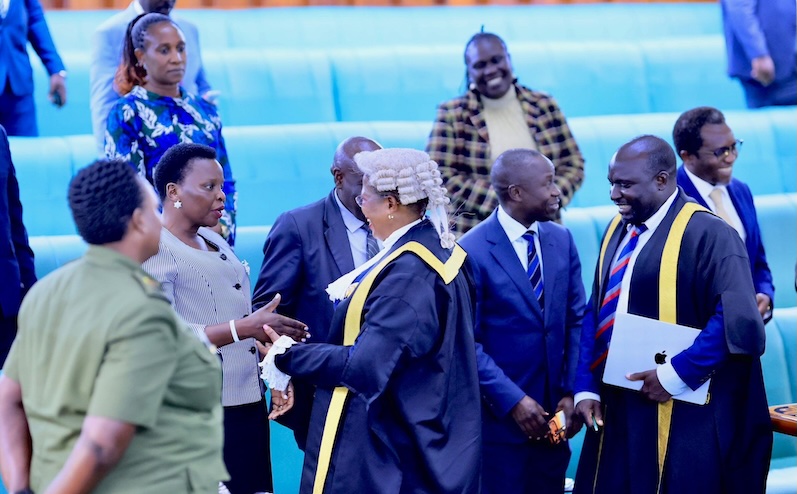
The Protection of Sovereignty Bill, 2026, was passed by Uganda’s Parliament on Tuesday in a session that opposition lawmakers described as procedurally flawed and rushed. The House, sitting under Speaker Anita Among, processed the bill through its second and third readings amid repeated objections from the opposition camp. Opposition leader Joel Ssenyonyi, MP for Nakawa West, attempted to have the bill thrown out on two grounds: that the version before the House differed from the one received late last month, and that the committee report had been leaked before being officially tabled. Speaker Among dismissed both arguments, stating that the report bore her signature and was therefore authenticated. “was uploaded had my signature. I even said ‘please place it on the order paper with my very able signature,’” Among told Ssenyonyi. She contrasted it with the Uganda Airlines probe report, which had been blocked because it lacked her signature.
Majority Report Presented, Minority Voices Silenced
Wilson Kajwengye, co-chairperson of the joint committees on Defence and Internal Affairs and Legal and Parliamentary Affairs, presented the majority report endorsing the bill with amendments proposed by the Attorney General. His presentation proceeded largely uninterrupted. When it came time for the six minority reports, Speaker Among directed that all be presented within 35 minutes, the same duration given to the majority report. The opposition rejected this, with Shadow Constitutional Affairs Minister Jonathan Odur openly refusing to comply. “When a member of the committee dissents singularly, the weight of the report demands that we will be accorded the same time,” Odur said. Among insisted, and Odur refused to heed her instruction, leading to a standoff.
Key Provisions and Controversial Definitions
The bill introduces stringent registration requirements for “agents of foreign influence,” with penalties of up to 20 years’ imprisonment for activities considered to undermine national sovereignty. It defines Ugandans living abroad as “foreigners,” places tighter controls on non-governmental organisation funding, and targets media houses, academic institutions, and diaspora networks. Critics warn that the broad definition of “foreign agents” could lead to regulatory overreach, shrinking civic space and undermining constitutional freedoms. The Bank of Uganda Governor, Atingi-Ego, warned that the proposals could complicate financial oversight and trigger informal financial flows. President Museveni has since clarified that the bill is intended to shield Uganda’s policy decisions from external influence. He directed that contentious provisions be reviewed to ensure they do not disrupt private investment, religious contributions, or diaspora remittances.
Deep Divisions Within the Ruling Party
The bill has exposed fractures within the ruling National Resistance Movement (NRM) party. from the joint committees indicates that at least 20 of the 56 committee MPs did not append their signatures to the majority report. The NRM parliamentary caucus met on Tuesday morning at the Office of the President to harmonise its position, chaired by Government Chief Whip Denis Hamson Obua. Caucus spokesperson Alex Brandon Kintu said the meeting was intended to ease internal divisions and present a unified position during debate. However, some MPs who arrived late sought to reopen clauses already agreed upon by the committee, indicating lingering disagreements. During a two-day retreat at Commonwealth Resort Munyonyo beginning May 2, the joint committee examined the bill. The meeting ended with a majority vote of 22 to 11 in favour of adopting the bill with amendments. Opposition legislators criticised the process, with had been prepared in advance for endorsement.
Procedural Disputes and Security Concerns
Tensions peaked during the joint committee retreat, where 11 of the 24 committee members demanded a clause-by-clause review of public submissions and amended drafts. They argued that lawmakers had not been given adequate access to critical documents before adopting the report. “We do not want summaries. We must read the submissions ourselves to make an informed decision,” said Erute South MP Jonathan Odur. Kilak South without proper scrutiny would “undermine the integrity of parliament.” deployment of security personnel during the retreat, an unusual occurrence for committee proceedings, further amplified concerns about procedural fairness and transparency.
Museveni’s Mixed Signals and the Path Ahead
President Museveni has distanced himself from aspects of the draft bill, suggesting that it may not fully reflect Cabinet’s original position. Political analysts interpret this posture as an attempt to shield himself from growing public backlash while retaining room to influence the final outcome. Despite the president’s call for revisions, the bill was passed on Tuesday. Civil society groups have opposed the legislation, and critics argue that it mirrors laws in Russia and China designed to crush dissent. The bill now awaits presidential assent to become law. The passage of the bill raises questions about the future of civic space in Uganda, the treatment of diaspora communities, and the balance between sovereignty and constitutional freedoms. Observers will watch closely to see whether Museveni signs the bill as passed or sends it back for further amendments.
The bottom line
- Uganda’s Parliament passed the Protection of Sovereignty Bill, 2026, on May 5 amid opposition boycotts and procedural disputes.
- The bill defines Ugandans abroad as 'foreigners' and imposes up to 20 years' imprisonment for activities deemed to undermine sovereignty.
- At least 20 of 56 committee MPs did not sign the majority report, revealing deep divisions within the ruling NRM party.
- President Museveni directed revisions to protect private investment, religious contributions, and diaspora remittances, but the bill passed without those changes.
- The Bank of Uganda Governor warned the bill could trigger informal financial flows and complicate financial oversight.
- Critics compare the law to similar legislation in Russia and China, warning it could shrink civic space and constitutional freedoms.

Al-Nassr's 16-Game Winning Streak Shattered in 3-1 Defeat to Al-Qadsiah

Bodø/Glimt's Champions League Fairytale Ends in Lisbon, but Their Model Endures

Bonnie Blue Deported from Indonesia After Bali Arrest, Banned for at Least Ten Years
