Brampton slashes development charges up to 100% to spur rental construction amid 1% vacancy crisis
The Ontario city, where 25 students have been found crammed into a single basement apartment, offers tiered fee reductions to shift supply from unsafe secondary units to purpose-built rentals.
UNITED STATES —
Key facts
- Brampton's vacancy rate is 1%.
- Development charge reductions take effect Sept. 10 and run through Nov. 14, 2026.
- Three-bedroom and two-plus-bedroom mixed-use units get 100% municipal DC reduction.
- One-bedroom+den and two-bedroom units get 75% reduction; one-bedroom units get 50%.
- Municipal DC for a large apartment (>750 sq ft) is currently $38,395; total with regional and education levies is $100,659.
- In 2018, total DCs for a large apartment were $54,197.
- Brampton has over 26,000 registered additional residential units (ARUs), accounting for more than 60% of all new residential units in 2025.
- Peel Region reduced its residential DCs by 50% from July 10, 2025 to Nov. 13, 2026.
A city choked by a 1% vacancy rate turns to fee waivers
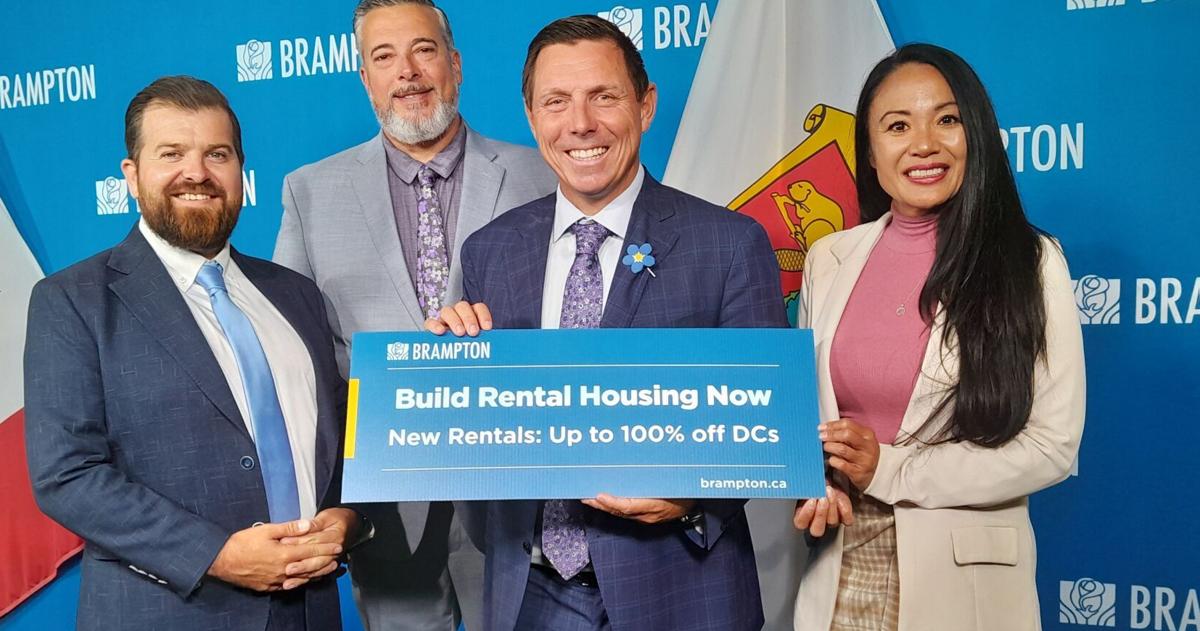
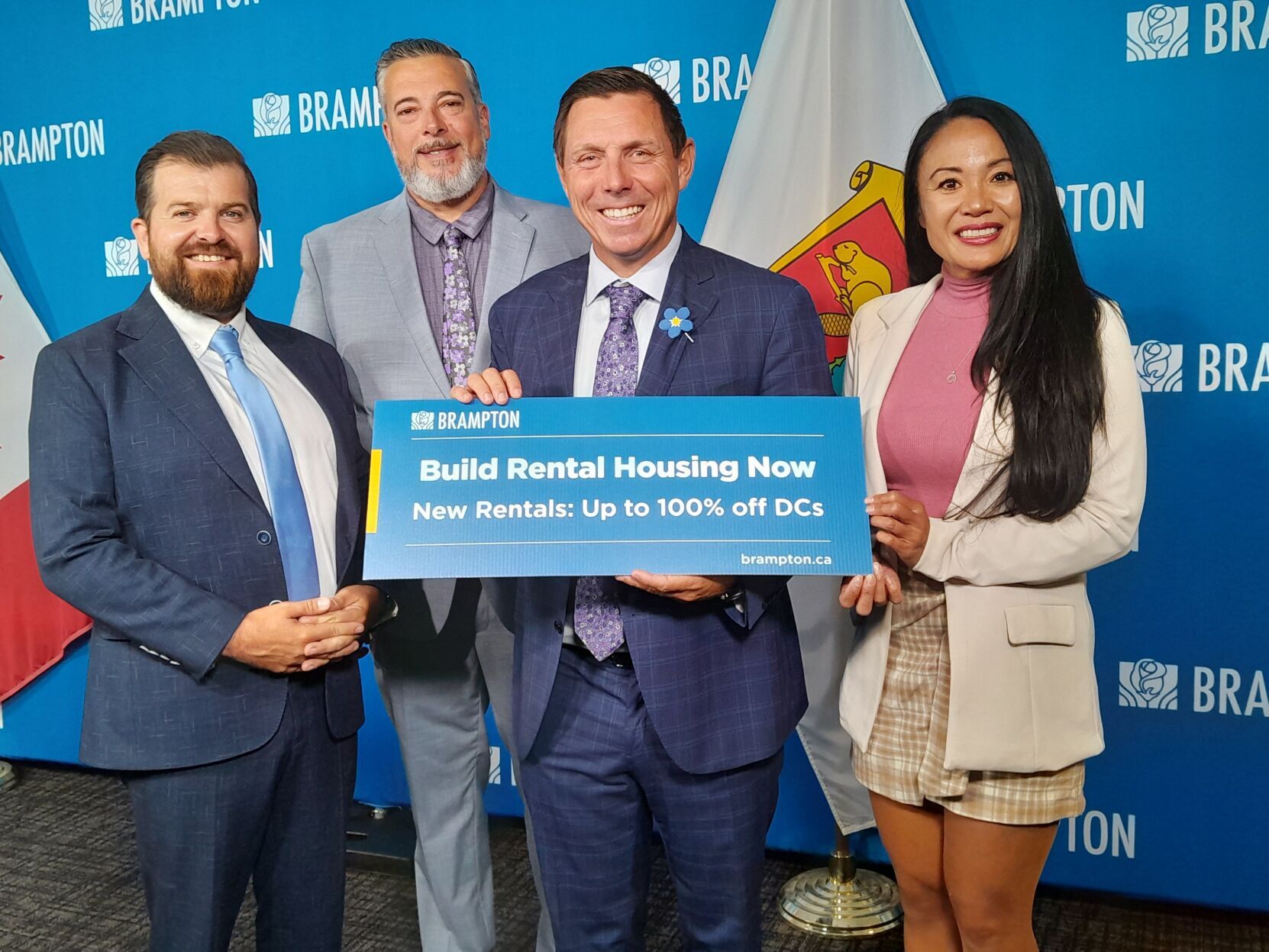
Brampton, a rapidly growing city west of Toronto, is betting that a sweeping reduction in development charges — up to 100% for the largest rental units — will unlock construction that has all but stalled. Mayor Patrick Brown announced the incentive program at a news conference on Sept. 10, the same day city council ratified it unanimously. “We have a one per cent vacancy rate,” Brown told reporters, noting that even residents with the means to pay cannot find homes. He described basement apartments “littered with overpopulation,” including one instance where 25 students were living in a single unit. “It needs to change,” he said.
Tiered discounts target family-sized units and mixed-use buildings
Under the new Development Charges Incentive Program, which runs until Nov. 14, 2026, builders will receive a 50% discount on municipal DCs for one-bedroom units, 75% for one-bedroom+den and two-bedroom units, and a full 100% reduction for three-bedroom units and two-plus-bedroom units with mixed use. The municipal DC for a large apartment (over 750 sq ft) currently stands at $38,395, while a small apartment (under 750 sq ft) costs $23,628. But those figures are only part of the total levy. Builders also pay DCs to the Region of Peel, GO Transit, and local education boards, bringing the total to $100,659 for a large apartment and $59,084 for a small one. In 2018, the combined charge was $54,197 and $36,738 respectively — meaning fees have nearly doubled in seven years.
Councillors who pushed the motion see it as a weapon against slum landlords
Councillors Dennis Keenan and Rowena Santos, who represent downtown wards, introduced the motion at a council meeting last week. Santos said the program is “bad news for slum landlords” and that the city’s overreliance on additional residential units (ARUs) — basement apartments, garden suites, and similar secondary dwellings — has strained services. “Today, Brampton has over 26,000 registered ARUs accounting for more than 60 per cent of all new residential units in 2025,” she said at the news conference. “This overreliance on ARUs is not sustainable.” Unlike purpose-built rentals, ARUs do not pay development charges, Santos noted. She said the rapid proliferation of ARUs has placed significant strain on bylaw enforcement, 311, fire, police, recreation centres, and transit, while also raising property standards concerns and undermining neighbourhood character.
Regional and municipal reforms align to cut costs for developers
Brampton’s move follows a broader trend across the Greater Toronto and Hamilton Area. In June, Peel Region passed its own DC reforms, reducing regional residential development charges by 50% from July 10, 2025 to Nov. 13, 2026. That reduction further lowers the total burden on Brampton builders. Other municipalities have taken similar steps: Burlington lowered DCs by $1,500 last May; Vaughan returned DCs to September 2018 levels in November; Mississauga reduced all residential DCs by 50% and by 100% for three-bedroom units in purpose-built rentals in January; and Hamilton cut all residential DCs by 20% in August. Mayor Brown said the program “could change the game in Brampton” and bring “hundreds of millions of dollars of new investment to a sector that desperately needs it.” He noted there are 24,000 surplus condos in the Greater Toronto Area but argued that “that’s not where we believe we need to put our limited fiscal capacity.”
City calls on province to pause ARU proliferation
Alongside the DC incentives, Brampton City Council passed a motion asking the provincial government to reconsider its “one-size-fits-all” ARU legislation. The city wants the ability to pause new ARUs in concentrated areas “so the City can address property standards and safety issues, while incentivizing better, safer alternatives through purpose-built rentals.” Santos specifically called on the province to reverse its “aggressive additional residential unit legislation.” The mayor said he would like to see thousands of new rental units built. “Right now we don’t have rental housing being built. It is stalled,” he said. He argued that safe legal units would “create competition in a sector that never had competition in our city” and that the current lack of options has “allowed, unfortunately, renters to be preyed upon.”
A test case for whether fee relief can revive rental construction
Brampton’s experiment comes at a moment when development charges across the GTA have skyrocketed over the past 15 years, adding strain to already struggling pipelines. The city is effectively forgoing millions in municipal revenue in the hope that lower upfront costs will translate into a wave of new rental supply. Whether the tiered discounts — which favour larger, family-friendly units — will actually attract builders remains an open question. For now, the program is the most aggressive in the region, offering a full waiver for the units the city needs most. Brown’s bet is that the short-term fiscal sacrifice will yield long-term gains in housing availability and tenant safety. The province’s response to the ARU pause request will be a critical next step.
The bottom line
- Brampton's 1% vacancy rate and reports of 25 students in a single basement apartment drove the city to act.
- Development charge reductions are tiered: 50% for one-bedroom, 75% for one-bedroom+den and two-bedroom, 100% for three-bedroom and two-plus-bedroom mixed-use.
- Total DCs for a large apartment have nearly doubled from $54,197 in 2018 to $100,659 today, including regional and education levies.
- Peel Region's separate 50% DC reduction from July 2025 to Nov. 2026 further lowers costs for Brampton developers.
- The city has over 26,000 registered ARUs, which make up more than 60% of all new residential units in 2025 and do not pay development charges.
- Brampton is asking the province to allow a pause on new ARUs in concentrated areas to address safety and property standards.



Joelinton returns as Newcastle seek to end four-match losing streak against Brighton
Magic Face Elimination Without Wagner as Banchero, Cunningham Duel Enters History