David Attenborough: A Century of Wonder and Witness
The broadcaster's 100th birthday marks a lifetime of shaping global understanding of the natural world and advocating for its preservation.
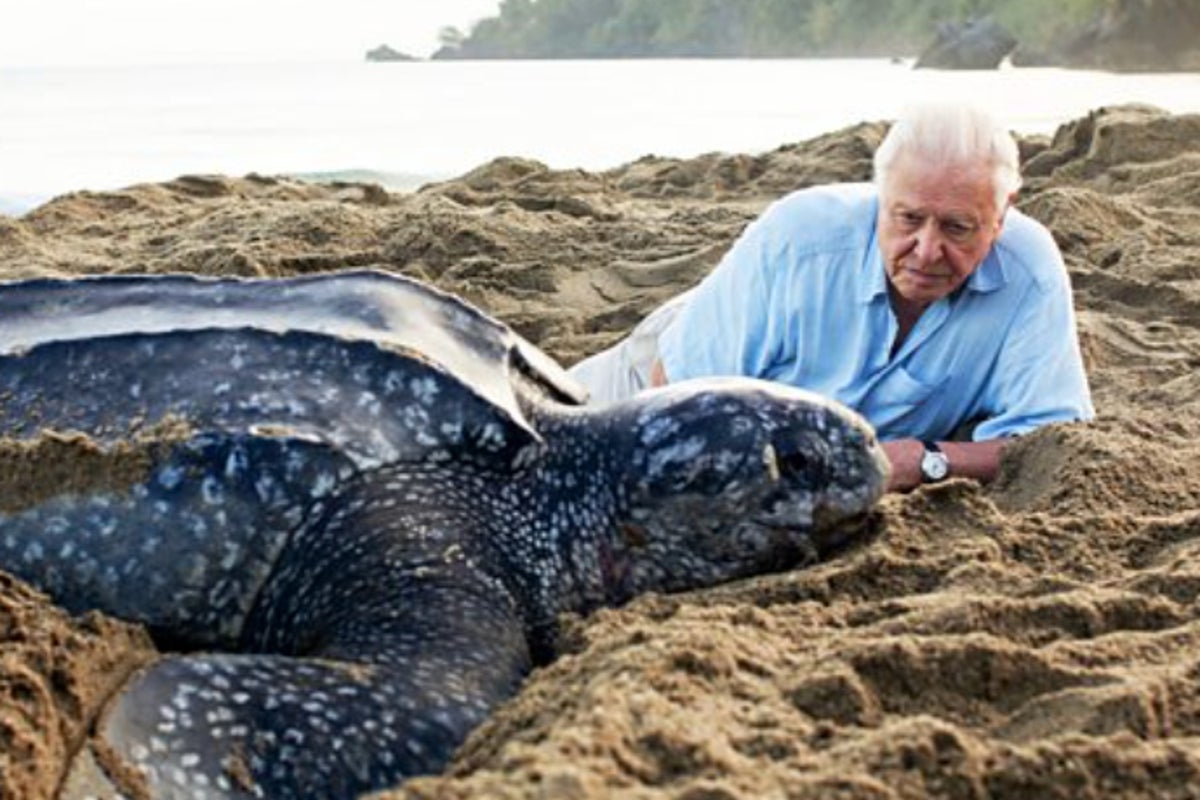
UNITED STATES —
Key facts
- Sir David Attenborough was born on May 8, 1926, in England.
- His broadcasting career spans over 70 years, beginning in the early 1950s.
- Attenborough was appointed controller of BBC Two in 1965, overseeing its cultural and educational programming.
- He has received two knighthoods, the second in June 2022 from Prince Charles.
- More than 50 organisms have been named in his honor.
- His 2025 documentary, "Ocean with David Attenborough," will focus on marine ecosystems.
- Attenborough holds the Guinness World Record for the longest career as a television presenter and naturalist.
A Voice for the Wild Turns 100
Sir David Attenborough, the instantly recognizable and deeply trusted voice behind countless nature documentaries, is celebrating his 100th birthday. His extraordinary career, spanning over seven decades, has not only brought the planet's most spectacular ecosystems into living rooms worldwide but has also profoundly influenced how generations perceive and interact with the natural world. As he reaches this remarkable milestone, experts reflect on his enduring impact on conservation, documentary filmmaking, and the critical communication of climate change. From frolicking with gorillas to tracking ancient fish, Attenborough's calm narration has guided audiences through the deepest oceans, densest rainforests, and iciest poles. His work began at the BBC in the early 1950s, helping to define modern wildlife filmmaking and establishing him as a leading advocate for conservation and climate action. His influence extends far beyond the screen, shaping public understanding and inspiring a global commitment to environmental stewardship.
From Behind the Camera to the Forefront of Broadcasting
Before becoming the celebrated face of wildlife programming, Attenborough played a pivotal role in shaping British television. In 1965, he was appointed controller of BBC Two, a nascent channel then striving to define its identity. Under his leadership, the broadcaster became renowned for its ambitious cultural and educational output, commissioning landmark series such as "Monty Python's Flying Circus," "Civilisation," and "The Ascent of Man." Attenborough's tenure at BBC Two also saw him champion technological innovation. He was instrumental in introducing color television to the UK, preceding Germany's first color broadcasts in Europe. Following the 1967 Wimbledon broadcast, he advocated for the change of tennis balls from traditional white to bright yellow to enhance visibility, a practice that endures today. He stepped down from his executive role in 1972, driven by a desire to develop his own series, culminating in the seminal "Life on Earth: A Natural History" in 1979. This series, and those that followed, would revolutionize natural history filmmaking.
Mastering the Art of Scientific Storytelling
Attenborough's genius lies in his unparalleled ability to translate complex scientific concepts into accessible and engaging narratives. His early series, "Life on Earth," demystified evolutionary biology for hundreds of millions of viewers, embedding principles like natural selection, adaptation, and ecology into popular culture. He presents these ideas not as abstract theories but as dynamic processes shaping life across the natural world. This commitment to scientific accuracy is underpinned by close collaboration with academics and field researchers. His programs meticulously reflect current evidence on animal behavior, ecosystems, and biodiversity, ensuring his storytelling is both captivating and authoritative. Ben Garrod, a science broadcaster and professor, recalls Attenborough's infectious, childlike wonder during a filming expedition in South America, a passion for discovery that has remained undimmed for decades. "Facts and figures bubbled out of Attenborough excitedly, not at all like the calm and more measured way we’re all so used to," Garrod observed, highlighting the broadcaster's profound ability to convey his deep love for the natural world.
A Legacy Etched in Nature and Culture
The broadcaster's influence is so profound that more than 50 organisms, from living frogs and plants to extinct marine reptiles, have been named in his honor. These include the pitcher plant Nepenthes attenboroughii and the extinct marine reptile genus Attenborosaurus. His career has been punctuated by numerous accolades, including 32 honorary degrees and two knighthoods. He was first knighted by Queen Elizabeth II in 1985, and received a second knighthood, the Knight Grand Cross of the Order of St Michael and St George, from Prince Charles in June 2022 for his nature documentaries and advocacy. In April of the same year, he was honored with the UN Champions of the Earth Lifetime Achievement Award and was nominated for the 2022 Nobel Peace Prize alongside Pope Francis and the World Health Organization. Attenborough also holds the Guinness World Record for the longest career as a television presenter and naturalist, a testament to his enduring presence and impact since his on-screen debut in "Animal Disguises" in 1953. His 2017 series, "Blue Planet II," generated such intense demand in China that it reportedly caused temporary internet slowdowns.
Looking Ahead: A Continued Commitment
Even at 100, Attenborough remains actively involved in natural history broadcasting. His upcoming feature-length documentary, "Ocean with David Attenborough," slated for 2025, is strategically timed to coincide with major international ocean events, including World Oceans Day and the United Nations Ocean Conference. The film will explore marine ecosystems and the urgent solutions required to safeguard them for future generations. His dedication to raising awareness about the planet's ecological challenges is unwavering. He has been a vocal advocate for conservation and climate action, warning millions that the natural world is under increasing threat. His ability to connect with audiences on an emotional and intellectual level has made him a powerful force in environmental advocacy. While he finds the British public's designation of "national treasure" uncomfortable, his impact is undeniable. His life's work represents a continuous dialogue between scientific discovery and public consciousness, a bridge built over 70 years of dedicated storytelling.
The bottom line
- Sir David Attenborough, born May 8, 1926, is celebrating his 100th birthday, marking over 70 years in broadcasting.
- He played a key role in shaping BBC Two's identity and introducing color television to the UK.
- Attenborough's documentaries are praised for their scientific accuracy and ability to make complex topics accessible.
- His legacy is recognized through numerous accolades, including two knighthoods and over 50 species named in his honor.
- He remains an active advocate for conservation, with a new documentary on oceans planned for 2025.
- His broadcasting career holds the Guinness World Record for the longest duration as a television presenter and naturalist.




Mexico City Sinking Nearly a Foot Annually, NASA Satellite Data Reveals

Rafi Law Group Secures $125 Million Investment for Expansion

Hayden Panettiere Confirms Bisexual Identity in Memoir
