Half of US job growth concentrated in just over 100 counties, leaving 50 million in distress
Despite record low unemployment, geographic fractures deepen as AI threatens to widen the gap between thriving hubs and struggling communities.
UNITED STATES —
Key facts
- Just over 100 of America's 3,000-plus counties accounted for half of all U.S. job growth in 2020.
- More than 50 million Americans live in economically distressed communities.
- In about one-third of U.S. counties, prime-age employment lags the national average by five percentage points or more.
- National prime-age employment hovers around 80%; unemployment is at its lowest since 2022.
- Nearly one in four workers using AI say it is 'very' or 'somewhat' likely that AI will eliminate their job (Gallup).
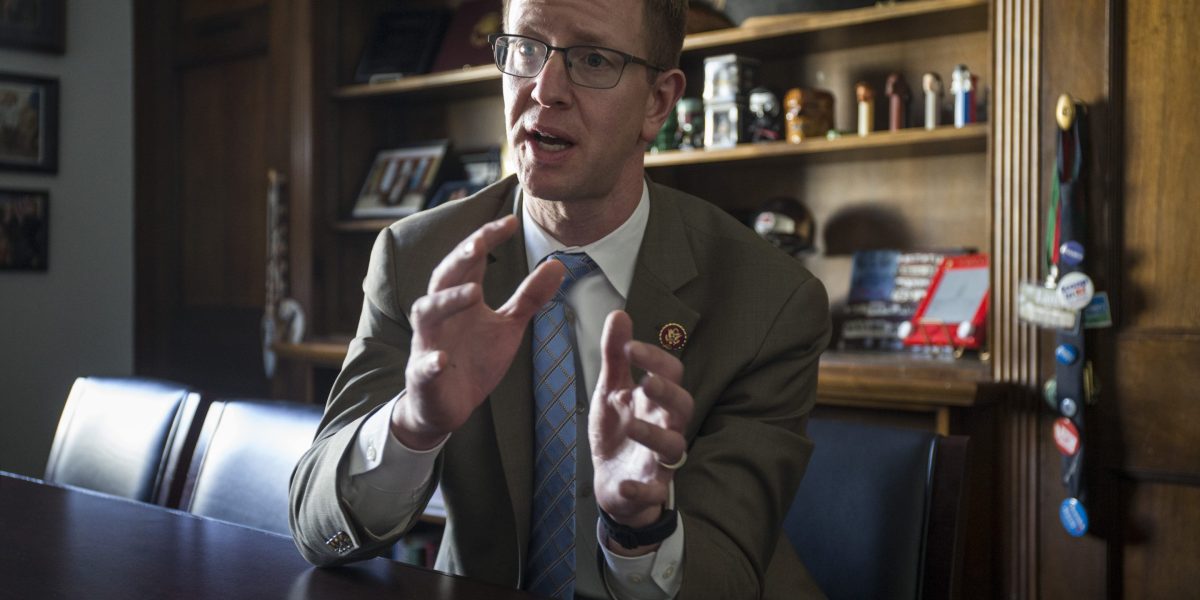
- The author, a former Congress member and now at The Rockefeller Foundation, grew up in a timber town on Washington's Olympic Peninsula that suffered mill closures in the early 1990s.
A nation of two economies
The United States is experiencing a paradox: national unemployment is at its lowest point since 2022, and prime-age employment — jobs for those between 25 and 54 — hovers around 80 percent. Yet these aggregate figures mask deep geographic fractures. In about one-third of American counties, prime-age employment lags the national average by five percentage points or more, a threshold that defines a 'distressed community.' More than 50 million Americans live in such areas, marked by inadequate jobs, poorer health outcomes, higher crime, and frayed civic life. Economic opportunity has become astonishingly concentrated. In 2020, just over a hundred of America's 3,000-plus counties accounted for half of all U.S. job growth. The remaining counties share the other half, leaving vast swaths of the country struggling to keep pace. People in those communities are not doing anything wrong, the author argues — they are simply not living in the right place.
The legacy of lost industry
The author, who grew up in a timber town on Washington's Olympic Peninsula, recalls the early 1990s when mill closures and job losses devastated the community. Workers and families who had done everything right found themselves scrambling to survive. Local stores struggled, schools tightened budgets, and public services shrank. For many, lost paychecks led to lost faith in the system and the country. During 12 years in Congress and now at The Rockefeller Foundation, the author has seen that his hometown is similar to too many others. Communities that never fully recovered from previous economic shocks now risk falling even further behind as artificial intelligence reshapes work. While technology has always changed jobs, the speed and scale of AI are different, and people sense it.
AI as a new disruptor
A Gallup survey finds that nearly one in four workers using AI say it is 'very' or 'somewhat' likely that AI and automation will eliminate their job. The risk is not only layoffs but weakened attachment: when a worker encounters a disruption, falls out of the labor market, and struggles to climb back in. The likelier reality is more frequent job transitions, faster task changes inside existing jobs, and shorter tenures. Yet AI can also help workers move faster into new ones. Used well, AI can help people understand which roles are growing in their region, how their existing skills translate to those jobs, and what short, credible steps — often weeks or months, not years — lead to real hiring. The challenge is to modernize workforce systems designed for a world in which job loss was episodic and recovery followed a predictable path through retraining and re-entry.
Place-based strategies that actually connect people to jobs
Traditional place-based strategies helped attract investment into communities, often by landing marquee employers or large capital projects. But too often, those strategies assumed opportunity would automatically reach local workers. What is different now, the author argues, is that access to work depends less on where investment lands and more on whether local systems actually connect people to jobs. In communities making progress today, workforce agencies align training with real hiring commitments, employers help shape local pipelines, and practical barriers like childcare and transportation are treated as part of the jobs system, not afterthoughts. The U.S. economy has millions of open jobs, especially in healthcare, construction, and the care economy, but many go unfilled because workers lack access to short, job-aligned training or are sidelined by barriers outside the workplace.
A model from the Olympic Peninsula
On Washington's Olympic Peninsula, communities long anchored by timber and natural-resource jobs have faced a slow, uneven transition. In some places, prime-age employment lags the national average by double digits. In response, local leaders have not chased one-off projects. Instead, they have organized a coordinated response that aligns workforce development, economic development, and supportive services around a simple goal: connecting people to existing jobs and emerging opportunities in maritime work, manufacturing, clean energy, and natural resources. That includes employer-driven training through the local community college, modern workforce partners that help people navigate transitions, and investments that reduce barriers like childcare and transportation. The approach treats work-enabling infrastructure as part of the jobs system, because without it, people cannot reliably show up to work or stay attached as jobs change.
Modernizing the response to disruption
Too many workforce systems — the combination of employers, training providers, public agencies, and benefits programs that connect people to jobs — were designed for a world in which job loss was episodic. That is not the world AI is pushing us toward. The author calls for a shift: employers need incentives and support to redeploy workers into new roles as tasks change, rather than defaulting to layoffs and rehiring. States should focus less on whether someone qualifies as 'unemployed' and more on how quickly people move from one job to the next, by modernizing benefits and workforce services so workers can bridge transitions without losing income, health coverage, or momentum. Philanthropy plays a distinct role by providing risk capital — testing approaches government and employers are often unable or unwilling to try first, from AI-enabled job navigation to new models designed around transitions rather than layoffs. When those approaches prove durable, states and employers are better positioned to adopt and scale them.
A path forward amid deepening divides
The author concludes that getting more Americans working amid this level of economic change requires taking place seriously, but differently than before. Jobs policy cannot stop at job creation; it must also address alignment between training and hiring, and remove practical barriers. Communities that make progress focus on alignment, not just supply. Training programs are designed with employers so credentials lead directly to hiring. Employers invest in retention and advancement, not just recruitment. The stakes are high. Without deliberate action, the geographic concentration of opportunity will only intensify, leaving tens of millions of Americans in communities where hard work does not lead anywhere. The question is whether the nation can learn from places like the Olympic Peninsula and scale their approaches before the next wave of disruption widens the divide.
The bottom line
- Half of U.S. job growth is concentrated in just over 100 counties, leaving 50 million Americans in distressed communities.
- National unemployment is at its lowest since 2022, but one-third of counties have prime-age employment five points below the national average.
- Nearly one in four AI-using workers fear job loss from AI, and the speed of disruption is unprecedented.
- Traditional place-based strategies often fail to connect local workers to new jobs; alignment between training, hiring, and support services is key.
- The Olympic Peninsula offers a model: coordinated workforce development, employer-driven training, and investment in childcare and transportation.
- Workforce systems must be modernized to handle frequent job transitions, with AI used to help workers move into new roles quickly.
Spirit Airlines Faces Shutdown as Rescue Talks Collapse

S&P 500 closes above 7,200 for first time as Caterpillar and Alphabet surge

Knicks demolish Hawks by 51 in historic playoff elimination
